Quick Answer 🔥
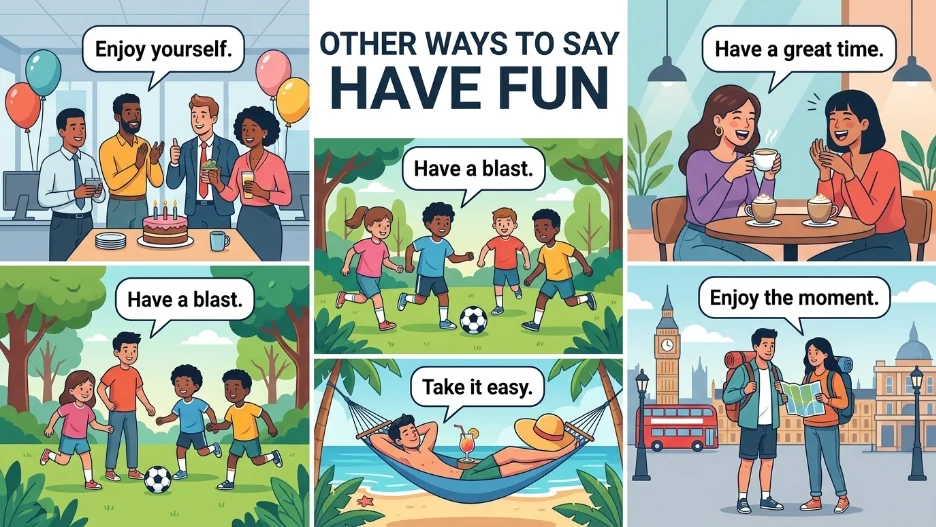
Looking for fresh alternatives to “have fun”? Here are 5 top options to start: Enjoy yourself, Have a blast, Make the most of it, Live it up, and Have a great time.
The phrase “have fun” is one of the most common expressions in English. It simply means to enjoy yourself and take pleasure in an activity or experience . You’ll hear it everywhere—between friends, at the end of conversations, and even in casual workplace exchanges.
But here’s the thing: relying on the same phrase every time can make your English sound repetitive and, in some contexts, overly informal. Learning alternatives to “have fun” allows you to match your tone to the situation. Whether you’re writing a professional email, encouraging a friend, or crafting social media content, the right choice helps you express excitement in English more naturally and confidently.
“The right tone makes your English sound professional and confident.”
Quick Categories
Formal Alternatives to “Have Fun”
- Enjoy yourself
- Have a pleasant experience
- Wishing you a rewarding time
- Take pleasure in it
Professional Alternatives to “Have Fun”
- Enjoy the experience
- Make the most of the opportunity
- I hope you have a productive and enjoyable time
- May your endeavors be fruitful
Casual Alternatives to “Have Fun”
- Have a blast
- Live it up
- Let loose
- Have a great time
Informal Expressions to “Have Fun”
- Go wild
- Knock yourself out
- Let your hair down
- Party hard
Pro Tip: When in doubt, choose “Enjoy yourself” for most polite situations. Save phrases like “Go wild” for close friends only .
Common Mistakes to Avoid
Using “have fun” and its alternatives can trip up even advanced learners. Here are 5 common errors:
1. Using informal alternatives in professional settings
- ❌ “Hope you have a blast at the board meeting!”
- ✅ “I hope you have a productive meeting.”
2. Overusing “have fun” in formal writing
- ❌ “Have fun with the project report.”
- ✅ “I hope you find the project rewarding.”
3. Using sarcastic phrases when sincerity is needed
- ❌ “Knock yourself out” (said to a nervous colleague)
- ✅ “Enjoy yourself—you’ve earned it.”
4. Forgetting context specific alternatives
- ❌ “Have fun at the funeral” (inappropriate)
- ✅ “Wishing you strength today” (context appropriate)
5. Using “have fun” too casually with senior colleagues
- ❌ “Have fun at the conference, boss!”
- ✅ “Enjoy the conference—it sounds like a great opportunity.”
What Does “Have Fun” Mean?
Definition: “Have fun” is a common expression used to wish someone enjoyment and pleasure during an activity or event. It’s an imperative phrase that conveys warmth, goodwill, and a hope for positive experiences .
Grammar note: It functions as a verb phrase in the imperative mood—you’re giving a friendly command or wish.
Example: “You’re going to the concert tonight? Have fun!”
When to Use “Have Fun”
Common contexts:
- Before someone attends a party or social event
- At the end of a conversation with a friend
- When someone is leaving for a trip or vacation
- Casual workplace interactions (team events, office parties)
Spoken vs Written:
- Spoken: Natural in everyday conversation
- Written: Common in texts, social media, and informal emails; use alternatives for formal writing
Formal vs Informal:
- Informal: Most common usage (90%+)
- Formal: Not recommended; alternatives are preferred
Is It Professional or Polite to Say “Have Fun”?
Polite? ✔️ Yes—it’s warm and friendly.
Professional? ❌ No—in most cases. While it works for casual workplace chats, it’s too informal for emails to clients, professional correspondence, or formal events .
Business style example:
- ❌ “Have fun at the conference next week.”
- ✅ “Enjoy the conference next week—I trust it will be a valuable experience.”
Pros and Cons of Using “Have Fun”
Pros
- Simple and natural
- Friendly tone
- Common usage (everyone understands it)
- Easy to understand
Cons
- Too informal for work
- Overused—can feel cliché
- Limited emotional range
- Not suitable for formal writing
30 Other Ways to Say “Have Fun” (With Examples)
These alternatives will help you sound more fluent, confident, and natural in different situations. Use them according to tone, context, and audience to express excitement, admiration, or approval.
1. Phrase: Enjoy Yourself
Meaning: A warm wish for someone to have a good time.
Explanation: Slightly more personal and polite than “have fun.”
Example Sentence: “Enjoy yourself at the gallery opening tonight—it’s going to be a stunning exhibition.”
Best Use: Formal events, polite messages
Worst Use: High energy parties
Tone: Warm, polite
Context Variability: Works in both spoken and written, professional and casual settings
2. Phrase: Have a Blast
Meaning: To have an extremely fun and exciting time.
Explanation: More emphatic than “have fun”—implies high energy enjoyment.
Example Sentence: “You’re going to Disneyland? Have a blast and take lots of pictures!”
Best Use: Friends, parties, concerts
Worst Use: Formal emails
Tone: Energetic, enthusiastic
Context Variability: Casual / spoken only
3. Phrase: Live It Up
Meaning: To enjoy life to the fullest, often in a celebratory way.
Explanation: Encourages someone to embrace an experience without holding back.
Example Sentence: “You’ve worked so hard this year—take this vacation to live it up!”
Best Use: Vacations, celebrations
Worst Use: Professional contexts
Tone: Exciting, encouraging
Context Variability: Casual / spoken
4. Phrase: Make the Most of It
Meaning: To enjoy an experience as fully as possible.
Explanation: Encourages someone to appreciate an opportunity, even if conditions aren’t perfect.
Example Sentence: “Even if the weather isn’t ideal, make the most of your weekend getaway.”
Best Use: Any situation needing encouragement
Worst Use: When you want to sound highly enthusiastic
Tone: Practical, supportive
Context Variability: Professional / spoken
5. Phrase: Have a Great Time
Meaning: A sincere wish for someone to enjoy themselves.
Explanation: A slightly more polished version of “have fun.”
Example Sentence: “Have a great time at the reunion—I hope it’s full of good memories.”
Best Use: Any polite situation
Worst Use: When you need more enthusiasm
Tone: Warm, polite
Context Variability: Professional / spoken
6. Phrase: Savor the Moment
Meaning: To deeply appreciate and enjoy a special experience.
Explanation: Encourages mindful, reflective enjoyment.
Example Sentence: “Your graduation ceremony will fly by—savor the moment.”
Best Use: Weddings, graduations, milestones
Worst Use: Casual hangouts
Tone: Reflective, heartfelt
Context Variability: Formal / written
7. Phrase: Let Loose
Meaning: To relax and have fun without being restrained.
Explanation: Encourages someone to shed inhibition and enjoy freely.
Example Sentence: “You’re always so focused on work—tonight’s party is your chance to let loose.”
Best Use: Parties, social events
Worst Use: Formal settings
Tone: Relaxed, freeing
Context Variability: Casual / spoken
8. Phrase: Knock Yourself Out
Meaning: A casual and humorous way to tell someone to enjoy something fully.
Explanation: Gives permission to indulge freely, often with a playful tone.
Example Sentence: “Feel free to try every dessert—knock yourself out!”
Best Use: Friends, buffets, casual fun
Worst Use: Professional contexts
Tone: Playful, informal
Context Variability: Casual / spoken
9. Phrase: Soak It All In
Meaning: To take full pleasure in an experience by absorbing every detail.
Explanation: Encourages mindfulness and complete enjoyment of surroundings.
Example Sentence: “You’ll only be in Paris once this year—soak it all in.”
Best Use: Travel, meaningful experiences
Worst Use: Casual hangouts
Tone: Reflective, poetic
Context Variability: Spoken / written
10. Phrase: Have the Time of Your Life
Meaning: To enjoy something so much it becomes unforgettable.
Explanation: Implies a peak life experience—high praise.
Example Sentence: “Wishing you the time of your life on your big trip!”
Best Use: Major events, once in a lifetime experiences
Worst Use: Routine activities
Tone: Heartfelt, enthusiastic
Context Variability: Casual / spoken
11. Phrase: Enjoy the Experience
Meaning: A polite wish for someone to have a positive experience.
Explanation: Professional and neutral—works well in formal contexts.
Example Sentence: “Enjoy the conference—it sounds like a wonderful opportunity.”
Best Use: Professional events, training sessions
Worst Use: High energy celebrations
Tone: Polite, professional
Context Variability: Professional / spoken and written
12. Phrase: Relish It
Meaning: To enjoy and deeply appreciate something.
Explanation: Formal and literary—ideal for moments of achievement.
Example Sentence: “You’ve worked so hard for this—relish every minute.”
Best Use: Personal achievements, recognition
Worst Use: Casual conversations
Tone: Formal, appreciative
Context Variability: Professional / written
13. Phrase: Let the Good Times Roll
Meaning: To allow a period of enjoyment and happiness to begin.
Explanation: A cheerful, idiomatic way to signal the start of fun.
Example Sentence: “Vacation starts now—let the good times roll!”
Best Use: Celebrations, trips
Worst Use: Professional contexts
Tone: Cheerful, celebratory
Context Variability: Casual / spoken
14. Phrase: Treat Yourself
Meaning: To indulge in something special or pleasurable.
Explanation: Encourages self care and reward.
Example Sentence: “It’s your birthday—treat yourself to something nice.”
Best Use: Birthdays, rewards, self care
Worst Use: Group activities
Tone: Kind, encouraging
Context Variability: Casual / spoken
15. Phrase: Take It All In
Meaning: To fully appreciate a moment or experience.
Explanation: Emphasizes emotional presence and mindfulness.
Example Sentence: “When you reach the mountain peak, take it all in—the view, the air, the sense of accomplishment.”
Best Use: Memorable experiences, travel
Worst Use: Routine events
Tone: Reflective, poetic
Context Variability: Spoken / written
16. Phrase: Indulge Yourself
Meaning: To do something purely for personal enjoyment.
Explanation: Suggests guilt free pleasure or self care.
Example Sentence: “You’re always so disciplined—take the weekend to indulge yourself.”
Best Use: Rest days, self care
Worst Use: Professional contexts
Tone: Relaxed, permissive
Context Variability: Casual / spoken
17. Phrase: Go Wild
Meaning: A high energy way of saying to let go and have fun.
Explanation: Encourages uninhibited, carefree enjoyment.
Example Sentence: “It’s the weekend—go wild and have fun!”
Best Use: Parties, festivals, celebrations
Worst Use: Formal environments
Tone: Energetic, fun
Context Variability: Casual / spoken
18. Phrase: Take Pleasure In
Meaning: To derive satisfaction or happiness from an activity.
Explanation: Formal and reflective—used in more careful writing.
Example Sentence: “He truly takes pleasure in cooking for others.”
Best Use: Formal descriptions, storytelling
Worst Use: Quick casual messages
Tone: Formal, reflective
Context Variability: Professional / written
19. Phrase: Make Happy Memories
Meaning: To create lasting, joyful moments.
Explanation: Implies long term value beyond immediate fun.
Example Sentence: “Enjoy your weekend getaway—make happy memories you’ll look back on.”
Best Use: Trips, family events
Worst Use: Routine activities
Tone: Warm, sentimental
Context Variability: Casual / spoken
20. Phrase: Have a Whale of a Time
Meaning: To have an exceptionally good time.
Explanation: A playful, old fashioned phrase.
Example Sentence: “The kids had a whale of a time at the zoo today!”
Best Use: Playful situations, children’s activities
Worst Use: Professional contexts
Tone: Playful, old fashioned
Context Variability: Casual / spoken
21. Phrase: Rejoice In
Meaning: To feel or express great joy.
Explanation: Formal and poetic ideal for achievements or spiritual contexts.
Example Sentence: “Rejoice in your success—you’ve earned it.”
Best Use: Achievements, celebrations
Worst Use: Casual conversation
Tone: Formal, poetic
Context Variability: Professional / written
22. Phrase: Kick Back and Relax
Meaning: To rest and enjoy yourself.
Explanation: Emphasizes calm, low key enjoyment.
Example Sentence: “You’ve had a tough week kick back and relax this weekend.”
Best Use: Downtime, weekends
Worst Use: High energy events
Tone: Calm, relaxing
Context Variability: Casual / spoken
23. Phrase: Revel In It
Meaning: To enjoy something intensely and enthusiastically.
Explanation: Often used in dramatic or expressive contexts.
Example Sentence: “She revels in the freedom of her solo travels.”
Best Use: Expressive writing, dramatic contexts
Worst Use: Casual messages
Tone: Expressive, dramatic
Context Variability: Written
24. Phrase: Have a Laugh
Meaning: To engage in joyful, humorous activities.
Explanation: Suggests lighthearted fun, often with comedy.
Example Sentence: “The stand up show is supposed to be hilarious go have a laugh.”
Best Use: Comedy, social outings
Worst Use: Professional contexts
Tone: Lighthearted, cheerful
Context Variability: Casual / spoken
25. Phrase: May Your Endeavors Be Fruitful
Meaning: A formal wish for success and positive outcomes.
Explanation: Highly professional—avoids “fun” entirely.
Example Sentence: “May your endeavors at the conference be fruitful and enriching.”
Best Use: Professional events, formal messages
Worst Use: Social events
Tone: Formal, professional
Context Variability: Professional / written
26. Phrase: Enjoy the Ride
Meaning: To take pleasure in a journey or process.
Explanation: Encourages appreciation of the experience itself.
Example Sentence: “This project will have ups and downs—just enjoy the ride.”
Best Use: Long term projects, adventures
Worst Use: Short events
Tone: Supportive, encouraging
Context Variability: Professional / spoken
27. Phrase: Bask in It
Meaning: To take great satisfaction in something positive.
Explanation: Often used when someone is receiving praise or recognition.
Example Sentence: “You’ve earned this praise—bask in it while it lasts.”
Best Use: Recognition, achievements
Worst Use: Casual conversation
Tone: Appreciative, reflective
Context Variability: Spoken / written
28. Phrase: Have an Awesome Time
Meaning: A casual wish for someone to have a great experience.
Explanation: Similar to “have a great time” but more energetic.
Example Sentence: “Have an awesome time at the concert—I wish I was going!”
Best Use: Friends, casual events
Worst Use: Professional settings
Tone: Energetic, friendly
Context Variability: Casual / spoken
29. Phrase: Delight In
Meaning: To take genuine pleasure in something.
Explanation: Formal yet warm—works for deeper emotional enjoyment.
Example Sentence: “She delights in every moment spent with her grandchildren.”
Best Use: Deep enjoyment, formal contexts
Worst Use: Quick casual messages
Tone: Warm, formal
Context Variability: Professional / written
30. Phrase: Get Your Smile On
Meaning: A playful way to embrace positivity and joy.
Explanation: Promotes carefree enjoyment.
Example Sentence: “You’re heading to the beach? Get your smile on!”
Best Use: Casual messages, social media
Worst Use: Professional contexts
Tone: Playful, cheerful
Context Variability: Casual / spoken
“Learning alternatives to ‘have fun’ is about matching your tone to your audience—not just sounding different.”
Comparison Table: Top 10 Alternatives
| Phrase | Tone | Best Use |
| Enjoy Yourself | Warm, polite | Formal events, professional messages |
| Have a Blast | Energetic, enthusiastic | Parties, concerts, with friends |
| Make the Most of It | Practical, supportive | Encouraging someone in any situation |
| Savor the Moment | Reflective, poetic | Weddings, graduations, milestones |
| Have a Great Time | Warm, polished | Polite settings, emails |
| Live It Up | Exciting, celebratory | Vacations, celebrations |
| Let Loose | Relaxed, freeing | Social events, unwinding |
| Soak It All In | Reflective, mindful | Travel, meaningful experiences |
| Enjoy the Experience | Neutral, professional | Business events, conferences |
| Knock Yourself Out | Playful, informal | Friends, indulgent activities |
Mini Quiz: Test Your Knowledge
1. Which phrase is most appropriate for a professional email to a client?
- A) Have a blast
- B) Enjoy the experience
- C) Go wild
- D) Knock yourself out
Answer: B
2. Your friend is going on a dream vacation. Which alternative shows the most enthusiasm?
- A) Have a pleasant day
- B) Make the most of it
- C) Have the time of your life
- D) Enjoy yourself
Answer: C
3. Your colleague is nervous about a presentation. Which response is most appropriate?
- A) Have fun with it
- B) Enjoy yourself
- C) I hope it goes well and you find it rewarding
- D) Live it up
Answer: C
4. Which phrase should you avoid in a formal workplace setting?
- A) Enjoy the conference
- B) Have a great time
- C) Knock yourself out
- D) May your endeavors be fruitful
Answer: C
FAQs
Q1: What is the most professional way to say “have fun”?
The most professional alternatives include “Enjoy the experience,” “Make the most of the opportunity,” and “May your endeavors be fruitful” .
Q2: Can I say “have fun” in a business email?
Only in very casual internal emails. For external communication or formal emails, use professional alternatives like “Enjoy your time” or “I trust it will be a valuable experience.”
Q3: What’s a polite way to say “have fun” to someone you don’t know well?
“Enjoy yourself” or “I hope you have a wonderful time” are safe, polite choices that work with acquaintances and colleagues .
Q4: What does “have a blast” mean?
It means to have an extremely fun and enjoyable time. It’s more emphatic than “have fun” and is best used in informal settings .
Q5: Is “have fun” too informal for work?
Yes, in most professional contexts. While it’s acceptable in casual team conversations, formal writing and client communications call for more polished alternatives.
Conclusion
Learning alternatives to “have fun” is about more than just expanding your vocabulary it’s about communicating with precision and confidence. The right phrase can convey the perfect level of enthusiasm, formality, or warmth for any situation.
Start incorporating one or two new alternatives into your daily conversations this week. Pay attention to the context and your relationship with the listener. With practice, choosing the right phrase will become second nature and your English will sound more fluent, professional, and natural.

Sally Rooney is an American writer who contributes to QuickResponsess.com, creating clear and practical content for English learners. Her articles help readers build confidence in using words and expressions accurately in everyday and professional communication.