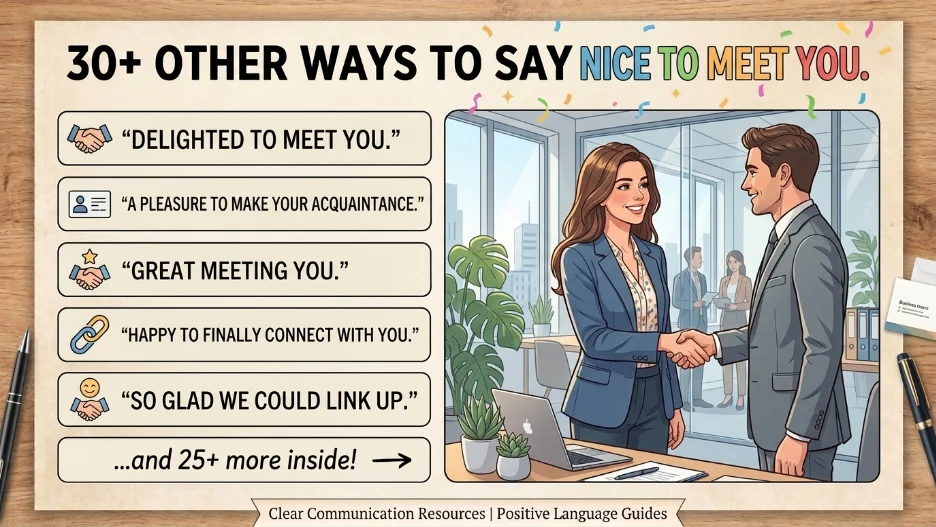
Quick Answer :Looking for alternatives to “nice to meet you”? Here are 5 top options: “Pleased to meet you,” “It’s a pleasure to meet you,” “Great to meet you,” “Lovely to meet you,” and “Delighted to make your acquaintance.”
The phrase “nice to meet you” is a standard English pleasantry used when meeting someone for the first time. While perfectly polite, using it repeatedly can feel monotonous and may not always match the tone of the situation .
Learning alternatives to “nice to meet you” helps you sound more fluent, confident, and context aware. Whether you need to express excitement in English during a job interview or keep it casual at a social gathering, having options at your disposal demonstrates language sophistication .
Quick Categories
Formal Alternatives to “Nice to Meet You”
- “It’s a pleasure to meet you”
- “Pleased to make your acquaintance”
- “Delighted to meet you”
- “I’m honored to meet you”
Casual Alternatives
- “Great to meet you”
- “Lovely to meet you”
- “Nice meeting you”
- “Good to meet you”
Professional Alternatives
- “It’s great to connect with you”
- “I appreciate meeting you”
- “Thank you for taking the time to meet”
- “It’s been a pleasure”
Informal Expressions
- “So glad we met”
- “Happy to meet you”
- “Finally we meet”
- “I’ve heard so much about you”
Pro Tip: Match your phrase to the setting. Formal alternatives build credibility in business, while casual options build rapport in social situations .
What Does “Nice to Meet You” Mean?
“Nice to meet you” is a polite greeting used when introduced to someone for the first time. It expresses pleasure or satisfaction in making a new acquaintance.
Example: “Hi, I’m Sarah. Nice to meet you.”
When to Use “Nice to Meet You”
- First time introductions
- Professional networking events
- Job interviews
- Social gatherings
- Virtual meetings and emails
- Business conferences
Spoken vs Written: Commonly used in both, but written forms often benefit from more formal alternatives.
Formal vs Informal: Suitable for both, though more formal settings may call for refined alternatives.
Is It Professional or Polite to Say “Nice to Meet You”?
Polite? ✔️ Yes – it’s a standard courteous greeting.
Professional? ❌ Not always – while acceptable, it lacks the polish expected in formal business communication.
Business Example: “Thank you for the opportunity to interview. It’s a pleasure to meet you.”
Common Mistakes to Avoid
- Using it repeatedly in the same conversation
- “Nice to meet you. Nice to meet you too.” → Use variety.
- Using it in formal written correspondence
- ❌ “Nice to meet you via email.”
- ✓ “It’s a pleasure to connect with you.”
- Confusing it with “nice to see you”
- “Nice to see you” is for people you’ve already met.
- Saying it at the end of a first meeting
- “Nice meeting you” works better as a farewell .
- Overusing it in professional introductions
- Clients and colleagues appreciate more sophisticated alternatives.
Pros and Cons of Using “Nice to Meet You”
Pros:
- Simple and universally understood
- Friendly and approachable tone
- Common usage makes it safe
- Easy for English learners to use
Cons:
- Too informal for many professional contexts
- Overused and unmemorable
- Limited emotional range
- Not suitable for formal writing or high stakes meetings
“The right tone makes your English sound professional and confident.”
Other Ways to Say “Nice to Meet You” (With Examples)
These alternatives will help you sound more fluent, confident, and natural in different situations. Use them according to tone, context, and audience to express excitement, admiration, or approval.
1. Phrase: “Pleased to Meet You”
Meaning: A polite, slightly formal way to acknowledge a new introduction.
Explanation: Commonly used in professional and business settings.
Example: “Pleased to meet you, Mr. Thompson. I’ve heard great things about your work.”
Best Use: Business meetings
Worst Use: Casual social events
Tone: Polite, respectful
Context Variability: Professional interviews, networking events, formal introductions
2. Phrase: “It’s a Pleasure to Meet You”
Meaning: Expresses genuine happiness and respect in meeting someone.
Explanation: One of the most versatile formal alternatives.
Example: “It’s a pleasure to meet you, Dr. Ahmed. I’ve admired your research.”
Best Use: Professional settings
Worst Use: Casual chats with friends
Tone: Warm, courteous
Context Variability: Interviews, client meetings, formal social events
3. Phrase: “Delighted to Make Your Acquaintance”
Meaning: A graceful, classic expression of meeting someone new.
Explanation: Adds sophistication and elegance to introductions.
Example: “I’m delighted to make your acquaintance. Your reputation precedes you.”
Best Use: Highly formal occasions
Worst Use: Everyday conversations
Tone: Formal, elegant
Context Variability: Diplomatic events, formal correspondence, prestigious gatherings
4. Phrase: “Great to Meet You”
Meaning: A friendly and upbeat way to acknowledge a new connection.
Explanation: Works well in both casual and professional settings.
Example: “Great to meet you! I’ve heard a lot about your projects.”
Best Use: Informal professional settings
Worst Use: Very formal business meetings
Tone: Friendly, approachable
Context Variability: Networking events, casual introductions, team meetings
5. Phrase: “Lovely to Meet You”
Meaning: A warm and charming expression that adds a personal touch.
Explanation: Conveys genuine warmth and friendliness.
Example: “Lovely to meet you! I hope we get to chat more.”
Best Use: Social gatherings
Worst Use: Highly formal corporate settings
Tone: Warm, kind
Context Variability: Friendly introductions, parties, informal networking
6. Phrase: “It’s Great to Connect with You”
Meaning: Acknowledges meeting someone in a modern, professional context.
Explanation: Especially suitable for virtual meetings and LinkedIn connections .
Example: “It’s great to connect with you, Sarah. I’ve heard wonderful things about your marketing work.”
Best Use: Virtual or professional introductions
Worst Use: In person social events
Tone: Professional, polished
Context Variability: Zoom calls, emails, LinkedIn messages
7. Phrase: “I’ve Been Looking Forward to Meeting You”
Meaning: Shows anticipation and genuine excitement about the meeting.
Explanation: Demonstrates you value the person’s time and reputation.
Example: “I’ve been looking forward to meeting you and hearing your perspective.”
Best Use: Planned meetings
Worst Use: Unexpected encounters
Tone: Enthusiastic, respectful
Context Variability: Interviews, conferences, mentorship meetings
8. Phrase: “I’m Honored to Meet You”
Meaning: Conveys deep respect when meeting someone influential.
Explanation: Reserved for individuals you truly admire or respect.
Example: “I’m honored to meet you, Professor. Your work has inspired my career.”
Best Use: Meeting role models
Worst Use: Casual introductions
Tone: Highly respectful
Context Variability: Mentors, leaders, public figures
9. Phrase: “Glad to Meet You”
Meaning: A simple and friendly alternative.
Explanation: Works in both formal and informal contexts.
Example: “Glad to meet you, David! I hope we can collaborate soon.”
Best Use: Everyday conversations
Worst Use: Extremely formal events
Tone: Cheerful, friendly
Context Variability: Social events, casual meetings, quick introductions
10. Phrase: “It’s Wonderful to Meet You”
Meaning: A heartfelt expression of genuine pleasure.
Explanation: Adds warmth and sincerity beyond the standard phrase.
Example: “It’s wonderful to meet you! I truly enjoyed our talk.”
Best Use: Warm or personal introductions
Worst Use: Quick, rushed meetings
Tone: Sincere, positive
Context Variability: Meaningful encounters, first time meetings with an instant connection
11. Phrase: “Pleased to Make Your Acquaintance”
Meaning: A polished, traditional way to acknowledge a new introduction.
Explanation: Formal and refined, often used in business or written correspondence .
Example: “I’m pleased to make your acquaintance, Ms. Lee.”
Best Use: Professional settings
Worst Use: Informal gatherings
Tone: Formal, respectful
Context Variability: Interviews, formal letters, business introductions
12. Phrase: “Excited to Meet You”
Meaning: Conveys enthusiasm and positivity about the meeting.
Explanation: A modern, upbeat alternative for informal settings .
Example: “I’m so excited to meet you in person after all our email exchanges!”
Best Use: Casual, upbeat introductions
Worst Use: Conservative professional settings
Tone: Energetic, friendly
Context Variability: Creative meetings, team gatherings, online to offline introductions
13. Phrase: “Nice to Finally Meet You”
Meaning: Expresses satisfaction after prior communication.
Explanation: Perfect when you’ve interacted online or through others.
Example: “Nice to finally meet you! I’ve heard so much about you.”
Best Use: Meeting after virtual contact
Worst Use: First time, no context meetings
Tone: Friendly, genuine
Context Variability: LinkedIn connections, email exchanges, referral introductions
14. Phrase: “Great Meeting You”
Meaning: A casual, upbeat expression often used after a pleasant interaction.
Explanation: Works well for networking and friendly encounters.
Example: “Great meeting you today! Let’s stay in touch.”
Best Use: After informal meetings
Worst Use: Formal follow ups
Tone: Energetic, friendly
Context Variability: Networking events, conferences, after meeting conversations
15. Phrase: “It’s Been a Pleasure”
Meaning: Conveys appreciation for the time spent together.
Explanation: Often used at the end of professional meetings or in follow up messages.
Example: “It’s been a pleasure working with you on this project.”
Best Use: End of meetings
Worst Use: Opening conversations
Tone: Respectful, polished
Context Variability: Business farewells, closing emails, client meetings
16. Phrase: “Happy to Meet You”
Meaning: A cheerful way to express positivity when meeting someone.
Explanation: Simple and approachable for any first introduction.
Example: “Happy to meet you, John! I’ve heard wonderful things about your creative projects.”
Best Use: Everyday conversations
Worst Use: Serious professional settings
Tone: Cheerful, friendly
Context Variability: Social events, casual introductions, friendly meetings
17. Phrase: “Thrilled to Meet You”
Meaning: Expresses deep excitement and enthusiasm.
Explanation: Use when you feel genuinely glad or honored to meet someone significant.
Example: “I’m absolutely thrilled to meet you, Professor James! Your work has inspired me for years.”
Best Use: Meeting admired individuals
Worst Use: Casual encounters
Tone: Excited, sincere
Context Variability: Mentors, celebrities, industry leaders
18. Phrase: “What a Pleasure It Was Meeting You”
Meaning: A charming and polite variation for follow ups.
Explanation: Works well in thank you notes and after conversation messages.
Example: “What a pleasure it was meeting you yesterday. I truly enjoyed our discussion.”
Best Use: Professional follow ups
Worst Use: Immediate introductions
Tone: Polite, thoughtful
Context Variability: Emails, thank you notes, follow up messages
19. Phrase: “It’s Lovely to Finally Meet You”
Meaning: Expresses happiness upon meeting someone face to face after virtual contact.
Explanation: Perfect for online to offline introductions.
Example: “It’s lovely to finally meet you after all our virtual meetings!”
Best Use: Hybrid or online work contexts
Worst Use: First time meetings without prior contact
Tone: Warm, relatable
Context Variability: Remote teams, hybrid work, online to in person meetings
20. Phrase: “Nice Getting to Know You”
Meaning: Suggests a deeper connection beyond just an introduction.
Explanation: Indicates the conversation allowed some personal understanding.
Example: “It was nice getting to know you! I really enjoyed hearing about your journey.”
Best Use: After friendly meetings
Worst Use: Quick introductions
Tone: Gentle, personal
Context Variability: Meaningful conversations, after extended chats, personal networking
21. Phrase: “So Glad We Met”
Meaning: A cheerful and warm version emphasizing genuine delight.
Explanation: Emphasizes friendliness and approachability.
Example: “I’m so glad we met at last! I’ve been looking forward to this conversation.”
Best Use: Any introduction needing warmth
Worst Use: Formal business settings
Tone: Positive, sincere
Context Variability: Social events, friendly networking, meaningful encounters
22. Phrase: “Grateful to Meet You”
Meaning: A humble expression of appreciation for the meeting.
Explanation: Shows thankfulness for the connection.
Example: “I’m grateful to meet you, Dr. Khan. Your insights mean a lot to me.”
Best Use: Formal or meaningful introductions
Worst Use: Quick or casual meetings
Tone: Respectful, appreciative
Context Variability: Mentorship, professional connections, meaningful interactions
23. Phrase: “Delighted to Connect”
Meaning: A polished, professional alternative.
Explanation: Expresses happiness in building a new relationship.
Example: “I’m delighted to connect, Rachel! Looking forward to working together.”
Best Use: Virtual or professional settings
Worst Use: In person social events
Tone: Professional, polished
Context Variability: Emails, LinkedIn, professional networking
24. Phrase: “Great Crossing Paths with You”
Meaning: A thoughtful expression for chance encounters.
Explanation: Suggests the meeting felt special or meaningful.
Example: “It was great crossing paths with you today! Hope we meet again soon.”
Best Use: Casual, spontaneous meetings
Worst Use: Professional emails
Tone: Warm, light hearted
Context Variability: Social events, conferences, unplanned meetings
25. Phrase: “It’s a Privilege to Meet You”
Meaning: Shows deep respect and appreciation.
Explanation: Ideal for meeting someone of higher status or achievement.
Example: “It’s a privilege to meet you—I’ve long admired your work in the field.”
Best Use: High stakes conversations
Worst Use: Everyday introductions
Tone: Highly respectful
Context Variability: Executives, leaders, influential figures
26. Phrase: “I Appreciate Meeting You”
Meaning: A respectful way to acknowledge the meeting opportunity.
Explanation: Shows gratitude for the person’s time.
Example: “I appreciate meeting you and learning more about your work.”
Best Use: Business and interviews
Worst Use: Social or casual meetings
Tone: Respectful, sincere
Context Variability: Professional follow ups, interviews, business meetings
27. Phrase: “I Enjoyed Our Conversation”
Meaning: Warm and direct, feels more personal while remaining professional.
Explanation: Shows you valued the interaction.
Example: “I enjoyed our conversation and appreciated your thoughtful responses.”
Best Use: After meaningful discussions
Worst Use: Brief introductions
Tone: Personal, professional
Context Variability: Networking follow ups, professional discussions, after meetings
28. Phrase: “Nice to E Meet You”
Meaning: Acknowledges meeting someone in a virtual context.
Explanation: Used for online introductions and virtual connections .
Example: “Nice to e meet you! Looking forward to collaborating.”
Best Use: Virtual meetings
Worst Use: In person introductions
Tone: Modern, casual
Context Variability: Zoom calls, virtual events, online networking
29. Phrase: “I’m Grateful for the Opportunity to Meet”
Meaning: A polite, reflective expression of thanks.
Explanation: Works well in professional and email contexts.
Example: “Thank you again. I’m grateful for the opportunity to meet and learn from you.”
Best Use: Formal written communication
Worst Use: Quick social greetings
Tone: Polite, respectful
Context Variability: Formal emails, post interview messages, professional follow ups
30. Phrase: “Great to Connect Virtually”
Meaning: Acknowledges the online nature of the meeting positively.
Explanation: Modern, friendly alternative for remote meetings.
Example: “Great to connect virtually! I enjoyed our discussion.”
Best Use: Virtual meetings and calls
Worst Use: In person meetings
Tone: Friendly, professional
Context Variability: Zoom calls, webinars, video conferences
31. Phrase: “I’ve Heard Great Things About You”
Meaning: Compliments the person while expressing pleasure in meeting.
Explanation: Builds instant rapport and trust.
Example: “I’ve heard great things about you from the team.”
Best Use: Meeting influential people
Worst Use: When not true
Tone: Complimentary, respectful
Context Variability: Referrals, networking, professional introductions
32. Phrase: “So Lovely Connecting with You”
Meaning: A soft, gentle expression of pleasure in the interaction.
Explanation: Great for friendly, caring communication.
Example: “So lovely connecting with you—hope we talk again soon.”
Best Use: Personal, warm conversations
Worst Use: Strictly professional emails
Tone: Soft, gentle
Context Variability: Social connections, warm networking, friendly chats
“Building your vocabulary with these alternatives helps you communicate with confidence and professionalism in any situation.”
Mini Quiz / Self Check
1. You’re meeting a senior executive for the first time. Which phrase is most appropriate?
- A) “Great to meet you!”
- B) “It’s a pleasure to meet you.” ✓
- C) “Nice meeting you!”
2. You’ve been emailing with a colleague for weeks and finally meet in person. What should you say?
- A) “Pleased to make your acquaintance.”
- B) “Nice to finally meet you!” ✓
- C) “Lovely to meet you!”
3. You’re at a casual party and meet a friend of a friend. Which is best?
- A) “Delighted to make your acquaintance.”
- B) “Great to meet you!” ✓
- C) “It’s a privilege to meet you.”
4. What phrase should you AVOID at the beginning of a first meeting?
- A) “Nice meeting you” ✓
- B) “Pleased to meet you”
- C) “Great to meet you”
Comparison Table: Top Alternatives
| Phrase | Tone | Best Use |
| “It’s a pleasure to meet you” | Formal | Professional introductions |
| “Pleased to meet you” | Polite | Business meetings |
| “Great to meet you” | Friendly | Casual networking |
| “Lovely to meet you” | Warm | Social gatherings |
| “Delighted to make your acquaintance” | Elegant | Formal occasions |
| “I’ve been looking forward to meeting you” | Enthusiastic | Planned meetings |
| “It’s great to connect with you” | Professional | Virtual meetings |
| “I’m honored to meet you” | Highly respectful | Meeting role models |
| “Nice to finally meet you” | Genuine | After prior contact |
| “Glad to meet you” | Simple | Everyday situations |
FAQs
1. Is “The Author States” grammatically correct?
Yes. “The author states” is grammatically correct and widely used to introduce an author’s ideas in academic writing.
2. What is the difference between “Claims” and “Argues”?
“Claims” presents a statement or assertion, while “argues” indicates the author supports an idea with reasons or evidence.
3. Can I use “The Author States” in professional emails?
It’s acceptable, but phrases like “According to the report” or “The document notes” often sound more natural in business writing.
4. What is the most formal alternative to “The Author States”?
Formal alternatives include “The author asserts,” “The author contends,” and “The author posits.”
5. How many times can I use “The Author States” in an essay?
Use it sparingly and alternate with similar expressions to improve readability and avoid repetition.
Conclusion
Learning alternatives to “nice to meet you” is a simple yet powerful way to enhance your English communication skills. Whether you need formal alternatives for professional settings or casual expressions for social situations, having variety in your vocabulary helps you sound more fluent, confident, and culturally aware.
Practice using these phrases daily, paying attention to the tone and context of each situation. Remember, the right expression can transform a basic introduction into a memorable connection.

Stephen King is an American writer and language enthusiast who enjoys creating clear, practical content that helps readers communicate with confidence. His work at QuickResponsess.com focuses on making English easier to understand through simple explanations and everyday examples.