Quick Answer 🔥
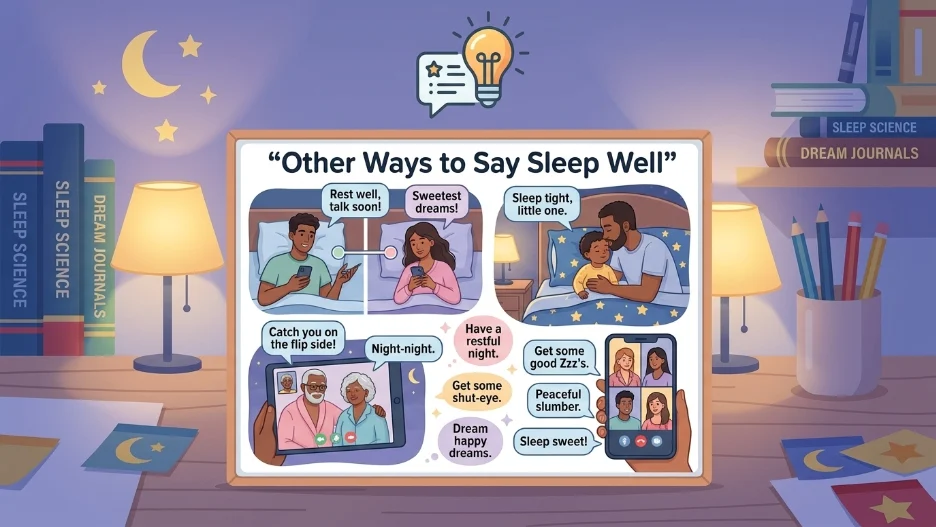
Rest easy, Sweet dreams, Sleep tight, Have a restful night, Sleep peacefully.
Finding other ways to say sleep well can make your conversations sound warmer, more thoughtful, and more natural. While “sleep well” is a common and polite expression, English offers many alternatives that suit different situations, whether you’re talking to a friend, a family member, a coworker, or someone special. Choosing the right phrase can add personality and make your goodnight wishes feel more sincere.
In this guide, you’ll discover a variety of other ways to say sleep well, along with their meanings, tone, and example sentences. Whether you need a formal expression for professional communication or a sweet message for a loved one, these alternatives will help you expand your vocabulary and express your goodnight wishes with confidence.
Quick Categories
Formal Alternatives to “Sleep Well”
- Have a restful night
- May you enjoy a peaceful night’s rest
- Wishing you a restorative sleep
- I trust you’ll sleep soundly
- May your night be filled with tranquility
Pro Tip: In a formal email, pair the wish with a professional closing like “Looking forward to our meeting tomorrow” to maintain a business tone.
Casual Alternatives to “Sleep Well”
- Sleep tight
- Catch some Z’s
- Hit the hay
- Nighty night
- Snooze well
Pro Tip: These are perfect for text messages with friends or family. They add a playful, lighthearted touch.
Professional Alternatives to “Sleep Well”
- Rest well and recharge
- I hope you get good rest
- Have a good night’s rest
- Rest up for tomorrow
Pro Tip: Use these with coworkers or in professional settings. They are polite but not overly intimate.
Informal & Playful Expressions
- Don’t let the bedbugs bite
- Sleep like a baby
- Dream of me
- Sleep like a log
- Go to the land of Nod
Pro Tip: Save these for close friends and family. They can feel too personal or childish for professional use.
Common Mistakes to Avoid
- Using “good” instead of “well”: Saying “I slept good” is grammatically incorrect. Use “well” as the adverb.
- Incorrect: “I slept good last night.”
- Correct: “I slept well last night.”
- Using the wrong tone: Saying “Don’t let the bedbugs bite” in a formal email to a client is inappropriate.
- Incorrect: “Looking forward to your feedback. Don’t let the bedbugs bite!”
- Correct: “Looking forward to your feedback. Have a restful night.”
- Overusing “Sleep tight”: It’s a great phrase, but it can become repetitive in close relationships.
- Incorrect: Every night: “Sleep tight, sleep tight, sleep tight.”
- Correct: “Sleep tight,” “Sweet dreams,” “Rest easy.”
- Forgetting the possessive:
- Incorrect: “Have a good night sleep.”
- Correct: “Have a good night’s sleep.”
- Misreading the relationship: Using “Dream of me” with a casual acquaintance can be awkward.
- Incorrect: “Okay, talk tomorrow. Dream of me!”
- Correct: “Okay, talk tomorrow. Sleep well!”
What Does “Sleep Well” Mean?
“Sleep well” is a friendly, caring expression used to wish someone a peaceful, restful sleep. It functions as a polite farewell at the end of the day and is a standard way to express good wishes for a restorative night.
Example: “Good night, sleep well, and see you in the morning!”
When to Use “Sleep Well”
“Sleep well” is versatile and fits many situations. Use it when:
- Saying goodnight to family or friends at home.
- Ending a phone call or video chat in the evening.
- Wishing colleagues well as you finish a late shift.
- Leaving a conversation with someone heading to bed.
- Writing a simple, kind message without needing to be formal or overly creative.
| Spoken | Written | |
| Formal | Occasionally, if close | Rarely |
| Informal | Very Common | Very Common |
Is It Professional or Polite to Say “Sleep Well”?
“Sleep well” is polite, but it is not professional in most formal business settings.
In a professional context, a wish for someone’s sleep can feel too personal. It’s better to use a more neutral closing.
- Polite? ✔️ Yes
- Professional? ❌ No (in most cases)
Business style example: “Thank you for your time today. I hope you have a pleasant evening and look forward to continuing our discussion tomorrow.”
Pros and Cons of Using “Sleep Well”
Pros
- Simple and natural: Everyone understands it.
- Friendly tone: Shows care without being overbearing.
- Common usage: You can never go wrong with it.
- Easy to understand: It’s clear and unambiguous.
Cons
- Too informal for work: Best kept for personal relationships.
- Overused: It can become repetitive.
- Limited emotional range: It doesn’t convey deep affection or playfulness.
- Not suitable for formal writing: Avoid in business letters or formal correspondence.
Other Ways to Say “Sleep Well” (With Examples)
These alternatives will help you sound more fluent, confident, and natural in different situations. Use them according to tone, context, and audience to express excitement, admiration, or approval.
1. Phrase: Rest Easy
Meaning: Wishing for a calm and worry free sleep.
Explanation: Suggests letting go of stress and relaxing completely.
Example Sentence: “I know you’ve been stressed—just rest easy tonight.”
Best Use: Close friends
Worst Use: Professional emails
Tone: Reassuring, comforting
Context Variability: Casual / Spoken
2. Phrase: Sleep Tight
Meaning: A traditional, affectionate wish for a comfortable sleep.
Explanation: Traditionally referred to tightening bed ropes; now means being cozy and secure.
Example Sentence: “Goodnight, sweetheart. Sleep tight!”
Best Use: Family, children
Worst Use: Formal settings
Tone: Affectionate, warm
Context Variability: Casual / Spoken
3. Phrase: Sweet Dreams
Meaning: Hoping for pleasant and joyful dreams.
Explanation: A gentle, caring phrase focusing on the quality of someone’s dreams.
Example Sentence: “Goodnight! Sweet dreams.”
Best Use: Loved ones, close friends
Worst Use: Professional colleagues
Tone: Gentle, caring
Context Variability: Casual / Spoken & Written
4. Phrase: Have a Restful Night
Meaning: A polite way to wish for undisturbed, peaceful sleep.
Explanation: Suggests that the person will be able to relax and recharge.
Example Sentence: “Take care of yourself and have a restful night.”
Best Use: Professional, polite
Worst Use: Playful texts
Tone: Polite, supportive
Context Variability: Professional & Casual / Spoken & Written
5. Phrase: Sleep Peacefully
Meaning: Wishing for a calm and tranquil night’s rest.
Explanation: Emphasizes emotional and physical tranquility during sleep.
Example Sentence: “You’ve had a tough day—sleep peacefully tonight.”
Best Use: Comforting someone
Worst Use: Lighthearted chats
Tone: Soothing, calm
Context Variability: Casual / Spoken
6. Phrase: Rest Well
Meaning: A straightforward way to wish someone good rest.
Explanation: Focuses on the restorative aspect of sleep.
Example Sentence: “You deserve it. Rest well!”
Best Use: Family, close friends
Worst Use: Formal writing
Tone: Caring, considerate
Context Variability: Casual / Spoken & Written
7. Phrase: Sleep Soundly
Meaning: Wishing for deep, undisturbed sleep.
Explanation: Implies a night of complete peace without interruptions.
Example Sentence: “Sleep soundly and I’ll see you in the morning.”
Best Use: Informal settings
Worst Use: Work emails
Tone: Relaxed, thoughtful
Context Variability: Casual / Spoken
8. Phrase: May Your Sleep Be Peaceful
Meaning: A more formal, heartfelt wish for a tranquil sleep.
Explanation: A gracious and elegant way to express good wishes for the night.
Example Sentence: “May your sleep be peaceful and your dreams sweet.”
Best Use: Polite, formal contexts
Worst Use: Texting friends
Tone: Gentle, formal
Context Variability: Formal / Written & Spoken
9. Phrase: Wishing You a Peaceful Night’s Sleep
Meaning: Hoping for a night of quiet and calm rest.
Explanation: An intentional, caring phrase often used in written messages.
Example Sentence: “Sending warm wishes for a peaceful night’s sleep.”
Best Use: Emails, cards
Worst Use: Quick chats
Tone: Thoughtful, caring
Context Variability: Formal & Casual / Written
10. Phrase: Sleep Like a Baby
Meaning: Wishing for a deep, uninterrupted sleep.
Explanation: Refers to the peaceful, sound sleep of a baby.
Example Sentence: “Goodnight! Sleep like a baby and wake up refreshed!”
Best Use: Close relationships
Worst Use: Professional settings
Tone: Friendly, lighthearted
Context Variability: Casual / Spoken
11. Phrase: Catch Some Z’s
Meaning: A playful, informal way to say “get some sleep.”
Explanation: “Z’s” are a common cartoon representation of sleep.
Example Sentence: “Looks like you need to catch some Z’s. See you tomorrow.”
Best Use: Friends, siblings
Worst Use: Professional emails
Tone: Playful, casual
Context Variability: Casual / Spoken & Written
12. Phrase: Hit the Hay
Meaning: A casual idiom meaning to go to bed.
Explanation: Refers to old mattresses often stuffed with hay.
Example Sentence: “It’s late, I’m going to hit the hay.”
Best Use: Very informal
Worst Use: Any formal setting
Tone: Very casual
Context Variability: Casual / Spoken
13. Phrase: Don’t Let the Bedbugs Bite
Meaning: A playful, traditional saying wishing someone a good night.
Explanation: A humorous rhyme often used with children or close friends.
Example Sentence: “Sleep tight, don’t let the bedbugs bite!”
Best Use: Children, close friends
Worst Use: Professional or formal
Tone: Playful, affectionate
Context Variability: Casual / Spoken
14. Phrase: Recharge Tonight
Meaning: Encouraging the person to rest and regain energy.
Explanation: Uses a modern metaphor for sleep as a way to “recharge batteries.”
Example Sentence: “You have a long day tomorrow, recharge tonight.”
Best Use: Encouraging context
Worst Use: Romantic messages
Tone: Motivational
Context Variability: Professional & Casual / Spoken
15. Phrase: May the Night Bring You Peace
Meaning: Wishing for emotional calm and inner peace during sleep.
Explanation: A compassionate phrase for someone who may be troubled.
Example Sentence: “I know today was hard. May the night bring you peace.”
Best Use: Comforting someone
Worst Use: Casual conversation
Tone: Comforting, soothing
Context Variability: Casual / Spoken
16. Phrase: Get Some Rest
Meaning: A direct, encouraging way to suggest sleeping or relaxing.
Explanation: Universally used and understood.
Example Sentence: “You look tired. Get some rest.”
Best Use: Everyone
Worst Use: N/A
Tone: Neutral, friendly
Context Variability: Universal / Spoken
17. Phrase: Have a Good Night’s Sleep
Meaning: A standard, polite phrase for a good sleep.
Explanation: A grammatically correct and friendly alternative.
Example Sentence: “I hope you have a good night’s sleep after such a long day!”
Best Use: Most situations
Worst Use: Formal writing
Tone: Neutral, polite
Context Variability: Universal / Spoken
18. Phrase: Sleep in Peace
Meaning: A more formal, heartfelt wish for a calm night.
Explanation: Focuses on the stillness and tranquility of sleep.
Example Sentence: “Sleep in peace tonight and wake up feeling better.”
Best Use: Formal, polite
Worst Use: Lighthearted texts
Tone: Calm, respectful
Context Variability: Formal & Casual / Spoken
19. Phrase: May You Have Sweet Dreams
Meaning: A more affectionate version of “sweet dreams.”
Explanation: Adds a layer of warmth and well wishing.
Example Sentence: “Goodnight, may you have sweet dreams!”
Best Use: Loved ones
Worst Use: Professional contexts
Tone: Warm, loving
Context Variability: Casual / Spoken
20. Phrase: Enjoy a Restful Night
Meaning: Encouraging someone to enjoy their sleep.
Explanation: A kind, reassuring phrase.
Example Sentence: “Enjoy a restful night, you’ve earned it!”
Best Use: Casual, after a long day
Worst Use: Very formal emails
Tone: Reassuring, kind
Context Variability: Casual / Spoken
21. Phrase: Sleep Safely
Meaning: A loving wish for secure rest.
Explanation: Often used when someone is traveling or feeling anxious.
Example Sentence: “Sleep safely tonight. I’m just a call away.”
Best Use: Long distance, anxious contexts
Worst Use: Casual, everyday
Tone: Reassuring, caring
Context Variability: Casual / Spoken
22. Phrase: Nighty Night
Meaning: A childish, affectionate way to say goodnight.
Explanation: Very informal and often used with children or in a playful manner.
Example Sentence: “Time for bed! Nighty night!”
Best Use: Children, playful
Worst Use: Professional settings
Tone: Playful, affectionate
Context Variability: Casual / Spoken
23. Phrase: Lights Out
Meaning: A direct, sometimes humorous way to say bedtime.
Explanation: Suggests the turning off of lights to sleep.
Example Sentence: “Okay, lights out. Time to sleep.”
Best Use: Casual, humorous
Worst Use: Formal contexts
Tone: Direct, playful
Context Variability: Casual / Spoken
24. Phrase: Drift Off to Dreamland
Meaning: A poetic way to wish for a peaceful journey into sleep.
Explanation: “Dreamland” refers to a state of sleep where dreams occur.
Example Sentence: “Lie back, close your eyes, and drift off to dreamland.”
Best Use: Loved ones, children
Worst Use: Professional contexts
Tone: Poetic, lighthearted
Context Variability: Casual / Spoken
25. Phrase: May Your Sleep Be Deep
Meaning: Wishing for restorative, deep sleep.
Explanation: Focuses on the quality and depth of the sleep.
Example Sentence: “Close your eyes and may your rest be deep and healing.”
Best Use: Heartfelt messages
Worst Use: Casual, quick chats
Tone: Nurturing, poetic
Context Variability: Casual / Spoken
26. Phrase: Let Your Mind Rest
Meaning: Encouraging mental relaxation alongside physical rest.
Explanation: A compassionate phrase for those who overthink.
Example Sentence: “You’ve been thinking nonstop—let your mind rest tonight.”
Best Use: Over thinkers, stressed individuals
Worst Use: Generic goodnight
Tone: Caring, thoughtful
Context Variability: Casual / Spoken
27. Phrase: Get a Full Night’s Rest
Meaning: Emphasizing the importance of adequate sleep.
Explanation: Suggests getting enough hours of uninterrupted sleep.
Example Sentence: “Try to get a full night’s rest before your presentation.”
Best Use: Supportive advice
Worst Use: Romantic messages
Tone: Encouraging
Context Variability: Professional & Casual / Spoken
28. Phrase: Enjoy Your Slumber
Meaning: A slightly formal way to wish someone a good sleep.
Explanation: “Slumber” is a formal synonym for sleep.
Example Sentence: “Thank you for a lovely evening. Enjoy your slumber.”
Best Use: Formal, polite
Worst Use: Playful texts
Tone: Elegant, formal
Context Variability: Formal / Spoken
29. Phrase: I Hope You Get Good Rest
Meaning: A sincere, straightforward wish.
Explanation: A direct and caring way to say sleep well.
Example Sentence: “I know you’re tired. I hope you get good rest.”
Best Use: Most contexts
Worst Use: Very formal writing
Tone: Sincere, friendly
Context Variability: Universal / Spoken
30. Phrase: Have a Tranquil Night
Meaning: Wishing for a calm, quiet, and restful evening.
Explanation: “Tranquil” emphasizes peace and relaxation.
Example Sentence: “May you have a tranquil night and wake up with a smile.”
Best Use: Polite, formal contexts
Worst Use: Casual texting
Tone: Peaceful, polite
Context Variability: Formal & Casual / Spoken
Mini Quiz / Self Check
Test your understanding of these alternatives:
- You are sending a goodnight text to a close friend who has had a stressful week. Which phrase is most appropriate?
- A) I hope you have a restful night.
- B) Sleep tight.
- C) Rest easy.
- D) All of the above.
- Which phrase is best for a work email to a colleague?
- A) Sweet dreams.
- B) Catch some Z’s.
- C) Have a pleasant evening.
- D) Don’t let the bedbugs bite.
- You want to be playful with your partner. Which phrase works best?
- A) Sleep soundly.
- B) Dream of me.
- C) Get some rest.
- D) I trust you’ll have a peaceful night.
- Which statement is grammatically correct?
- A) I slept good last night.
- B) I had a good night sleep.
- C) I slept well last night.
- D) I had a good restful night.
Comparison Table: Top Alternatives
| Phrase | Tone | Best Use |
| Rest Easy | Reassuring | Comforting stressed friends |
| Sleep Tight | Affectionate | Family and children |
| Sweet Dreams | Gentle, Caring | Loved ones and close friends |
| Have a Restful Night | Polite, Supportive | Professional and formal contexts |
| Sleep Peacefully | Soothing, Calm | Comforting someone after a tough day |
| Rest Well | Caring, Considerate | Family and close friends |
| Sleep Soundly | Relaxed | Informal settings |
| May Your Sleep Be Peaceful | Gentle, Formal | Polite or formal goodnights |
| Wishing You a Peaceful Night’s Sleep | Thoughtful | Emails and cards |
| Sleep Like a Baby | Lighthearted | Close relationships |
Frequently Asked Questions
Is “sleep well” grammatically correct?
Yes. “Well” is an adverb modifying the verb “sleep,” so saying “sleep well” is grammatically correct.
What are other ways to say “sleep well”?
There are many alternatives, including rest well, sweet dreams, sleep tight, have a restful night, and sleep peacefully.
Can I say “sleep well” in professional emails?
It is generally too personal for formal business emails. Opt for neutral closings like “Have a pleasant evening” or “I hope you have a restful night.”
Is “sleep tight” an old expression?
Yes. The phrase originates from the practice of tightening the ropes on old style beds to make them more comfortable.
Is it “good night sleep” or “good night’s sleep”?
The correct phrase is “good night’s sleep,” which uses the possessive apostrophe.
Conclusion
Expanding your repertoire of bedtime wishes is a simple way to improve your fluency and emotional expression in English. Learning alternatives to “sleep well” allows you to choose the perfect phrase for any situation, from a professional email to a romantic goodnight.
Practice using these different expressions in your daily conversations. The key to sounding natural is understanding the tone and context of each phrase, ensuring your words match the relationship you have with the person you are speaking to.
- Other Ways to Say “Sweet Dreams”
- Professional English Email Writing Guide

Sally Rooney is an American writer who contributes to QuickResponsess.com, creating clear and practical content for English learners. Her articles help readers build confidence in using words and expressions accurately in everyday and professional communication.