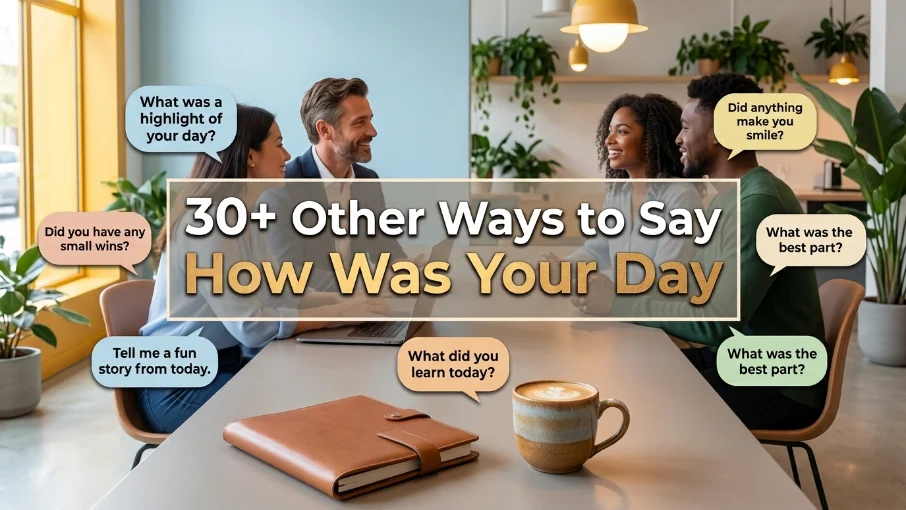
Here are 5 top alternatives: “How did everything go today?”, “What was the highlight of your day?”, “How are you holding up?”, “What have you been up to today?”, and “How’s your day been treating you?”
“How was your day?” is the default greeting we use with family, friends, and colleagues. It’s simple, well intentioned, and universally understood. Yet, it often leads to the same predictable response: “Fine” or “Good.”
Learning alternatives to “how was your day” transforms dull exchanges into genuine conversations. It signals that you truly care about the other person’s experiences, not just fulfilling a social script. Whether you want to express excitement in English or show deeper empathy, varying your questions builds stronger connections and improves your fluency .
Quick Categories
Formal Alternatives
- How did everything go today?
- How has your day been progressing?
- I hope your day has been productive
- How are things on your end?
Casual Alternatives
- What did you get up to today?
- How’s your day going so far?
- What’s new with you today?
- How’s life treating you?
Professional Alternatives
- How did your day unfold?
- Was today productive for you?
- How are things going with your projects?
- How’s everything on your end?
Informal Expressions
- What made you smile today?
- Any highlights from your day?
- What’s been the best part?
- How are you holding up?
Pro Tip: Match your question to your relationship with the person. A close friend or family member deserves warmer, more personal phrasing than a professional acquaintance .
What Does “How Was Your Day?” Mean?
“How was your day?” is a question used to ask about someone’s experiences, emotions, or activities during the day. It’s a common conversation starter that shows interest in the person’s well being .
Example: “Hi, honey! How was your day at work?”
When to Use “How Was Your Day?”
- ✅ When greeting someone you know well after work or school
- ✅ As a daily check in with family or roommates
- ✅ In casual conversations with friends
- ✅ Over text messages with acquaintances
- ❌ In formal business emails (use alternatives instead)
- ❌ When you want deeper, more meaningful responses
Is It Professional or Polite to Say “How Was Your Day?”
Polite? ✔️ Yes – Asking about someone’s day is courteous and shows care.
Professional? ❌ No (in most cases) – In formal or business contexts, this phrasing can feel too casual. Instead, try: “I hope you’ve had a productive day. How are things progressing?”
Pros and Cons of Using “How Was Your Day?”
Pros ✅
- Simple and natural – everyone understands it
- Friendly and approachable
- Common usage makes it easy to use
- Safe choice with most people
Cons ❌
- Too informal for professional settings
- Overused – can feel robotic
- Limited emotional range
- Often leads to one word answers
Common Mistakes
- Using it in formal business correspondence
- ❌ “How was your day?” in an email to a client
- ✅ “I hope you’re having a productive week. How are things progressing?”
- Expecting deep responses from acquaintances
- ❌ “How was your day?” to a colleague you barely know
- ✅ “How’s your week going so far?”
- Repeating it daily with the same person
- ❌ Asking every single day
- ✅ Vary with “What made you smile today?” or “What was the highlight?”
- Using it when someone is visibly upset
- ❌ “How was your day?” to someone clearly stressed
- ✅ “How are you holding up today?”
- Not following up on previous conversations
- ❌ Ignoring what they shared yesterday
- ✅ “How did that meeting go you mentioned yesterday?”
“The right question opens the door to real conversation. It shows you’re not just making small talk—you genuinely care.”
Other Ways to Say “How Was Your Day?” (30+ Examples)
These alternatives help you sound more fluent, confident, and natural in different situations. Use them according to tone, context, and audience to create meaningful conversations.
1. Phrase: How did everything go today?
Meaning: A gentle, open ended question about the events of the day.
Explanation: Invites the person to share both positive and challenging experiences without pressure .
Example: “Hey, how did everything go today at the office?”
Best Use: Casual conversations
Worst Use: Very formal settings
Tone: Warm, open
Context Variability:
- Casual: “So, how did everything go today?”
- Professional: “How did everything go with the client presentation?”
2. Phrase: What was the highlight of your day?
Meaning: Asks the person to share the best moment of their day.
Explanation: Encourages positive reflection and often leads to uplifting conversations .
Example: “Before we head to dinner, what was the highlight of your day?”
Best Use: Close friends, partners
Worst Use: Formal emails
Tone: Positive, engaging
Context Variability:
- Spoken: “Tell me, what was the highlight of your day?”
- Written: “What was the highlight of your day at work yesterday?”
3. Phrase: How are you holding up?
Meaning: A compassionate question showing concern for someone’s emotional state.
Explanation: Perfect when you sense someone might be tired, stressed, or overwhelmed .
Example: “You’ve had such a long week. How are you holding up?”
Best Use: When someone’s stressed
Worst Use: Light, casual chats
Tone: Empathetic, caring
Context Variability:
- Spoken: “How are you holding up with everything?”
- Professional: “How are you holding up with your current workload?”
4. Phrase: What have you been up to today?
Meaning: A friendly inquiry about someone’s activities during the day.
Explanation: Sounds curious and less robotic than the standard phrase .
Example: “Hey, what have you been up to today? Anything exciting?”
Best Use: Friends, family
Worst Use: Formal writing
Tone: Curious, light
Context Variability:
- Casual: “So what have you been up to today?”
- Text: “What have you been up to today? Miss you!”
5. Phrase: How’s your day been treating you?
Meaning: A creative twist asking how their day has felt, not just what happened.
Explanation: Shifts focus from activities to emotions, showing deeper care .
Example: “You look a bit tired. How’s your day been treating you?”
Best Use: Friendly chats
Worst Use: Formal business emails
Tone: Friendly, empathetic
Context Variability:
- Spoken: “How’s the day been treating you at the new job?”
- Professional: “How has your week been treating you so far?”
6. Phrase: Did anything exciting happen today?
Meaning: Asks if something notable or interesting occurred.
Explanation: Encourages energetic conversation and storytelling .
Example: “You seem cheerful! Did anything exciting happen today?”
Best Use: Lively conversations
Worst Use: Professional meetings
Tone: Playful, positive
Context Variability:
- Casual: “Tell me, did anything exciting happen today?”
- Text: “Anything exciting happen today? I want to hear!”
7. Phrase: How’s everything going for you today?
Meaning: A balanced way to ask about both mood and events.
Explanation: Works in almost any setting, from casual to professional .
Example: “I haven’t checked in with you in a while. How’s everything going for you today?”
Best Use: Any setting
Worst Use: Very formal reports
Tone: Neutral, polite
Context Variability:
- Casual: “How’s everything going for you lately?”
- Professional: “How’s everything going with the project?”
“The most powerful conversations start with questions that show you truly want to listen.”
8. Phrase: What made you smile today?
Meaning: A beautiful, positive question focusing on joyful moments.
Explanation: Encourages gratitude and reflection, creating warm dialogue .
Example: “Before bed, tell me what made you smile today.”
Best Use: Partners, close friends
Worst Use: Professional contexts
Tone: Gentle, uplifting
Context Variability:
- Spoken: “I love hearing good news. What made you smile today?”
- Written: “I was thinking about you. What made you smile today?”
9. Phrase: How are things on your end?
Meaning: A professional yet friendly check in on someone’s situation.
Explanation: Balances friendliness and professionalism perfectly .
Example: “Just checking in. How are things on your end with the project?”
Best Use: Work chats, long distance friends
Worst Use: Very personal conversations
Tone: Professional, respectful
Context Variability:
- Professional: “How are things on your end of the business?”
- Casual: “How are things on your end these days?”
10. Phrase: What kind of day did you have?
Meaning: An open ended question inviting an honest description.
Explanation: Allows the person to share freely without assumptions .
Example: “Hey, what kind of day did you have? Busy or relaxing?”
Best Use: Close relationships
Worst Use: Formal settings
Tone: Gentle, open
Context Variability:
- Spoken: “What kind of day have you had, really?”
- Professional: “What kind of day did you have with the team?”
11. Phrase: How was your day at work/school?
Meaning: A more specific version tailored to their routine.
Explanation: Shows you remember their commitments and care about details .
Example: “How was your day at work? You had that big meeting, right?”
Best Use: Specific contexts
Worst Use: When they’re not working/studying
Tone: Attentive, caring
Context Variability:
- Spoken: “How was school today?”
- Professional: “How was work this week?”
12. Phrase: Was today productive for you?
Meaning: Checking in on how successful or efficient their day was.
Explanation: Acknowledges their workload and asks about accomplishments .
Example: “You had a packed schedule. Was today productive for you?”
Best Use: Work, goal oriented chats
Worst Use: Casual friend conversations
Tone: Professional, encouraging
Context Variability:
- Professional: “Was today productive for you and the team?”
- Casual: “Did you feel productive today?”
13. Phrase: What did you get up to today?
Meaning: A playful, relaxed way to ask about their activities.
Explanation: Sound casual and fun without being too direct .
Example: “So, what did you get up to today? Anything fun?”
Best Use: Friends, casual chats
Worst Use: Professional settings
Tone: Playful, relaxed
Context Variability:
- Spoken: “What did you get up to this weekend?”
- Text: “What did you get up to today? 😊”
14. Phrase: How’s your evening going?
Meaning: A time specific check in later in the day.
Explanation: Shows you’re thinking about their comfort and relaxation .
Example: “Hey, how’s your evening going after that long day?”
Best Use: Evening conversations
Worst Use: Morning chats
Tone: Relaxed, affectionate
Context Variability:
- Spoken: “How’s your night treating you?”
- Text: “How’s your evening going so far?”
15. Phrase: How did your day start?
Meaning: A more specific inquiry about the beginning of their day.
Explanation: Makes your question more personal and fresh .
Example: “How did your day start? I hope your morning wasn’t too rushed.”
Best Use: Morning chats, catching up
Worst Use: End of day conversations
Tone: Friendly, personal
Context Variability:
- Spoken: “How did your morning go?”
- Written: “How did your day start today?”
“When you ask the right question, you invite genuine connection. Your words matter.”
16. Phrase: How are you feeling about today?
Meaning: A deeper question focusing on emotions, not just events.
Explanation: Encourages honest emotional sharing beyond surface level talk .
Example: “I can tell something’s on your mind. How are you feeling about today?”
Best Use: Close relationships
Worst Use: Casual conversations
Tone: Thoughtful, caring
Context Variability:
- Spoken: “How are you feeling after everything?”
- Professional: “How are you feeling about the project’s progress?”
17. Phrase: What was the best part of your day?
Meaning: Encourages sharing a positive moment from their day.
Explanation: Makes the conversation uplifting and helps them focus on good things .
Example: “I want to hear something good. What was the best part of your day?”
Best Use: Positive chats
Worst Use: When they’re upset
Tone: Positive, uplifting
Context Variability:
- Spoken: “Tell me the best thing that happened today.”
- Written: “What was the best part of your day yesterday?”
18. Phrase: Tell me about your day.
Meaning: A completely open ended prompt for sharing.
Explanation: Gives them control over what and how much they share .
Example: “You look tired. Tell me about your day—what happened?”
Best Use: Close friends, partners
Worst Use: Professional settings
Tone: Open, inviting
Context Variability:
- Spoken: “Tell me about today—I’m listening.”
- Text: “Tell me about your day when you have a moment.”
19. Phrase: How did your day turn out?
Meaning: Asks about the outcome of their day, especially after something important.
Explanation: Works well when you know they had a specific event or challenge .
Example: “You had that interview this morning. How did your day turn out?”
Best Use: Following up on events
Worst Use: Routine conversations
Tone: Curious, warm
Context Variability:
- Spoken: “So, how did everything turn out today?”
- Written: “How did your day turn out after the meeting?”
20. Phrase: How’s your mood today?
Meaning: A direct inquiry about their emotional state.
Explanation: Shows deep care beyond surface level daily events .
Example: “I want to check in with you. How’s your mood today?”
Best Use: Emotional check ins
Worst Use: Light conversations
Tone: Supportive, caring
Context Variability:
- Spoken: “How are you feeling right now?”
- Professional: “How’s the team’s mood today?”
21. Phrase: How’s life treating you these days?
Meaning: A broader question about overall well being, not just today.
Explanation: Extends care beyond one day and shows long term concern .
Example: “It’s been a while! How’s life treating you these days?”
Best Use: Reconnecting
Worst Use: Formal work emails
Tone: Thoughtful, caring
Context Variability:
- Spoken: “How’s life been treating you lately?”
- Written: “How’s life treating you these days?”
22. Phrase: What’s something new that happened today?
Meaning: Asks about something fresh or different in their day.
Explanation: Encourages sharing interesting details they might otherwise forget .
Example: “What’s something new that happened today? I love hearing about your days.”
Best Use: Friends, partners
Worst Use: Professional contexts
Tone: Curious, engaging
Context Variability:
- Spoken: “Any new developments today?”
- Text: “What’s something new that happened today?”
23. Phrase: What kind of vibe did today have?
Meaning: A fun, modern way to ask about the atmosphere of their day.
Explanation: Sounds casual and cool while inviting descriptive answers .
Example: “Was today chill or chaotic? What kind of vibe did it have?”
Best Use: Friends, casual chats
Worst Use: Professional settings
Tone: Playful, modern
Context Variability:
- Spoken: “What was the energy like today?”
- Written: “What kind of vibe did today have?”
24. Phrase: How are you feeling about the day ending?
Meaning: Asks about their emotional state as the day wraps up.
Explanation: Perfect for evening conversations and deeper reflection .
Example: “As the day wraps up, how are you feeling about everything?”
Best Use: Evening chats
Worst Use: Professional emails
Tone: Warm, reflective
Context Variability:
- Spoken: “How do you feel now that the day’s over?”
- Text: “How are you feeling about today ending?”
25. Phrase: How did everything go with [specific event]?
Meaning: A personalized follow up question about something they mentioned.
Explanation: Shows you listen and genuinely care about their life .
Example: “How did everything go with your presentation today?”
Best Use: Specific follow ups
Worst Use: When you don’t know their schedule
Tone: Attentive, caring
Context Variability:
- Spoken: “How did your doctor’s appointment go?”
- Professional: “How did the client meeting go today?”
26. Phrase: How’s your energy today?
Meaning: A thoughtful question about their well being and energy levels.
Explanation: Shows care beyond surface level chit chat .
Example: “You’ve been so busy lately. How’s your energy today?”
Best Use: Supportive check ins
Worst Use: Very casual settings
Tone: Supportive, caring
Context Variability:
- Spoken: “How are you feeling energy wise?”
- Professional: “How’s the team’s energy today?”
27. Phrase: I hope your day was good. What happened?
Meaning: Combines care with an open invitation to share.
Explanation: Shows positive expectations and genuine curiosity.
Example: “I hope your day was good. What happened that made it special?”
Best Use: Warm conversations
Worst Use: Formal work settings
Tone: Warm, encouraging
Context Variability:
- Spoken: “I hope today was kind to you. What happened?”
- Written: “I hope your day was good. Tell me about it!”
28. Phrase: What did you enjoy most about today?
Meaning: Encourages focusing on the most enjoyable moment.
Explanation: Shifts conversation toward positive reflection .
Example: “What did you enjoy most about today, even if it was small?”
Best Use: Gratitude focused chats
Worst Use: Professional reports
Tone: Positive, uplifting
Context Variability:
- Spoken: “What was the most enjoyable part of today?”
- Text: “What did you enjoy most about today?”
29. Phrase: Did your day go as planned?
Meaning: Asks whether their day matched their expectations.
Explanation: Great for people who had a specific schedule or goals .
Example: “You had a tight schedule today. Did your day go as planned?”
Best Use: Goal oriented people
Worst Use: Very casual settings
Tone: Curious, attentive
Context Variability:
- Professional: “Did your day go as planned with your deliverables?”
- Spoken: “Did today work out how you expected?”
30. Phrase: How did today compare to yesterday?
Meaning: A comparative question about their daily experience.
Explanation: Opens conversation about patterns or changes .
Example: “How did today compare to yesterday? Better or worse?”
Best Use: Friends, partners
Worst Use: Professional settings
Tone: Curious, thoughtful
Context Variability:
- Spoken: “Is today better than yesterday?”
- Text: “How did today compare to yesterday?”
“Great conversation isn’t about asking better questions—it’s about making people feel truly heard.”
Mini Quiz / Self Check
1. What’s the best question to ask a colleague after a stressful meeting?
A) “How was your day?”
B) “How are you holding up?”
C) “What made you smile today?”
Answer: B – “How are you holding up?” shows empathy and care
2. Which question is most appropriate for a formal business email?
A) “What did you get up to today?”
B) “How’s life treating you?”
C) “How are things progressing with the project?”
Answer: C – It’s professional and specific
3. You’re texting a close friend who seems down. What would you ask?
A) “How was your day?”
B) “How are you feeling about today?”
C) “Was today productive for you?”
Answer: B – Shows deeper emotional care
4. Which phrase is best for a positive, uplifting conversation?
A) “What was the highlight of your day?”
B) “Was today productive?”
C) “How are you holding up?”
Answer: A – Encourages focusing on good moments
Comparison Table: Top 10 Alternatives
| Phrase | Tone | Best Use |
| How did everything go today? | Warm, open | Casual chats |
| What was the highlight of your day? | Positive, engaging | Close friends, partners |
| How are you holding up? | Empathetic, caring | When someone’s stressed |
| What have you been up to today? | Curious, light | Friends, family |
| How’s your day been treating you? | Friendly, empathetic | Work chats |
| Did anything exciting happen today? | Playful, positive | Lively conversations |
| How’s everything going for you today? | Neutral, polite | Any setting |
| What made you smile today? | Gentle, uplifting | Partners, close friends |
| How are things on your end? | Professional, respectful | Work, long distance friends |
| How did your day turn out? | Curious, warm | Following up on events |
FAQs
1. What’s a professional way to say “How was your day?”
Use phrases like “How are things going?” or “I hope you’ve had a productive day.” They sound friendly and professional.
2. How do I ask “How was your day?” in a text message?
Keep it casual with questions like “How’s your day going?” or “What have you been up to today?”
3. What are some alternatives to “How was your day?” for deeper conversations?
Ask “What was the best part of your day?” or “How are you feeling today?” to encourage more meaningful responses.
4. Is “How was your day?” considered professional?
It’s fine in casual workplace conversations, but “How are things on your end?” or “How’s everything going?” sounds more professional.
5. How can I avoid getting the same boring response every day?
Ask specific or open-ended questions, such as “What was the highlight of your day?” or “Did anything interesting happen today?
Conclusion
Mastering alternative ways to ask “How was your day?” is a simple yet powerful way to level up your English communication. These 30+ options help you show genuine interest, express care appropriately, and build stronger connections in every conversation.
Start small. Tomorrow, try just one new question with a friend or colleague. Notice how it changes their response and deepens your connection. The key is matching your question to the person, context, and your relationship.

Sally Rooney is an American writer who contributes to QuickResponsess.com, creating clear and practical content for English learners. Her articles help readers build confidence in using words and expressions accurately in everyday and professional communication.