Quick Answer 🔥
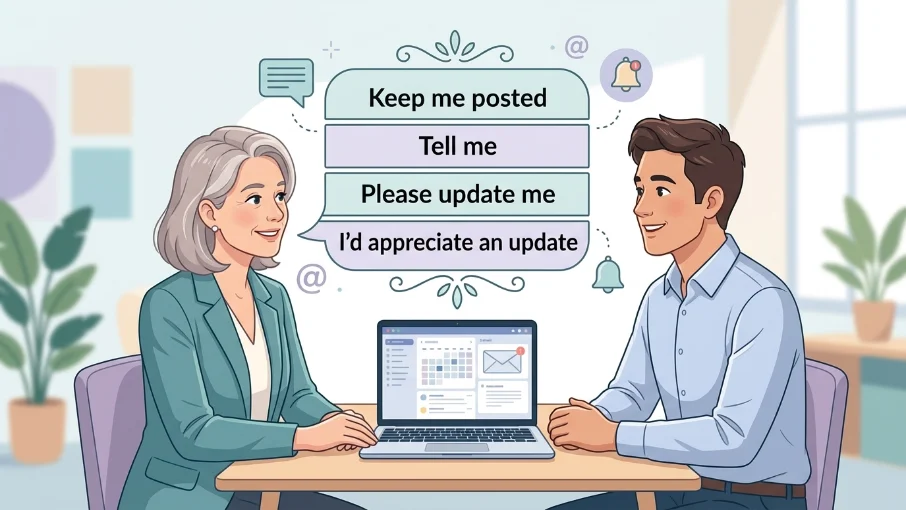
Looking for alternatives to “let me know”? Try these top picks: Keep me posted, Please inform me, Keep me in the loop, I’d appreciate your feedback, and Touch base with me.
“Let me know” is one of the most common English phrases used to ask for information, feedback, or confirmation. It’s simple, direct, and works in countless situations from casual texts to professional emails.
However, using the same phrase repeatedly can make your English sound limited or robotic. Learning alternatives to “let me know” helps you communicate with greater precision and adaptability. Whether you want to sound more professional, express genuine interest, or simply avoid repetition, expanding your vocabulary transforms how others perceive you .
Let’s explore 30 powerful alternatives that will elevate your English communication skills.
Quick Categories
Formal Alternatives to “Let Me Know”
- Please inform me
- Please notify me
- Keep me advised
- I would appreciate being updated
- Please keep me informed
Professional Alternatives
- Please advise
- Keep me updated
- Keep me in the loop
- Touch base with me
- I’d appreciate your feedback
Casual Alternatives
- Keep me posted
- Drop me a line
- Give me a heads up
- Fill me in
- Ping me
Informal Expressions
- Give me a shout
- Hit me up
- LMK (texting abbreviation)
- Give me the lowdown
What Does “Let Me Know” Mean?
“Let me know” is a polite request asking someone to share information, provide an update, or give feedback. It signals interest and openness while inviting communication .
Key grammar point: The phrase typically precedes a noun clause (what, if, when, whether) or a noun.
Example: “Please let me know if you can attend the meeting.”
“The right tone makes your English sound professional and confident.”
When to Use “Let Me Know”
Common contexts include:
- Asking for availability or scheduling preferences
- Requesting feedback on work or ideas
- Seeking confirmation about decisions
- Inquiring about progress or updates
Spoken vs Written: Used extensively in both. More common in spoken English and informal written communication.
Formal vs Informal: Neutral but leans informal. For formal writing, consider alternatives like “please inform me” or “kindly notify me” .
Is It Professional or Polite to Say “Let Me Know”?
Polite? ✔️ Yes – it’s courteous and widely accepted.
Professional? ❌ Not always – it can sound too casual in formal business writing.
Business style example: “Please let me know your availability for next week’s meeting.”
While perfectly acceptable in most situations, using more formal alternatives can enhance your professional image in official correspondence .
Pros and Cons of Using “Let Me Know”
Pros
- Simple and natural – easy for all English levels
- Friendly tone – builds rapport
- Common usage – universally understood
- Easy to understand – no confusion
Cons
- Too informal for work – may lack professionalism
- Overused – repetitive and generic
- Limited emotional range – doesn’t convey enthusiasm
- Not suitable for formal writing – better alternatives exist
30 Other Ways to Say “Let Me Know” (With Examples)
These alternatives will help you sound more fluent, confident, and natural in different situations. Use them according to tone, context, and audience to communicate more effectively.
1. Phrase: Keep me posted
Meaning: Provide ongoing updates as things progress.
Explanation: A friendly and casual way to request continuous information.
Example Sentence: “Keep me posted on how the project goes—I’d love to hear how it turns out.”
Best Use: Ongoing projects
Worst Use: Formal legal documents
Tone: Warm, conversational, supportive
Context Variability: Great for casual and semi professional situations
2. Phrase: Please inform me
Meaning: Formally request information or notification.
Explanation: Uses more formal vocabulary, ideal for business and official communication.
Example Sentence: “Please inform me of your decision at your earliest convenience.”
Best Use: Business emails
Worst Use: Texting friends
Tone: Formal, direct, respectful
Context Variability: Primarily professional correspondence
3. Phrase: Keep me in the loop
Meaning: Include me in ongoing communications and decisions.
Explanation: Emphasizes collaboration and being part of the process.
Example Sentence: “Please keep me in the loop as things move forward with the client.”
Best Use: Team projects
Worst Use: One time requests
Tone: Professional, collaborative
Context Variability: Strong in workplace settings
4. Phrase: I’d appreciate your feedback
Meaning: I value your opinion and would like to hear it.
Explanation: Shows humility and respect for the other person’s perspective.
Example Sentence: “I’d appreciate your feedback on this draft before I send it out.”
Best Use: Review requests
Worst Use: Casual chats
Tone: Polite, respectful, collaborative
Context Variability: Professional, academic, and creative contexts
5. Phrase: Please advise
Meaning: Request guidance or a decision from someone with authority.
Explanation: A direct, professional phrase commonly used when seeking direction.
Example Sentence: “Could you please advise on how you would like to proceed?”
Best Use: Emailing supervisors
Worst Use: Friendly conversations
Tone: Formal, business like
Context Variability: Workplace emails, especially when seeking decisions
6. Phrase: Keep me updated
Meaning: Let me know when new information becomes available.
Explanation: Clear and concise, works well in professional settings.
Example Sentence: “Keep me updated once the team has finalized the schedule.”
Best Use: Status tracking
Worst Use: Personal chats
Tone: Professional, efficient
Context Variability: Strong in business communication
7. Phrase: Touch base with me
Meaning: Connect briefly to share updates or discuss progress.
Explanation: A professional idiom common in workplace settings.
Example Sentence: “Let’s touch base next week to finalize the next steps.”
Best Use: Check in meetings
Worst Use: Urgent matters
Tone: Professional, approachable
Context Variability: Primarily workplace environments
8. Phrase: Drop me a line
Meaning: Send a short message when you have time.
Explanation: Informal, friendly way to ask for contact.
Example Sentence: “Drop me a line when you’re free—I’d love to catch up.”
Best Use: Friends and colleagues
Worst Use: Formal business correspondence
Tone: Warm, friendly, relaxed
Context Variability: Casual and personal communication
9. Phrase: Please notify me
Meaning: Formally request official notification.
Explanation: Precise and suitable for official, legal, or formal contexts.
Example Sentence: “Please notify me once the application has been processed.”
Best Use: Official notifications
Worst Use: Friendly chats
Tone: Formal, precise
Context Variability: Official, legal, and corporate communication
10. Phrase: Let me know your thoughts
Meaning: I’d like your opinion or perspective.
Explanation: Invites open discussion and shows you value their insight.
Example Sentence: “Here’s the revised outline—let me know your thoughts when you have a minute.”
Best Use: Seeking opinions
Worst Use: Scheduling requests
Tone: Open, friendly, cooperative
Context Variability: Works in most professional and personal contexts
11. Phrase: Keep me advised
Meaning: Provide regular updates on developments.
Explanation: A more formal version of “keep me posted.”
Example Sentence: “Please keep me advised of any changes to the project timeline.”
Best Use: Formal business settings
Worst Use: Casual conversations
Tone: Professional, formal
Context Variability: Corporate and official communication
12. Phrase: I’d love to hear back from you
Meaning: I’m genuinely interested in your response.
Explanation: Adds warmth and personal touch to requests.
Example Sentence: “I’d love to hear back from you when you get a chance.”
Best Use: Follow up emails
Worst Use: Urgent deadlines
Tone: Kind, open, encouraging
Context Variability: Friendly professional and personal contexts
13. Phrase: Give me a heads up
Meaning: Provide advance warning or early notification.
Explanation: Casual phrase implying notice before something happens.
Example Sentence: “Give me a heads up if anything changes before the meeting.”
Best Use: Advance warnings
Worst Use: Formal reports
Tone: Friendly, casual
Context Variability: Informal and semi professional situations
14. Phrase: I’d be grateful if you could let me know
Meaning: A very polite way to request information.
Explanation: Adds extra warmth and respect to your request.
Example Sentence: “I’d be grateful if you could let me know your thoughts on this proposal.”
Best Use: Formal requests
Worst Use: Short messages
Tone: Respectful, humble, professional
Context Variability: Formal emails and sensitive requests
15. Phrase: Update me
Meaning: Share new information with me.
Explanation: Simple and direct, works well in time sensitive situations.
Example Sentence: “Please update me once you receive the final numbers.”
Best Use: Status updates
Worst Use: Seeking opinions
Tone: Direct, professional
Context Variability: Workplace communication
16. Phrase: Fill me in
Meaning: Provide details or catch me up on something.
Explanation: Casual phrase suggesting sharing complete information.
Example Sentence: “Fill me in on what happened at the client meeting.”
Best Use: Catching up
Worst Use: Formal contexts
Tone: Casual, friendly
Context Variability: Informal and semi professional
17. Phrase: Could you update me when you get a chance?
Meaning: Politely request information at the recipient’s convenience.
Explanation: Shows patience and respect for the other person’s time.
Example Sentence: “Could you update me when you get a chance? No rush at all.”
Best Use: Considerate requests
Worst Use: Urgent matters
Tone: Courteous, soft, professional
Context Variability: Professional communication valuing politeness
18. Phrase: I’d love your input
Meaning: I want your ideas or feedback.
Explanation: Emphasizes respect and collaboration.
Example Sentence: “I’d love your input on how we can make this presentation more engaging.”
Best Use: Collaborative work
Worst Use: Simple confirmations
Tone: Warm, inclusive, encouraging
Context Variability: Creative and team settings
19. Phrase: Reach out to me
Meaning: Contact me when you need to.
Explanation: Encourages connection while keeping communication open.
Example Sentence: “Feel free to reach out to me if you have any questions.”
Best Use: Offering help
Worst Use: Scheduling
Tone: Polite, approachable
Context Variability: Professional and semi formal situations
20. Phrase: Get back to me
Meaning: Respond when you have information.
Explanation: Direct call to action without being pushy.
Example Sentence: “Please get back to me by Friday with your decision.”
Best Use: Expecting responses
Worst Use: Ongoing updates
Tone: Direct, polite
Context Variability: Professional emails and requests
21. Phrase: Keep me abreast
Meaning: Keep me informed about the latest developments.
Explanation: Formal phrase indicating desire for continuous updates.
Example Sentence: “Keep me abreast of any developments with the new client.”
Best Use: Formal settings
Worst Use: Casual conversations
Tone: Professional, formal
Context Variability: Corporate and official communication
22. Phrase: Share any updates with me
Meaning: Pass along any new information.
Explanation: Clear and polite way to request information sharing.
Example Sentence: “Share any updates with me as they come in.”
Best Use: Information sharing
Worst Use: Decisions
Tone: Polite, professional
Context Variability: Professional communication
23. Phrase: Give me a shout
Meaning: Contact me, especially by phone or message.
Explanation: Very casual and friendly way to ask for contact.
Example Sentence: “Give me a shout when you’re free to discuss the project.”
Best Use: Casual chats
Worst Use: Formal settings
Tone: Casual, friendly
Context Variability: Informal and personal communication
24. Phrase: Respond at your convenience
Meaning: Reply when it suits you.
Explanation: Emphasizes respect for the recipient’s schedule.
Example Sentence: “Please respond at your convenience regarding the proposal.”
Best Use: Flexible requests
Worst Use: Deadlines
Tone: Polite, formal
Context Variability: Formal and considerate communication
25. Phrase: Please confirm
Meaning: Verify or acknowledge receipt or agreement.
Explanation: Direct and professional way to request verification.
Example Sentence: “Please confirm your attendance for next week’s meeting.”
Best Use: Confirmations
Worst Use: Open ended questions
Tone: Direct, professional
Context Variability: Official and business communication
26. Phrase: Let me know your availability
Meaning: Tell me when you are free.
Explanation: Specific request useful for scheduling.
Example Sentence: “Let me know your availability for a call next week.”
Best Use: Scheduling
Worst Use: Feedback requests
Tone: Polite, professional
Context Variability: Meeting and appointment setting
27. Phrase: Alert me
Meaning: Tell me about something important or urgent.
Explanation: Suggests urgency or importance of the information.
Example Sentence: “Alert me immediately if there are any issues with the system.”
Best Use: Urgent matters
Worst Use: Routine updates
Tone: Formal, urgent
Context Variability: Critical or time sensitive situations
28. Phrase: LMK
Meaning: Texting abbreviation for “let me know.”
Explanation: Popular in informal digital communication.
Example Sentence: “I just emailed you my draft, LMK what you think.”
Best Use: Texting
Worst Use: Formal emails
Tone: Casual, tech savvy
Context Variability: Text messages and online chats
29. Phrase: Notify me
Meaning: Inform me officially.
Explanation: Formal and concise, suitable for official communication.
Example Sentence: “Notify me once the documents are ready for review.”
Best Use: Official notifications
Worst Use: Informal chats
Tone: Formal, precise
Context Variability: Professional and official communication
30. Phrase: Ping me
Meaning: Send me a quick message, especially via chat.
Explanation: Modern, tech friendly phrase for instant messaging.
Example Sentence: “Ping me when you’ve finished the report.”
Best Use: IM/chat
Worst Use: Formal settings
Tone: Casual, tech savvy
Context Variability: Workplace messaging and digital communication
Common Mistakes to Avoid
- Being too informal in formal contexts
“Please keep me posted” in a legal letter instead of “Please inform me.” - Using “let me know” for immediate requests
“Let me know if you can help me right now” should be “Can you help me right now?” - Forgetting to specify what information you want
“Let me know” without context vs. “Let me know if Friday works.” - Using LMK in professional emails
“LMK your thoughts” instead of “Please let me know your thoughts.” - Repeating the same phrase too often
Using “let me know” five times in one email instead of varying expressions.
Mini Quiz: Test Your Knowledge
1. Which phrase would you use in a formal business email to a client?
A) Give me a shout
B) Please inform me
C) Ping me
D) Hit me up
Answer: B) Please inform me
2. You’re texting a colleague about a project update. Which is most appropriate?
A) Keep me advised
B) Please inform me
C) Keep me posted
D) Please notify me
Answer: C) Keep me posted
3. Which phrase is too casual for a job application follow up?
A) I’d appreciate your feedback
B) Please notify me
C) Give me a heads up
D) Please keep me informed
Answer: C) Give me a heads up
4. You need to schedule a meeting with your boss. What’s the best choice?
A) Touch base with me
B) Let me know your availability
C) Drop me a line
D) Give me a shout
Answer: B) Let me know your availability
Comparison Table: Top 10 Alternatives
| Phrase | Tone | Best Use |
| Please inform me | Formal | Business emails |
| Keep me posted | Casual | Ongoing projects |
| Keep me in the loop | Professional | Team communication |
| I’d appreciate your feedback | Polite | Review requests |
| Please advise | Formal | Seeking decisions |
| Touch base with me | Professional | Check ins |
| Keep me updated | Professional | Status tracking |
| Drop me a line | Casual | Friendly follow ups |
| Please notify me | Formal | Official notifications |
| Let me know your thoughts | Friendly | Seeking opinions |
FAQs
1. What is a professional way to say “let me know”?
Professional alternatives include “please inform me,” “please advise,” “keep me updated,” and “please notify me” .
2. Is “let me know” grammatically correct?
Yes, it’s grammatically correct and widely used in both spoken and written English.
3. What does “LMK” mean?
LMK is the texting abbreviation for “let me know,” commonly used in informal digital communication .
4. Can I use “let me know” in a formal email?
While acceptable, it’s better to use more formal alternatives like “please inform me” or “kindly advise” in official correspondence .
5. What’s the difference between “keep me posted” and “keep me informed”?
“Keep me posted” is more casual, while “keep me informed” is more formal and business like .
Conclusion
Mastering alternatives to “let me know” is a simple yet powerful way to elevate your English communication. Each alternative carries a different tone and serves a unique purpose, helping you match your language to any situation—from casual texts to formal business correspondence .
Practice using these expressions daily and pay attention to tone and context. The more you vary your vocabulary, the more fluent, confident, and professional you’ll sound. Which alternative will you try first?
See also:
- Other Ways to Say “Thank You” – [link to article]
- Professional English Communication Guide – [link to article]

Sally Rooney is an American writer who contributes to QuickResponsess.com, creating clear and practical content for English learners. Her articles help readers build confidence in using words and expressions accurately in everyday and professional communication.