Quick answer:
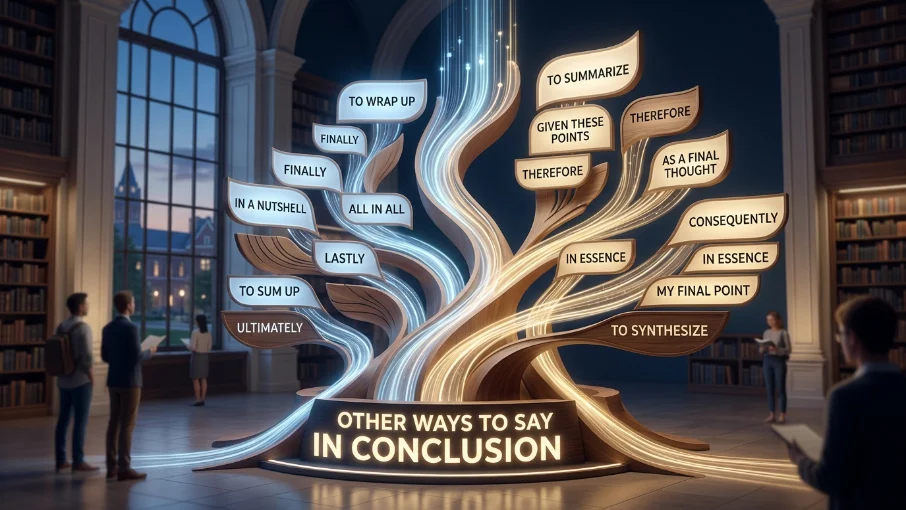
Other ways to say in conclusion include: in summary, to sum up, ultimately, all in all, and in closing. These alternatives help you vary your language while maintaining professionalism.
The phrase “in conclusion” is a classic transitional phrase that signals the end of your argument or presentation. While it’s widely understood and accepted, using it repeatedly can make your communication feel mechanical and uninspired. Understanding alternatives to in conclusion allows you to match your tone to any situation whether you’re writing a business report, giving a speech, or composing an academic paper.
Learning other ways to say in conclusion expands your linguistic toolkit and demonstrates advanced language proficiency. By incorporating varied expressions, you can express excitement in English more effectively and maintain your audience’s engagement until the very last word.
Quick Categories
Formal Alternatives to “In Conclusion”
- In summary
- To summarize
- Ultimately
- In closing
- In final analysis
- Given these points
- As demonstrated
Casual Alternatives
- All in all
- In a nutshell
- At the end of the day
- When all is said and done
- For the most part
Professional Alternatives
- To conclude
- In essence
- Finally
- Thus
- Therefore
- In brief
- On the whole
Informal Expressions
- Long story short
- Bottom line
- The takeaway
- Enough said
- That’s all
Common Mistakes to Avoid
- Overusing in a single document
Example: “In conclusion, we need to increase sales. In conclusion, our team has performed well.”
Fix: Vary your transitions to maintain interest. - Using it when you’re not actually concluding
Example: “In conclusion, let me explain our first point.”
Fix: Only use concluding phrases when you’re truly wrapping up. - Being too informal for professional settings
Example: “In conclusion, like, that’s basically it.”
Fix: Match your language to the audience and context. - Introducing new information
Example: “In conclusion, we also need to consider the budget.”
Fix: Summarize existing points; don’t add new content. - Forgetting to connect back to your main argument
Example: “In conclusion, the weather was nice.”
Fix: Always tie your conclusion back to your thesis or main point.
What Does “In Conclusion” Mean?
“In conclusion” is a transitional phrase used to signal the final thoughts of a spoken or written piece. It indicates that the speaker or writer is wrapping up their argument, summarizing key points, or delivering their final verdict. Grammatically, it functions as a sentence adverb, modifying the entire statement that follows.
Example Sentence: “In conclusion, our findings suggest that consistent practice is essential for language mastery.”
When to Use “In Conclusion”
Common contexts:
- Academic essays and research papers
- Business presentations and reports
- Public speeches and formal talks
- Professional emails summarizing discussions
Spoken vs Written: Works effectively in both, but spoken delivery often benefits from more varied expressions.
Formal vs Informal: Generally acceptable in formal settings but can feel stale in creative or casual contexts. Using other ways to say in conclusion can enhance both your professional reaction phrases and everyday communication.
Is It Professional or Polite to Say “In Conclusion”?
- Polite? ✔️ Yes it’s neutral and respectful.
- Professional? ❌ No in most cases, it lacks sophistication.
While perfectly polite, “in conclusion” often sounds like a school essay. For truly professional communication, explore other ways to say in conclusion that demonstrate rhetorical sophistication.
Business Example: “In conclusion, our quarterly performance exceeds projections.” → Better: “Ultimately, our quarterly performance exceeds projections.”
Pros and Cons of Using “In Conclusion”
Pros ✅
- Simple and natural
- Friendly tone
- Common usage
- Easy to understand
Cons ❌
- Too informal for work
- Overused
- Limited emotional range
- Not suitable for formal writing
Other Ways to Say “In Conclusion” (30+ Examples)
These alternatives will help you sound more fluent, confident, and natural in different situations. Use them according to tone, context, and audience to express excitement, admiration, or approval.
Formal Alternatives
1. Phrase: In summary
- Meaning: A concise statement of main points
- Explanation: Signals you’re about to give a brief overview
- Example Sentence: “In summary, our research confirms the initial hypothesis.”
- Best Use: Academic reports
- Worst Use: Casual conversations
- Tone: Academic, precise
- Context Variability: Formal
2. Phrase: To summarize
- Meaning: To give a condensed version of what was said
- Explanation: Clearly indicates you’re providing a summary
- Example Sentence: “To summarize, these three strategies will drive our growth.”
- Best Use: Business presentations
- Worst Use: Friendly chats
- Tone: Professional, direct
- Context Variability: Formal
3. Phrase: Ultimately
- Meaning: After considering everything
- Explanation: Emphasizes the final, most important point
- Example Sentence: “Ultimately, the decision rests with the board.”
- Best Use: Strategic discussions
- Worst Use: Casual texting
- Tone: Decisive, significant
- Context Variability: Professional
4. Phrase: In closing
- Meaning: As I bring this to an end
- Explanation: Traditional alternative used in speeches
- Example Sentence: “In closing, I want to thank everyone for their contributions.”
- Best Use: Public speaking
- Worst Use: Written emails
- Tone: Gracious, formal
- Context Variability: Formal
5. Phrase: In final analysis
- Meaning: After careful examination
- Explanation: Suggests thorough consideration
- Example Sentence: “In final analysis, the data supports our recommendations.”
- Best Use: Research papers
- Worst Use: Daily conversation
- Tone: Analytical, scholarly
- Context Variability: Academic
6. Phrase: Given these points
- Meaning: Considering the evidence presented
- Explanation: Connects evidence to conclusion
- Example Sentence: “Given these points, we should proceed with caution.”
- Best Use: Argumentative writing
- Worst Use: Informal discussions
- Tone: Logical, persuasive
- Context Variability: Formal
7. Phrase: As demonstrated
- Meaning: As has been shown
- Explanation: References previously presented evidence
- Example Sentence: “As demonstrated, the new system improves efficiency.”
- Best Use: Technical reports
- Worst Use: Everyday speech
- Tone: Evidentiary, confident
- Context Variability: Professional
Professional Alternatives
8. Phrase: To conclude
- Meaning: To bring to an end
- Explanation: Direct and professional alternative
- Example Sentence: “To conclude, we recommend implementing these changes.”
- Best Use: Proposals
- Worst Use: Casual contexts
- Tone: Professional, straightforward
- Context Variability: Formal
9. Phrase: In essence
- Meaning: At the core of the matter
- Explanation: Focuses on fundamental truth
- Example Sentence: “In essence, this strategy aligns with our goals.”
- Best Use: Executive summaries
- Worst Use: Informal chats
- Tone: Philosophical, profound
- Context Variability: Professional
10. Phrase: Finally
- Meaning: Last point in sequence
- Explanation: Natural transition to final point
- Example Sentence: “Finally, we must consider customer satisfaction.”
- Best Use: Presentations
- Worst Use: Overly formal writing
- Tone: Sequential, clear
- Context Variability: Versatile
11. Phrase: Thus
- Meaning: As a result
- Explanation: Shows logical consequence
- Example Sentence: “Thus, we can conclude that the project is viable.”
- Best Use: Academic writing
- Worst Use: Spoken conversations
- Tone: Formal, logical
- Context Variability: Formal
12. Phrase: Therefore
- Meaning: For that reason
- Explanation: Indicates logical conclusion
- Example Sentence: “Therefore, we must adapt our approach.”
- Best Use: Argumentative writing
- Worst Use: Casual conversation
- Tone: Conclusive, rational
- Context Variability: Formal
13. Phrase: In brief
- Meaning: In a few words
- Explanation: Signals concise summary
- Example Sentence: “In brief, we need to restructure our team.”
- Best Use: Memos
- Worst Use: Complex topics
- Tone: Concise, practical
- Context Variability: Professional
14. Phrase: On the whole
- Meaning: Considering everything
- Explanation: Balanced, comprehensive conclusion
- Example Sentence: “On the whole, our performance has been satisfactory.”
- Best Use: Business reviews
- Worst Use: Casual settings
- Tone: Analytical, measured
- Context Variability: Professional
Casual Alternatives
15. Phrase: All in all
- Meaning: Everything considered
- Explanation: Warm, friendly summary
- Example Sentence: “All in all, it was a productive meeting.”
- Best Use: Team updates
- Worst Use: Academic papers
- Tone: Friendly, warm
- Context Variability: Casual
16. Phrase: In a nutshell
- Meaning: In few words
- Explanation: Idiomatic expression for brief summary
- Example Sentence: “In a nutshell, we need more resources.”
- Best Use: Explanations
- Worst Use: Formal writing
- Tone: Informal, accessible
- Context Variability: Casual
17. Phrase: At the end of the day
- Meaning: Ultimately, when everything is considered
- Explanation: Popular idiomatic expression
- Example Sentence: “At the end of the day, client satisfaction matters most.”
- Best Use: Workplace conversations
- Worst Use: Formal reports
- Tone: Philosophical, relaxed
- Context Variability: Casual
18. Phrase: When all is said and done
- Meaning: After everything has been considered
- Explanation: Reflects on overall outcome
- Example Sentence: “When all is said and done, we achieved our targets.”
- Best Use: Team meetings
- Worst Use: Academic essays
- Tone: Reflective, conversational
- Context Variability: Casual
19. Phrase: For the most part
- Meaning: Mostly or largely
- Explanation: Concludes with qualification
- Example Sentence: “For the most part, the event was a success.”
- Best Use: Evaluations
- Worst Use: Definite conclusions
- Tone: Measured, realistic
- Context Variability: Versatile
Informal Expressions
20. Phrase: Long story short
- Meaning: To summarize quickly
- Explanation: Signals skipping to the key point
- Example Sentence: “Long story short, we decided to proceed.”
- Best Use: Storytelling
- Worst Use: Professional reports
- Tone: Conversational, casual
- Context Variability: Informal
21. Phrase: Bottom line
- Meaning: The most important point
- Explanation: Focuses on essential outcome
- Example Sentence: “The bottom line is we need to reduce costs.”
- Best Use: Business discussions
- Worst Use: Formal writing
- Tone: Direct, practical
- Context Variability: Informal
22. Phrase: The takeaway
- Meaning: Key point to remember
- Explanation: Modern business expression
- Example Sentence: “The takeaway from today’s presentation is collaboration.”
- Best Use: Modern workplaces
- Worst Use: Academic settings
- Tone: Contemporary, actionable
- Context Variability: Informal
23. Phrase: Enough said
- Meaning: No more explanation needed
- Explanation: Concludes with finality
- Example Sentence: “We’ve made our case. Enough said.”
- Best Use: Quick conclusions
- Worst Use: Formal arguments
- Tone: Decisive, final
- Context Variability: Informal
24. Phrase: That’s all
- Meaning: Complete, no more to add
- Explanation: Simple, straightforward ending
- Example Sentence: “Those are my thoughts. That’s all.”
- Best Use: Daily conversation
- Worst Use: Formal presentations
- Tone: Simple, clear
- Context Variability: Informal
Additional Strong Alternatives
25. Phrase: As a final point
- Meaning: Last item to mention
- Explanation: Signals final thought
- Example Sentence: “As a final point, I’d like to address sustainability.”
- Best Use: Presentations
- Worst Use: Short conversations
- Tone: Structured, clear
- Context Variability: Professional
26. Phrase: In the final analysis
- Meaning: After thorough consideration
- Explanation: Emphasizes depth of thought
- Example Sentence: “In the final analysis, we must prioritize innovation.”
- Best Use: Strategic decisions
- Worst Use: Casual chats
- Tone: Thoughtful, substantial
- Context Variability: Formal
27. Phrase: To wrap up
- Meaning: To bring to a conclusion
- Explanation: Natural, slightly informal
- Example Sentence: “To wrap up, I’ll summarize our achievements.”
- Best Use: Meetings
- Worst Use: Academic papers
- Tone: Conversational, clear
- Context Variability: Professional
28. Phrase: To sum it up
- Meaning: To summarize everything
- Explanation: Direct and understandable
- Example Sentence: “To sum it up, we need better communication.”
- Best Use: Explanations
- Worst Use: Formal writing
- Tone: Accessible, practical
- Context Variability: Professional
29. Phrase: In the end
- Meaning: Finally, after everything
- Explanation: Simple, effective alternative
- Example Sentence: “In the end, it’s about trust.”
- Best Use: Conversations
- Worst Use: Complex arguments
- Tone: Reflective, honest
- Context Variability: Versatile
30. Phrase: The point is
- Meaning: The essential fact to understand
- Explanation: Directly states main argument
- Example Sentence: “The point is our product meets market demand.”
- Best Use: Discussions
- Worst Use: Long-form writing
- Tone: Direct, clear
- Context Variability: Professional
31. Phrase: As we can see
- Meaning: Based on what we’ve observed
- Explanation: Invites audience to connect dots
- Example Sentence: “As we can see, the results are promising.”
- Best Use: Data presentations
- Worst Use: Personal conversations
- Tone: Inclusive, analytical
- Context Variability: Professional
“Your choice of concluding phrase reveals as much about your communication style as the actual conclus
Mini Quiz: Test Your Knowledge
1. Which phrase is most appropriate for an academic paper?
- A) In a nutshell
- B) In summary
- C) Bottom line
- D) Long story short
(Answer: B)
2. What’s the best way to conclude a business presentation?
- A) All in all, great meeting!
- B) Ultimately, the data supports our recommendation.
- C) That’s all, folks!
- D) Enough said.
(Answer: B)
3. Which phrase would be too informal for a formal report?
- A) In conclusion
- B) At the end of the day
- C) Finally
- D) To summarize
(Answer: B)
4. You’re writing a casual email to a colleague. Which conclusion feels most natural?
- A) Thus, we should proceed.
- B) All in all, I think we’re on track.
- C) In final analysis, we need to adjust.
- D) Therefore, our position is clear.
(Answer: B)
Comparison Table: Top 10 Alternatives
| Phrase | Tone | Best Use |
| In summary | Formal | Academic writing |
| Ultimately | Professional | Strategic decisions |
| To conclude | Professional | Business proposals |
| All in all | Casual | Team updates |
| In closing | Formal | Speeches |
| Thus | Formal | Academic argument |
| Bottom line | Informal | Business discussions |
| In essence | Professional | Executive summaries |
| At the end of the day | Casual | Workplace conversations |
| As demonstrated | Formal | Technical reports |
FAQs
1. Is “in conclusion” still acceptable in professional writing?
Yes, it’s still acceptable, but alternatives like “in summary” or “ultimately” often sound more polished.
2. What is the most professional way to say “in conclusion”?
“In summary,” “ultimately,” “to conclude,” and “in essence” are among the most professional alternatives.
3. Can I start a sentence with “ultimately”?
Yes, “ultimately” is a natural and effective way to introduce a final point.
4. What’s the difference between “in conclusion” and “to conclude”?
“To conclude” sounds slightly more formal, while “in conclusion” is more common in academic and general writing.
5. How do I choose which alternative to use?
Choose an alternative based on your audience, purpose, and the level of formality you want to conve
Conclusion
Mastering alternatives to in conclusion is more than memorizing synonyms it’s about understanding tone, context, and audience. Each alternative carries subtle differences in meaning and impact, allowing you to craft conclusions that resonate with your specific audience.
Practice using different conclusions in your daily writing and speech. Pay attention to how native speakers vary their concluding phrases and notice the effect it has on engagement. Remember, the right conclusion leaves a lasting impression make yours memorable by choosing the perfect phrase for every situation.

Sally Rooney is an American writer who contributes to QuickResponsess.com, creating clear and practical content for English learners. Her articles help readers build confidence in using words and expressions accurately in everyday and professional communication.