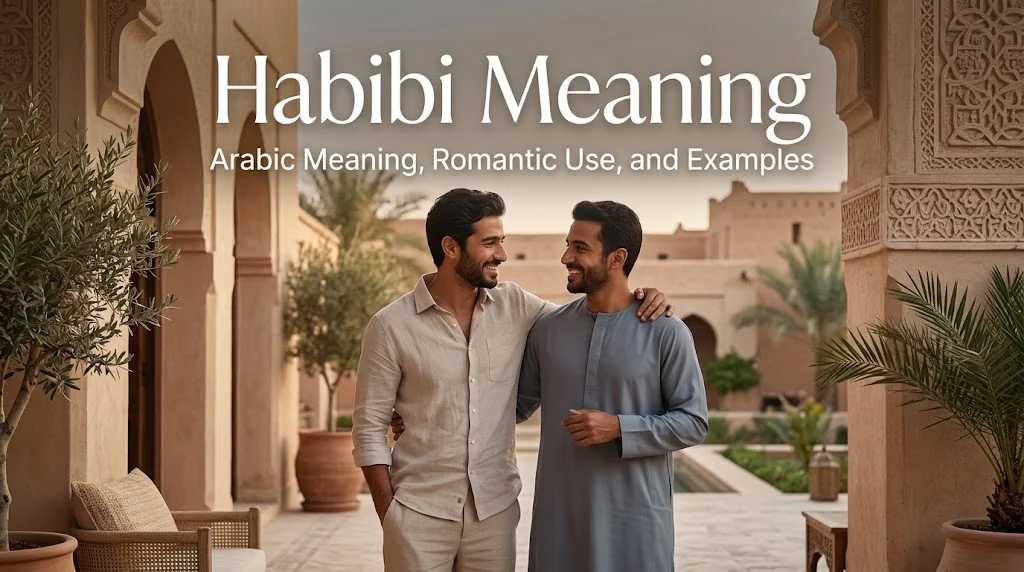
The habibi meaning is “my beloved” or “my dear,” and the word is commonly used to express affection, warmth, and closeness. Although it can be romantic, it is also used between friends, family members, and other people who share a comfortable relationship.
What Does Habibi Mean?
Habibi is an Arabic term of affection that commonly translates to “my beloved,” “my dear,” or “my love.” People use it when speaking to someone they care about, including a romantic partner, friend, or family member.
The word comes from Arabic and is related to ḥubb, meaning love. Its meaning is not limited to romantic relationships; depending on the speaker and situation, it can express friendship, fondness, kindness, or familiarity.
Here is a quick overview of the term.
| Detail | Explanation |
|---|---|
| Main meaning | My beloved, my dear, or my love |
| Language origin | Arabic |
| Type | Term of affection or endearment |
| Tone | Warm, affectionate, or friendly |
| Common usage | Conversations, text messages, and social media |
| Romantic meaning | Possible, but not always romantic |
Unlike internet abbreviations such as “LOL” or “ILY,” habibi is a real Arabic word rather than an acronym. It is also used in English-language conversations, particularly when people want to express affection or familiarity.
What Is the Meaning of Habibi in Simple Words?
In simple words, habibi means “my dear” or “someone I care about.” It is a warm way to address another person and can make a conversation feel more affectionate or personal.
For example, a person might text a close friend, “Thanks for helping me, habibi!” In this situation, the word expresses appreciation and closeness rather than necessarily suggesting romantic interest.
The exact meaning depends on the relationship between the speakers, their usual communication style, and the surrounding words. A romantic partner may use habibi lovingly, while a friend or family member may use it as a familiar expression of affection.
What Does Habibi Mean Literally?
Habibi is an Arabic word written as حبيبي. It is commonly translated as “my beloved” or “my dear.”
The word is related to ḥabīb, meaning beloved or dear, with the ending -ī expressing possession or association with “my.” In everyday usage, this produces the familiar affectionate meaning of “my beloved.”
Arabic also distinguishes between masculine and feminine forms when directly addressing someone. Habibi is generally the masculine form, while habibti (حبيبتي) is commonly used for a female.
These forms are useful to recognize, but the way people use affectionate expressions can vary across Arabic-speaking regions and individual relationships.
How Is Habibi Used in Everyday Conversations?
Habibi can be used in several everyday situations, and its tone changes according to the relationship and context.
- With a romantic partner: It can mean “my love” or “my darling.”
- Between friends: It can communicate closeness, warmth, or friendly affection.
- Within families: Parents, siblings, and other relatives may use it as an affectionate form of address.
- In casual conversations: A speaker may use it to sound warm, welcoming, or familiar.
- On social media: People may include it in captions, comments, or messages to express affection.
For example, someone might say, “Come here, habibi!” to a close friend. Depending on the speaker’s tone and relationship with that person, it could sound playful, welcoming, or affectionate.
Habibi is not automatically a declaration of love. In many situations, it functions as a familiar term of endearment rather than a statement of romantic commitment.
Habibi Meaning in Different Contexts
The word can communicate different shades of affection depending on where and how it appears.
| Context | Likely meaning | Typical tone |
|---|---|---|
| Romantic relationship | My love or darling | Romantic and affectionate |
| Friendship | My dear or buddy | Warm and familiar |
| Family conversation | Dear or beloved | Caring and affectionate |
| Text messages | An affectionate way to address someone | Depends on the relationship |
| Social media captions | Love, closeness, or appreciation | Personal or playful |
The word itself generally retains its affectionate meaning, but the relationship between the speakers helps determine how it should be interpreted.
What Does Habibi Mean in Text Messages?
In texting, habibi usually means “my dear,” “my love,” or “my beloved.” The sender may use it to sound sweet, caring, playful, or familiar.
For example:
“Good morning, habibi ❤️”
This message sounds affectionate, and it may be romantic when sent by a partner. However, the word alone cannot establish whether the sender has romantic feelings.
What Does Habibi Mean on Social Media?
On platforms such as Instagram, TikTok, Snapchat, and WhatsApp, habibi is commonly used in affectionate messages, comments, captions, and videos.
Someone might write “My habibi 🥰” under a picture of a partner or use “Habibi, come on!” in a humorous video. In the first example, the wording suggests affection; in the second, the phrase may be playful or comedic.
The platform does not give habibi a completely different definition. The surrounding content, emojis, and relationship between the people involved provide the most useful clues.
Real Conversation Examples
These examples demonstrate how habibi can appear in natural conversations.
Example 1: Romantic conversation
Person A: “I miss you so much.”
Person B: “I miss you too, habibi ❤️”
Meaning: The word expresses romantic affection and closeness in this conversation.
Example 2: Friends talking
Person A: “I saved you a seat at the café.”
Person B: “Thank you, habibi! You’re the best.”
Meaning: Here, habibi is a friendly term of affection and appreciation rather than a clear romantic signal.
Example 3: Family conversation
Person A: “Did you eat your dinner?”
Person B: “Yes, habibi. Don’t worry about me.”
Meaning: The word communicates familiarity and care within a close relationship.
Tone and Emotional Meaning of Habibi
Habibi usually carries a warm, affectionate tone, but it does not communicate the same level of intimacy in every conversation.
Is Habibi Romantic?
Habibi can be romantic when used between partners or people expressing romantic interest. In that context, it may translate naturally as “my love,” “darling,” or “my beloved.”
However, Arabic speakers also use it in friendly and familial contexts. If someone calls you habibi, consider your existing relationship and the rest of the conversation before assuming they are flirting.
Is Habibi Flirty?
Habibi can sound flirty when paired with romantic wording, affectionate emojis, compliments, or a conversation that already has a romantic tone.
For example, “You looked amazing today, habibi 😉” may suggest flirtation depending on the relationship. By contrast, “Thanks, habibi!” from a close friend may simply be friendly.
The word alone is not enough to determine someone’s intentions.
Is Habibi Rude or Offensive?
Habibi is generally an affectionate expression, not an insult. Nevertheless, its suitability depends on familiarity and cultural expectations.
Using it with a close friend or partner may feel natural, while addressing a stranger or professional contact this way could seem overly familiar. When you do not know someone’s preferences, a neutral greeting is usually a safer choice.
How to Reply to Habibi
The best response depends on whether the sender is a friend, romantic partner, family member, or acquaintance.
Friendly Replies
If a friend uses habibi casually, you can respond warmly without making the conversation romantic.
- “Hey, my friend!”
- “What’s up?”
- “Thanks, you’re so kind!”
- “Hey, how have you been?”
Romantic Replies
If your partner uses habibi affectionately, these responses can match the romantic tone.
- “My love ❤️”
- “I miss you too, darling.”
- “You’re so sweet, habibi.”
- “Love you, my dear.”
Polite Replies
If you are unfamiliar with the term or want to keep the conversation neutral, these responses work well.
- “Thank you!”
- “That’s sweet of you.”
- “Hello! How are you?”
- “Thanks for the kind words.”
You do not need to use Arabic in return. A natural response in your own language is perfectly appropriate.
When Should You Use Habibi?
Habibi is suitable when you want to express affection, friendliness, or familiarity and the relationship makes that tone appropriate.
You might use it with a romantic partner, a close friend, or a family member who is comfortable with affectionate language. You may also encounter it in Arabic-speaking communities, informal conversations, and social media posts.
If you are learning Arabic, pay attention to how native speakers use the word in different relationships. Matching the other person’s level of familiarity can help you avoid sounding unintentionally intimate.
When Should You Avoid Using Habibi?
Habibi is not inherently inappropriate, but it may sound too personal in some settings.
In professional emails, job applications, client communications, academic writing, and formal introductions, a person’s name or a conventional greeting is generally more suitable. The same applies when speaking to an unfamiliar person who may not welcome affectionate forms of address.
Avoid assuming that someone will appreciate the term simply because they speak Arabic or come from an Arabic-speaking background. Individual preferences vary, so respect the other person’s comfort and boundaries.
Common Mistakes About Habibi
People sometimes misunderstand habibi because its affectionate meaning can overlap with friendship and romance.
| Common Mistake | Correct Understanding |
|---|---|
| Assuming habibi always means romantic love | It can also express friendship, familiarity, or family affection. |
| Thinking habibi is used for everyone in exactly the same way | Arabic distinguishes masculine and feminine forms, and usage varies by context. |
| Assuming someone is flirting when they say habibi | The word alone does not prove romantic interest. |
Another common mistake is confusing habibi with habibti. Habibi is generally used when addressing a male, while habibti is commonly used when addressing a female. Actual usage can vary with dialect, pronunciation, and the language in which the word appears.
Similar Arabic Terms of Affection
Several Arabic expressions convey affection or closeness, but they have slightly different uses.
| Term | General Meaning | Main Difference |
|---|---|---|
| Habibti | My dear or my beloved | Common feminine form of address |
| Ya habibi | Oh, my dear or my beloved | Adds ya, a particle used when directly addressing someone |
| Hayati | My life | An affectionate expression often used romantically or with loved ones |
| Rouhi | My soul | A deeply affectionate expression |
| Habib | Beloved or dear | The related noun without the possessive ending in habibi |
The precise tone of these expressions can vary across dialects and relationships. They are not always interchangeable, so learning them in context is more useful than relying on a single English translation.
Origin and Cultural Significance of Habibi
Habibi comes from Arabic and is built around a word associated with being beloved or dear. It is used across many Arabic-speaking communities, although pronunciation, frequency, and conversational habits can vary by region.
The term has also become familiar to people who do not speak Arabic, partly through music, films, cultural exchange, travel, and online conversations. In English-language messages, it is often used as an affectionate expression without changing its underlying meaning.
Its cultural background is worth respecting. Habibi is not merely a trendy internet expression; it is an established Arabic term that can communicate genuine warmth and closeness in everyday life.
Quick Recap
- Habibi meaning: My beloved, my dear, or my love.
- Origin: The word comes from Arabic.
- In text: It is usually an affectionate or familiar way to address someone.
- Romantic meaning: It can be romantic, but friends and family members also use it.
- How to reply: Choose a friendly, romantic, or neutral response that matches your relationship.
Frequently Asked Questions
What does habibi mean in text?
Habibi means “my dear,” “my beloved,” or “my love” in text messages, expressing affection or friendly familiarity.
Does habibi mean my love?
Yes, habibi can mean “my love,” although “my dear” or “my beloved” may better fit friendly and family conversations.
Is habibi romantic or friendly?
Habibi can be romantic between partners or friendly among relatives and friends, depending on the relationship and conversational context.
What is the female version of habibi?
Habibti is the commonly used feminine form of habibi when addressing a female in Arabic.
How should you reply to habibi?
You can reply with “Habibi,” “Thank you,” “My love,” or another friendly expression that matches your relationship with the sender.
Final Thoughts
The habibi meaning is “my beloved,” “my dear,” or “my love,” making it a common Arabic expression of affection. People use it with romantic partners, friends, and family members, so it does not always indicate romantic interest. In texts and social media messages, the word generally carries the same affectionate meaning it has in spoken conversations. When someone calls you habibi, consider the relationship, wording, and tone before interpreting their intentions. Respond with a friendly greeting, an affectionate phrase, or a simple thank-you that feels natural for the situation.

Sally Rooney is an American writer who contributes to QuickResponsess.com, creating clear and practical content for English learners. Her articles help readers build confidence in using words and expressions accurately in everyday and professional communication.
30 thoughts on “Habibi Meaning: Definition, Origin & Usage”