Quick Answer 🔥
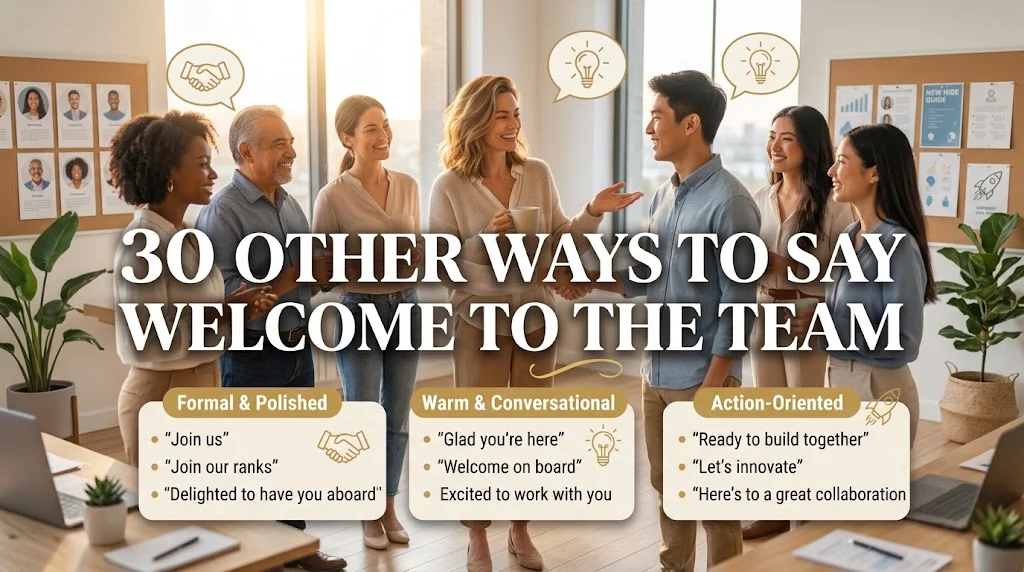
Use these top alternatives: Thrilled to have you onboard, Welcome aboard, We’re happy to have you with us, Delighted to work with you, and Excited to have you join us.
When a new colleague joins your workplace, the phrase “welcome to the team” is often the first thing that comes to mind. It’s simple, friendly, and gets the job done. But over time, this expression can start to feel generic and overused. If you rely on it too often, your welcome may come across as robotic rather than genuine.
Learning alternatives to “welcome to the team” helps you communicate with greater precision and emotional depth. Whether you want to express excitement in English professionally or keep things warm and casual, having a rich vocabulary allows you to match your tone to the situation. It shows emotional intelligence, cultural awareness, and a command of the language that leaves a lasting impression on new team members.
Quick Categories
Formal alternatives to “welcome to the team”
- We are delighted to have you join us
- It is a pleasure to welcome you aboard
- We extend our warmest welcome
- We are pleased to have you on board
- We welcome you to our organization
Casual alternatives
- Welcome aboard!
- So glad you’re here!
- Happy to have you with us
- Great to have you on the team
- You’re going to fit right in
Professional alternatives
- We look forward to collaborating with you
- We are excited to work alongside you
- We value the expertise you bring
- We are confident you will thrive here
- We anticipate great things from your contribution
Informal expressions
- Welcome to the crew!
- So excited to have you!
- You’re one of us now
- Welcome to the squad!
- Thrilled you’re joining us
Pro Tip: Match your choice to the company culture. A startup may welcome casual expressions, while a law firm or bank will expect formal language.
Common Mistakes
- Being too generic. Saying “welcome to the team” to every new hire without variation can feel impersonal.
- Mistake: “Welcome to the team.” (repeatedly)
- Better: “We are thrilled to have you join our marketing department.”
- Overusing casual language in formal settings. Using “hey” or “sup” in an official welcome email is unprofessional.
- Mistake: “Hey, welcome to the team!”
- Better: “We are pleased to welcome you to our firm.”
- Forgetting to personalize the message. A welcome without the new member’s name or role feels hollow.
- Mistake: “Welcome to the team.”
- Better: “Welcome to the team, Sarah we can’t wait to see your design expertise in action.”
- Using the wrong tone for the medium. A LinkedIn post may need to be more polished than a Slack message.
- Mistake: Using “Welcome aboard!” in a formal press release.
- Better: “We are delighted to announce that John is joining our executive team.”
- Neglecting to express enthusiasm. A flat welcome can make the new member feel undervalued.
- Mistake: “Welcome to the team.”
- Better: “We are so excited to have you join us!”
What Does “Welcome to the Team” Mean?
“Welcome to the team” is a greeting used to acknowledge and accept a new member into a group, organization, or workplace. It signals inclusion, openness, and the start of a collaborative relationship.
Grammar note: It is a declarative sentence where “welcome” functions as an interjection or verb, followed by the prepositional phrase “to the team.”
Example: “Welcome to the team, Michael we’re so glad you’re here.”
When to Use “Welcome to the Team”
- First day of a new employee – in person, via email, or on a welcome card
- Announcing a new hire to the rest of the organization
- Introducing a new team member in a meeting
- Welcoming a transfer from another department
- Greeting a new intern, contractor, or consultant
Spoken vs. Written: Common in both, but written welcomes allow for more personalization.
Formal vs. Informal: Can be used in both, but it leans slightly informal in many professional contexts.
Is It Professional or Polite to Say “Welcome to the Team”?
Polite? ✔️ Yes
Professional? ❌ No (in most cases)
While “welcome to the team” is certainly polite and friendly, it is often considered too casual for high stakes professional communication. In formal business writing such as offer letters, executive announcements, or client facing emails you may want to choose a more refined alternative.
Business style example: “We are pleased to welcome you to our organization and look forward to your contributions.”
Pros and Cons of Using “Welcome to the Team”
Pros:
- Simple and natural
- Friendly and approachable tone
- Common and widely understood
- Easy to remember and use
Cons:
- Too informal for professional or formal writing
- Overused and can feel clichéd
- Limited emotional range doesn’t convey deep enthusiasm
- Not suitable for executive level or external communications
Other Ways to Say “Welcome to the Team” (With Examples)
These 30 alternatives will help you sound more fluent, confident, and natural in different situations. Use them according to tone, context, and audience to express excitement, admiration, or approval.
Formal Alternatives
1. Phrase: We are delighted to have you join us
- Meaning: Expresses great pleasure and satisfaction.
- Explanation: A polished, respectful way to welcome someone in formal settings.
- Example Sentence: “We are delighted to have you join us as our new Head of Operations.”
- Best Use: Executive announcements
- Worst Use: Casual Slack messages
- Tone: Formal, respectful, warm
- Context Variability: Professional / Written
2. Phrase: It is a pleasure to welcome you aboard
- Meaning: Conveys honor and enjoyment in receiving the new member.
- Explanation: A classic, elegant phrase suitable for official correspondence.
- Example Sentence: “It is a pleasure to welcome you aboard our team of financial analysts.”
- Best Use: Offer letters
- Worst Use: Text messages
- Tone: Formal, gracious
- Context Variability: Professional / Written
3. Phrase: We extend our warmest welcome
- Meaning: Offers a heartfelt and sincere greeting.
- Explanation: Emphasizes genuine warmth and hospitality.
- Example Sentence: “We extend our warmest welcome to you as you begin your journey with us.”
- Best Use: Welcome speeches
- Worst Use: Quick email replies
- Tone: Formal, heartfelt
- Context Variability: Professional / Spoken
4. Phrase: We are pleased to have you on board
- Meaning: Indicates satisfaction and approval.
- Explanation: A neutral, professional way to acknowledge a new member.
- Example Sentence: “We are pleased to have you on board and look forward to your insights.”
- Best Use: Internal memos
- Worst Use: Social media posts
- Tone: Professional, reserved
- Context Variability: Professional / Written
5. Phrase: We welcome you to our organization
- Meaning: A formal, encompassing greeting to the entire company.
- Explanation: Broad and inclusive, suitable for large organizations.
- Example Sentence: “We welcome you to our organization and trust you will find it a rewarding place to grow.”
- Best Use: Company wide announcements
- Worst Use: One on one chats
- Tone: Formal, official
- Context Variability: Professional / Written
“Formal alternatives show respect and set a tone of professionalism from day one.”
Professional Alternatives
6. Phrase: We look forward to collaborating with you
- Meaning: Anticipates joint work and shared success.
- Explanation: Focuses on future teamwork and mutual goals.
- Example Sentence: “We look forward to collaborating with you on the upcoming product launch.”
- Best Use: Project kickoffs
- Worst Use: Casual greetings
- Tone: Professional, forward looking
- Context Variability: Professional / Written & Spoken
7. Phrase: We are excited to work alongside you
- Meaning: Shows enthusiasm for shared effort.
- Explanation: Emphasizes partnership and camaraderie.
- Example Sentence: “We are excited to work alongside you and learn from your experience.”
- Best Use: Team introductions
- Worst Use: Formal legal documents
- Tone: Professional, enthusiastic
- Context Variability: Professional / Spoken
8. Phrase: We value the expertise you bring
- Meaning: Acknowledges and appreciates the new member’s skills.
- Explanation: Makes the person feel seen and respected for their qualifications.
- Example Sentence: “We value the expertise you bring to our research department.”
- Best Use: Welcoming specialists
- Worst Use: Welcoming interns
- Tone: Professional, appreciative
- Context Variability: Professional / Written
9. Phrase: We are confident you will thrive here
- Meaning: Expresses belief in the person’s future success.
- Explanation: Encouraging and supportive, builds confidence.
- Example Sentence: “We are confident you will thrive here given your impressive track record.”
- Best Use: Performance reviews
- Worst Use: First day greetings
- Tone: Professional, encouraging
- Context Variability: Professional / Written
10. Phrase: We anticipate great things from your contribution
- Meaning: Expects positive outcomes from the new member’s work.
- Explanation: Motivational and forward thinking.
- Example Sentence: “We anticipate great things from your contribution to our sales team.”
- Best Use: Goal setting meetings
- Worst Use: Informal chats
- Tone: Professional, aspirational
- Context Variability: Professional / Written
11. Phrase: We are thrilled to have you as part of our team
- Meaning: Conveys intense excitement and happiness.
- Explanation: A step up from “happy,” showing genuine enthusiasm.
- Example Sentence: “We are thrilled to have you as part of our team your creativity will be a game changer.”
- Best Use: Welcome emails
- Worst Use: Extremely formal letters
- Tone: Professional, enthusiastic
- Context Variability: Professional / Written & Spoken
12. Phrase: We are grateful to have you with us
- Meaning: Expresses thankfulness for the person’s presence.
- Explanation: Humble and appreciative, good for senior hires.
- Example Sentence: “We are grateful to have you with us and value the leadership you bring.”
- Best Use: Welcoming executives
- Worst Use: Everyday team messages
- Tone: Professional, humble
- Context Variability: Professional / Written
13. Phrase: We are eager to see what you will accomplish
- Meaning: Shows curiosity and optimism about future achievements.
- Explanation: Encourages ambition and sets a positive tone.
- Example Sentence: “We are eager to see what you will accomplish in your new role.”
- Best Use: Goal oriented environments
- Worst Use: Casual settings
- Tone: Professional, optimistic
- Context Variability: Professional / Written
14. Phrase: We are so glad you chose to join us
- Meaning: Expresses gratitude for the person’s decision.
- Explanation: Makes the new member feel valued and wanted.
- Example Sentence: “We are so glad you chose to join us we know you had many options.”
- Best Use: Recruitment follow ups
- Worst Use: Internal team banter
- Tone: Professional, warm
- Context Variability: Professional / Written
15. Phrase: We welcome your fresh perspective
- Meaning: Invites new ideas and viewpoints.
- Explanation: Shows openness to innovation and change.
- Example Sentence: “We welcome your fresh perspective on our marketing strategy.”
- Best Use: Creative teams
- Worst Use: Highly traditional environments
- Tone: Professional, open minded
- Context Variability: Professional / Written
“Professional alternatives build credibility and show that you take the new hire’s role seriously.”
Casual Alternatives
16. Phrase: Welcome aboard!
- Meaning: A friendly, nautical inspired greeting.
- Explanation: Short, energetic, and universally understood.
- Example Sentence: “Welcome aboard! We can’t wait to get started.”
- Best Use: Team chats
- Worst Use: Formal letters
- Tone: Casual, friendly
- Context Variability: Casual / Spoken & Written
17. Phrase: So glad you’re here!
- Meaning: Expresses simple, genuine happiness.
- Explanation: Warm and direct, perfect for in person welcomes.
- Example Sentence: “So glad you’re here! Let me show you around.”
- Best Use: First day greetings
- Worst Use: Official announcements
- Tone: Casual, warm
- Context Variability: Casual / Spoken
18. Phrase: Happy to have you with us
- Meaning: A simple, cheerful welcome.
- Explanation: Light and positive, suitable for everyday use.
- Example Sentence: “Happy to have you with us let’s make great things happen.”
- Best Use: Team meetings
- Worst Use: Formal documents
- Tone: Casual, cheerful
- Context Variability: Casual / Spoken
19. Phrase: Great to have you on the team
- Meaning: A straightforward, appreciative greeting.
- Explanation: Friendly and unpretentious.
- Example Sentence: “Great to have you on the team we’ve heard wonderful things about you.”
- Best Use: Introductions
- Worst Use: Client facing emails
- Tone: Casual, appreciative
- Context Variability: Casual / Spoken
20. Phrase: You’re going to fit right in
- Meaning: Assures the new member of belonging.
- Explanation: Comforting and inclusive, reduces first day anxiety.
- Example Sentence: “You’re going to fit right in we’re all passionate about the same things.”
- Best Use: Welcoming new hires
- Worst Use: Formal settings
- Tone: Casual, reassuring
- Context Variability: Casual / Spoken
21. Phrase: We’re so happy you’re joining us
- Meaning: Expresses collective joy.
- Explanation: Friendly and inclusive.
- Example Sentence: “We’re so happy you’re joining us this is going to be an exciting journey.”
- Best Use: Team emails
- Worst Use: Board meetings
- Tone: Casual, joyful
- Context Variability: Casual / Written
22. Phrase: It’s wonderful to have you
- Meaning: A warm, appreciative greeting.
- Explanation: Slightly more polished than “great,” but still casual.
- Example Sentence: “It’s wonderful to have you your energy is already contagious.”
- Best Use: Welcoming new colleagues
- Worst Use: Official correspondence
- Tone: Casual, warm
- Context Variability: Casual / Spoken
23. Phrase: We’re lucky to have you
- Meaning: Expresses good fortune in acquiring the new member.
- Explanation: Humble and flattering.
- Example Sentence: “We’re lucky to have you your skills are exactly what we needed.”
- Best Use: Team praise
- Worst Use: Formal reviews
- Tone: Casual, appreciative
- Context Variability: Casual / Spoken
24. Phrase: Thrilled you’re here
- Meaning: Conveys strong excitement in a short, punchy way.
- Explanation: Energetic and modern.
- Example Sentence: “Thrilled you’re here let’s get to work!”
- Best Use: Social media welcomes
- Worst Use: Formal emails
- Tone: Casual, enthusiastic
- Context Variability: Casual / Spoken & Written
25. Phrase: Can’t wait to work with you
- Meaning: Shows eagerness and anticipation.
- Explanation: Direct and personal.
- Example Sentence: “Can’t wait to work with you I’ve heard amazing things about your projects.”
- Best Use: Peer welcomes
- Worst Use: Formal introductions
- Tone: Casual, eager
- Context Variability: Casual / Spoken
Informal Expressions
26. Phrase: Welcome to the crew!
- Meaning: A playful, team oriented greeting.
- Explanation: Suggests camaraderie and a close knit group.
- Example Sentence: “Welcome to the crew we’re like family here!”
- Best Use: Startups
- Worst Use: Corporate settings
- Tone: Informal, playful
- Context Variability: Informal / Spoken
27. Phrase: So excited to have you!
- Meaning: Expresses pure, unfiltered excitement.
- Explanation: Energetic and personal.
- Example Sentence: “So excited to have you this team is about to level up!”
- Best Use: Team celebrations
- Worst Use: Formal announcements
- Tone: Informal, energetic
- Context Variability: Informal / Spoken
28. Phrase: You’re one of us now
- Meaning: Signals full acceptance and belonging.
- Explanation: Creates an immediate sense of inclusion.
- Example Sentence: “You’re one of us now to get to know everyone!”
- Best Use: Close knit teams
- Worst Use: Large corporations
- Tone: Informal, inclusive
- Context Variability: Informal / Spoken
29. Phrase: Welcome to the squad!
- Meaning: A modern, trendy way to say “team.”
- Explanation: Popular in younger, dynamic workplaces.
- Example Sentence: “Welcome to the squad we’re going to crush it together!”
- Best Use: Creative agencies
- Worst Use: Traditional industries
- Tone: Informal, trendy
- Context Variability: Informal / Spoken
30. Phrase: Thrilled you’re joining us
- Meaning: High energy expression of excitement.
- Explanation: Short, punchy, and modern.
- Example Sentence: “Thrilled you’re joining us this is going to be amazing!”
- Best Use: Social posts
- Worst Use: Formal letters
- Tone: Informal, enthusiastic
- Context Variability: Informal / Written & Spoken
Pro Tip: Informal expressions build instant rapport but should be used only when you know the culture and the person well.
Mini Quiz / Self Check
1. You are sending a welcome email to a new CEO. Which phrase is most appropriate?
- A) “Welcome to the crew!”
- B) “We are delighted to have you join us.”
- C) “So excited to have you!”
- D) “You’re one of us now”
Answer: B
2. You are welcoming a new intern via Slack. Which phrase works best?
- A) “We extend our warmest welcome”
- B) “We are pleased to have you on board”
- C) “Welcome aboard!”
- D) “We welcome your fresh perspective”
Answer: C
3. Which phrase is NOT suitable for a formal company wide announcement?
- A) “We are pleased to welcome you”
- B) “We look forward to collaborating”
- C) “Welcome to the squad!”
- D) “We value the expertise you bring”
Answer: C
4. You want to express gratitude for a new hire’s decision to join. Which phrase is best?
- A) “We are grateful to have you with us”
- B) “Thrilled you’re here”
- C) “Welcome aboard!”
- D) “You’re going to fit right in”
Answer: A
Comparison Table: Top 10 Alternatives
| Phrase | Tone | Best Use |
| We are delighted to have you join us | Formal | Executive announcements |
| It is a pleasure to welcome you aboard | Formal | Offer letters |
| We look forward to collaborating with you | Professional | Project kickoffs |
| We are excited to work alongside you | Professional | Team introductions |
| We value the expertise you bring | Professional | Welcoming specialists |
| Welcome aboard! | Casual | Team chats |
| So glad you’re here! | Casual | First day greetings |
| Great to have you on the team | Casual | Introductions |
| Welcome to the crew! | Informal | Startups |
| Thrilled you’re joining us | Informal | Social media posts |
FAQs
1. What is the best formal alternative to “welcome to the team”?
The best formal alternative is “We are delighted to have you join us” or “It is a pleasure to welcome you aboard.” Both are respectful, professional, and suitable for official correspondence.
2. Can I say “welcome aboard” in a professional email?
Yes, “welcome aboard” is acceptable in professional emails, especially in casual or creative industries. However, for formal settings, consider “We are pleased to have you on board.”
3. What are some casual ways to welcome a new team member?
Casual alternatives include “Welcome aboard!”, “So glad you’re here!”, “Happy to have you with us”, and “Great to have you on the team.”
4. How do I welcome a new team member in a Slack message?
Use short, friendly phrases like “Welcome aboard!”, “So excited to have you!”, or “Great to have you on the team!” Personalize with the new member’s name for extra warmth.
5. Why should I avoid saying “welcome to the team” every time?
Overusing the phrase makes it feel generic and impersonal. Using a variety of other ways to say welcome to the team shows thoughtfulness, emotional intelligence, and a command of professional English.
Conclusion
Expanding your vocabulary with alternatives to “welcome to the team” is a simple yet powerful way to elevate your professional communication. Whether you choose a formal, professional, casual, or informal expression, the key is to match your tone to the context and the person you are welcoming. A thoughtful welcome can set the stage for a positive working relationship and make new members feel genuinely valued.
Start practicing these phrases today in emails, meetings, and everyday conversations. The more you use them, the more natural they will become. And remember: the right tone makes your English sound professional and confident.

Stephen King is an American writer and language enthusiast who enjoys creating clear, practical content that helps readers communicate with confidence. His work at QuickResponsess.com focuses on making English easier to understand through simple explanations and everyday examples.