Quick Answer 🔥
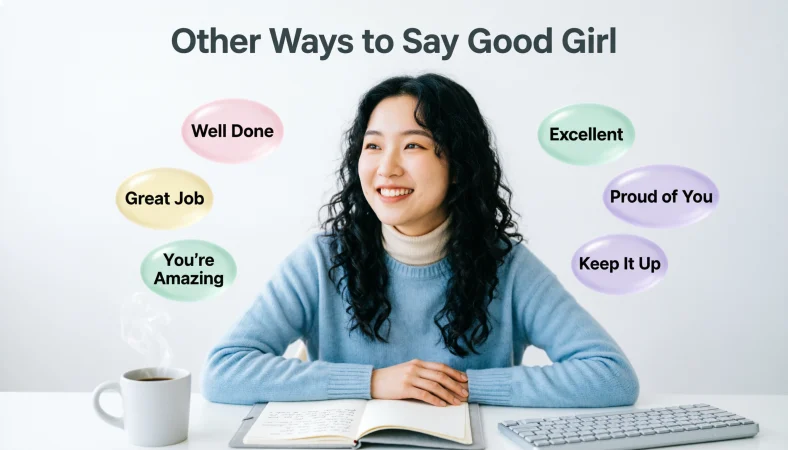
Instead of saying “good girl,” you can use phrases like well done, great job, I’m proud of you, you did amazing, excellent work, smart choice, fantastic effort, you’re doing great, impressive, or keep it up. The best alternative depends on whether you’re speaking to a child, a friend, a partner, or a pet.
The phrase “good girl” is a compliment used to praise someone often a child, pet, or close companion for completing a task or demonstrating positive behavior . It functions as a short interjection or sentence and carries a warm, encouraging tone .Example Sentence: “You finished your homework on time good girl!”
When to Use “Good Girl”
- In close personal relationships with children, pets, or family members
- Spoken English in casual, affectionate settings
- Social media posts celebrating achievements
- Not recommended in professional or academic writing
- Avoid when speaking to adult colleagues, especially in workplace settings
Is It Professional or Polite to Say “Good Girl”?
Polite? ✔️ Yes (in casual, personal contexts)
Professional? ❌ No (in most workplace and formal settings)
In professional environments, this phrase often sounds condescending and disrespectful, particularly when used toward adult women . It can weaken professional boundaries and create discomfort .
Example of Better Business Phrasing:
❌ “Good girl on that report.”
✅ “Excellent work on the report—your attention to detail is much appreciated.”
Pros and Cons of Using “Good Girl”
Pros:
- Simple, direct, and easy to understand
- Warm and emotionally positive tone
- Common in everyday language
- Encouraging for children and pets
Cons:
- Too informal for professional settings
- Overused and lacks variety
- Can feel patronizing toward adults
- Limited emotional range and depth
Common Mistakes to Avoid
- Using it with adult colleagues
❌ “Good girl, you completed the task early.”
✅ “Great work completing the task ahead of schedule.” - Assuming it’s always polite
❌ “Good girl” in a professional email
✅ “Thank you for your excellent contribution.” - Overusing it with children
❌ Praising only results, not effort
✅ Process-focused praise like “I see how hard you worked” - Using it in formal writing
❌ “The employee is a good girl.”
✅ “The employee demonstrates strong performance.” - Employing it in cross-cultural settings
❌ Assuming the phrase translates well
✅ Checking cultural appropriateness first
Quick Categories
Formal Alternatives to “Good Girl”
- Well done
- Excellent work
- Outstanding effort
- I appreciate your effort
- That was impressive
Casual Alternatives
- Great job
- You did amazing
- Way to go
- Nice work
- You nailed it
Professional Alternatives
- Your contribution was valuable
- You deserve recognition
- Strong work
- You handled that well
- You’re doing really well
Informal Expressions
- Kudos to you
- You’re a star
- You’re amazing
- Fantastic effort
- Bravo
Other Ways to Say “Good Girl” (With Examples)
These alternatives will help you sound more fluent, confident, and natural in different situations. Use them according to tone, context, and audience to express excitement, admiration, or approval.
1. Phrase: Well Done
Meaning: A phrase used to praise successful completion of a task .
Explanation: Focuses on the action rather than the person’s identity .
Example: “Well done on finishing the report ahead of time!”
Best Use: Professional settings
Worst Use: Intimate emotional moments
Tone: Respectful, professional
2. Phrase: Great Job
Meaning: A common compliment acknowledging effort or success .
Explanation: Friendly and encouraging without being too personal .
Example: “Great job on your presentation today!”
Best Use: Work and school
Worst Use: Very formal written communication
Tone: Supportive, cheerful
3. Phrase: Excellent Work
Meaning: Highlights superior performance or results .
Explanation: Conveys admiration and respect for someone’s effort .
Example: “Excellent work on the project—your creativity was outstanding.”
Best Use: Professional recognition
Worst Use: Playful conversations with friends
Tone: Formal, respectful
4. Phrase: I Appreciate Your Effort
Meaning: Expresses gratitude for someone’s work and dedication .
Explanation: Focuses on recognizing the person’s contribution rather than judging identity .
Example: “I appreciate your effort in organizing this event.”
Best Use: Professional communication
Worst Use: Playful casual praise
Tone: Grateful, professional
5. Phrase: You Handled That Well
Meaning: Acknowledges good judgment and behavior in a situation .
Explanation: Particularly useful in emotionally difficult or stressful moments .
Example: “You handled that difficult client conversation really well.”
Best Use: Conflict resolution or feedback sessions
Worst Use: Everyday casual humor
Tone: Supportive, reassuring
6. Phrase: Outstanding Effort
Meaning: Praise for exceptional performance or dedication .
Explanation: Stronger than basic appreciation, focuses on effort .
Example: “Outstanding effort managing the project timeline.”
Best Use: Teaching and management
Worst Use: Minor everyday tasks
Tone: Strong, admiring
7. Phrase: You Did Amazing
Meaning: Performed exceptionally well .
Explanation: Emotional and expressive, suited for warm interactions .
Example: “You did amazing in today’s meeting!”
Best Use: Social media, personal chats
Worst Use: Academic reports
Tone: Excited, casual
8. Phrase: Impressive
Meaning: Acknowledges skills, achievements, or qualities that stand out .
Explanation: Concise yet powerful, works in professional or casual settings .
Example: “Impressive work on solving that problem.”
Best Use: Quick professional recognition
Worst Use: Emotional reassurance
Tone: Admiring, neutral
9. Phrase: Nicely Done
Meaning: A softer version of praise for quality work .
Explanation: Highlights care and skill in performance .
Example: “Your design looks amazing—nicely done.”
Best Use: Creative or careful work
Worst Use: Serious corrective situations
Tone: Warm, pleasant
10. Phrase: Fantastic Effort
Meaning: Praises dedication regardless of outcome .
Explanation: Emphasizes commitment and energy put into a task .
Example: “Fantastic effort staying calm during that presentation.”
Best Use: Encouraging persistence
Worst Use: Formal performance reviews
Tone: Enthusiastic, warm
11. Phrase: You’re Amazing
Meaning: Highlights impressive personal qualities .
Explanation: Informal and heartfelt, perfect for personal praise .
Example: “You’re amazing for helping me today!”
Best Use: Personal interactions
Worst Use: Professional written communication
Tone: Warm, affectionate
12. Phrase: Bravo
Meaning: An exclamation expressing approval or applause .
Explanation: Short and expressive, often used for remarkable actions .
Example: “Bravo! That was brilliant!”
Best Use: Public acknowledgment of success
Worst Use: Everyday minor achievements
Tone: Enthusiastic, celebratory
13. Phrase: Kudos to You
Meaning: Informal praise for an achievement .
Explanation: Friendly and concise, works in casual or semi-formal contexts .
Example: “Kudos to you for finishing early.”
Best Use: Encouragement among peers
Worst Use: High-level corporate settings
Tone: Friendly, appreciative
14. Phrase: You Should Be Proud
Meaning: Encourages self-recognition of achievement .
Explanation: Shifts focus from external validation to internal pride .
Example: “You should be proud of how far you’ve come.”
Best Use: Motivation, coaching
Worst Use: Short casual texts
Tone: Inspirational, affirming
15. Phrase: Strong Work
Meaning: Short, direct praise for solid performance .
Explanation: Common in team environments and collaborative settings .
Example: “Strong work today, everyone.”
Best Use: Team motivation
Worst Use: Emotional conversations
Tone: Confident, direct
16. Phrase: You’re So Capable
Meaning: Boosts confidence before or after an effort .
Explanation: Empowers someone to trust their abilities .
Example: “You’re so capable—I believe in you.”
Best Use: Mentoring and leadership
Worst Use: Critical feedback scenarios
Tone: Empowering, supportive
17. Phrase: Way to Go
Meaning: Celebratory praise for completing a goal .
Explanation: Light and upbeat, used in informal settings .
Example: “Way to go—you did it!”
Best Use: Casual conversations
Worst Use: Formal recognition
Tone: Playful, upbeat
18. Phrase: You’re Doing Really Well
Meaning: Encouragement during ongoing effort .
Explanation: Ideal for long-term progress and learning stages .
Example: “Keep going—you’re doing really well.”
Best Use: Learning and growth phases
Worst Use: Final evaluations
Tone: Supportive, encouraging
19. Phrase: That Was Thoughtful
Meaning: Recognizes kindness or consideration .
Explanation: Values emotional awareness and empathy .
Example: “That was thoughtful of you to remember.”
Best Use: Gratitude and relationship building
Worst Use: Professional performance reviews
Tone: Appreciative, gentle
20. Phrase: I Love How You Did That
Meaning: Appreciates the style, care, or creativity in someone’s action .
Explanation: Specific and emotionally meaningful praise .
Example: “I love how you handled that conversation.”
Best Use: Close relationships and mentoring
Worst Use: Formal business emails
Tone: Warm, personal
21. Phrase: Marvelous
Meaning: A charming way to praise exceptional performance .
Explanation: Warm and enthusiastic, making compliments feel special .
Example: “Marvelous job decorating the room!”
Best Use: Celebratory moments
Worst Use: Very formal business contexts
Tone: Enthusiastic, warm
22. Phrase: Stellar
Meaning: Exceptional, impressive, or high-quality .
Explanation: Informal praise highlighting brilliance .
Example: “Stellar effort on your project!”
Best Use: Social media and casual praise
Worst Use: Formal academic writing
Tone: Enthusiastic, modern
23. Phrase: Top-Notch
Meaning: Describes something excellent or superior .
Explanation: Adds a playful, friendly tone while acknowledging quality .
Example: “Top-notch job cleaning the house!”
Best Use: Friendly praise
Worst Use: Boardroom presentations
Tone: Playful, friendly
24. Phrase: You Deserve Recognition
Meaning: Acknowledges value and contribution .
Explanation: Focuses on worth and fairness .
Example: “You deserve recognition for this achievement.”
Best Use: Professional acknowledgement
Worst Use: Casual joking
Tone: Respectful, serious
25. Phrase: That Means a Lot
Meaning: Expresses appreciation for thoughtful actions .
Explanation: Shows the person’s effort had emotional value .
Example: “That really means a lot—thank you.”
Best Use: Emotional conversations
Worst Use: Professional performance reviews
Tone: Grateful, heartfelt
26. Phrase: You’re Learning Quickly
Meaning: Encourages someone new to a skill or role .
Explanation: Recognizes improvement and adaptability .
Example: “You’re learning quickly—keep going.”
Best Use: Training and education
Worst Use: Celebrating final achievements
Tone: Supportive, motivating
27. Phrase: You’re So Responsible
Meaning: Recognizes maturity and reliability .
Explanation: Highlights character rather than a single action .
Example: “You’re so responsible with your decisions.”
Best Use: Parenting, mentoring
Worst Use: Casual friend interactions
Tone: Trusting, encouraging
28. Phrase: Your Hard Work Shows
Meaning: Acknowledges visible results from effort .
Explanation: Encourages continued dedication .
Example: “Your hard work shows in this presentation.”
Best Use: Motivation and feedback
Worst Use: Brief casual texts
Tone: Appreciative, professional
29. Phrase: That Took Skill
Meaning: Recognizes ability and competence .
Explanation: Highlights the person’s capability .
Example: “That took skill—impressive work.”
Best Use: Acknowledging expertise
Worst Use: Emotional support situations
Tone: Respectful, admiring
30. Phrase: You’re Growing So Much
Meaning: Notices progress over time .
Explanation: Focuses on development and improvement .
Example: “You’re growing so much in confidence.”
Best Use: Personal development, coaching
Worst Use: Evaluating specific tasks
Tone: Encouraging, nurturing
“The right tone makes your English sound professional and confident.”
“Specific, thoughtful praise is more powerful than generic approval.”
Mini Quiz: Check Your Understanding
1. Which phrase is most appropriate in a professional email?
A) Good girl
B) Well done
C) You’re amazing
Answer: B “Well done” is professional and respectful .
2. What’s the best way to praise someone’s effort, not just the result?
A) Fantastic effort
B) Good girl
C) You’re so smart
Answer: A “Fantastic effort” focuses on dedication and work .
3. Why should “good girl” be avoided in the workplace?
A) It’s too long
B) It sounds condescending and patronizing
C) It’s grammatically incorrect
Answer: B It can weaken professional boundaries and create discomfort .
4. Which phrase shows emotional support AND professional tone?
A) Good girl
B) Bravo
C) You handled that well
Answer: C It’s supportive and suitable for professional feedback .
Comparison Table: Top Alternatives
| Phrase | Tone | Best Use |
| Well Done | Respectful, professional | Achievements and formal praise |
| Great Job | Supportive, cheerful | Work, school, daily tasks |
| Excellent Work | Formal, respectful | Professional communication |
| I Appreciate Your Effort | Grateful, professional | Recognition and feedback |
| You Handled That Well | Supportive, reassuring | Conflict resolution |
| Outstanding Effort | Strong, admiring | Major achievements |
| You Did Amazing | Excited, casual | Social media, personal praise |
| Nice Work | Pleasant, supportive | Creative or careful work |
| Strong Work | Confident, direct | Team motivation |
| Kudos to You | Friendly, appreciative | Peer recognition |
FAQs
1. What is the best professional alternative to saying “good girl”?
“Well done” and “Excellent work” are the most professional alternatives . They focus on the achievement rather than the person, making them suitable for workplace settings.
2. Is it ever okay to say “good girl” in the workplace?
Generally no. It can sound condescending and unprofessional, especially toward adult women . Instead, use achievement-focused phrases like “Your contribution was valuable” .
3. Can “good girl” be used for adult women?
It’s risky. While sometimes used affectionately in close relationships, it often feels patronizing and childish toward adults . Context and relationship matter significantly.
4. What’s the difference between person praise and process praise?
Person praise focuses on traits (“You’re so smart”), while process praise focuses on effort and behavior (“You worked hard on that”). Research suggests process praise builds healthier motivation and perseverance .
5. Why do some people feel uncomfortable hearing “good girl”?
The phrase can carry gendered expectations and imply judgment about conforming to behavior standards . It may feel limiting, especially to adults who prefer being valued for their actions .
Conclusion
Learning alternatives to “good girl” will help you sound more fluent, confident, and context-aware in English. These alternatives allow you to express excitement, admiration, or approval appropriately across different situations from casual conversations to professional settings.
The key lies in choosing the right tone for your audience. Practice using these phrases in daily communication, and watch how your language becomes more precise and respectful. Remember: specific, thoughtful praise always beats generic approval .

Sally Rooney is an American writer who contributes to QuickResponsess.com, creating clear and practical content for English learners. Her articles help readers build confidence in using words and expressions accurately in everyday and professional communication.