Quick Answer Box 🔥
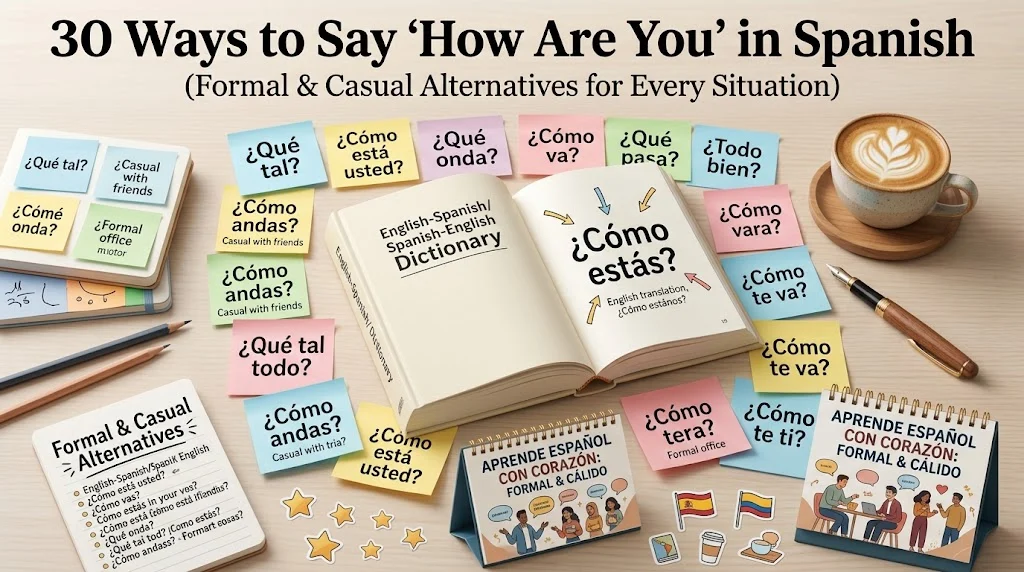
The most common ways to say how are you in Spanish are ¿Cómo estás? (informal), ¿Cómo está usted? (formal), ¿Qué tal? (neutral), ¿Cómo te va? (casual), and ¿Todo bien? (quick check in). Each varies by tone, region, and relationship.
Asking how you are is one of the first phrases any Spanish learner picks up. But relying solely on ¿Cómo estás? can make you sound repetitive and, at times, overly formal or too casual for the situation. Just as in English, native Spanish speakers use a rich variety of greetings depending on context, region, and relationship.
Learning alternatives to how are you in Spanish does more than expand your vocabulary it builds cultural awareness and conversational confidence. Whether you’re preparing for a business meeting in Madrid, catching up with friends in Mexico City, or simply want to express excitement in English (and Spanish!) through varied greetings, mastering these alternatives signals fluency and emotional intelligence.
Quick Categories Section
Formal Alternatives to “How Are You in Spanish”
- ¿Cómo está usted?
- ¿Cómo se encuentra?
- ¿Cómo le va?
- ¿Cómo ha estado?
- ¿Cómo se siente?
Casual Alternatives
- ¿Qué tal?
- ¿Cómo te va?
- ¿Cómo andas?
- ¿Todo bien?
- ¿Qué pasa?
Professional Alternatives
- ¿Cómo está? (without usted but still respectful)
- ¿Cómo le va en el trabajo?
- ¿Cómo van las cosas?
- ¿Qué tal todo?
- ¿Cómo está todo?
Informal Expressions / Slang
- ¿Qué onda? (Mexico & Central America)
- ¿Qué hubo? / ¿Quiubo? (Colombia, México)
- ¿Qué más? (Colombia)
- ¿Qué hay?
- ¿Cómo lo llevas? (Spain)
Pro Tip: When in doubt, start with ¿Qué tal? it’s the Swiss Army knife of Spanish greetings: neutral, friendly, and understood everywhere.
Common Mistakes Section
| # | Mistake | Example |
| 1 | Using ¿Cómo estás? with strangers or elders | ❌ Hola, señor. ¿Cómo estás? → Should be ¿Cómo está usted? |
| 2 | Forgetting the inverted question mark (¿) | ❌ Cómo estás? → ✅ ¿Cómo estás? |
| 3 | Using ser instead of estar | ❌ ¿Cómo eres? (What are you like as a person?) → ✅ ¿Cómo estás? (How are you right now?) |
| 4 | Not returning the question | ❌ Bien. → ✅ Bien, ¿y tú? / Bien, ¿y usted? |
| 5 | Using slang (¿Qué onda?) in professional settings | ❌ Buenos días, director. ¿Qué onda? → ✅ Buenos días, director. ¿Cómo está? |
What Does “How Are You in Spanish” Mean?
In Spanish, the most direct translation is ¿Cómo estás? (informal) or ¿Cómo está usted? (formal). The verb estar is used because it refers to temporary states mood, health, energy rather than permanent characteristics (which use ser).
Grammar note: ¿Cómo estás? literally means “How are you?” but Spanish requires the opening inverted question mark (¿) and the accent on cómo to distinguish it from the non question word como (like/as).
Example sentence: Hola, Ana. ¿Cómo estás? Muy bien, ¿y tú? (Hi Ana. How are you? Very well, and you?)
When to Use “How Are You in Spanish”
- Spoken vs Written: Used in both, but spoken Spanish often drops the pronoun (e.g., ¿Cómo está? instead of ¿Cómo está usted?)
- Formal vs Informal: Choose tú forms (¿Cómo estás?) for friends, family, peers; usted forms (¿Cómo está?) for strangers, elders, bosses, clients
- First Encounters: Always default to formal (usted) until invited to use tú
- Quick Passings: Use short forms like ¿Qué tal? or ¿Todo bien? when you’re not stopping for a full conversation
Is It Professional or Polite to Say “How Are You in Spanish”?
Polite? ✔️ Yes when using the formal usted version.
Professional? ❌ No (in most cases) ¿Cómo estás? is too casual for business emails or client meetings. Use ¿Cómo está usted? or ¿Cómo le va? instead.
Business style example: Buenos días, Sr. García. ¿Cómo está usted? Espero que todo vaya bien. (Good morning, Mr. García. How are you? I hope everything is going well.)
“Politeness is about respect. Professionalism is about precision. Choose your greeting accordingly.”
Pros and Cons of Using “How Are You in Spanish” (¿Cómo estás?)
Pros:
- Simple and natural the first phrase every learner knows
- Friendly tone works with friends and family
- Common usage understood in every Spanish speaking country
- Easy to understand no regional confusion
Cons:
- Too informal for work not suitable for bosses, clients, or elders
- Overused can sound robotic if repeated
- Limited emotional range doesn’t convey deeper interest
- Not suitable for formal writing emails, letters, or official communication
Other Ways to Say “How Are You in Spanish” (With Examples)
These 30 alternatives will help you sound more fluent, confident, and natural in different situations. Use them according to tone, context, and audience to express genuine interest, warmth, or professionalism.
Formal Alternatives (Nos. 1–7)
1. Phrase: ¿Cómo está usted?
Meaning: How are you? (formal)
Explanation: The standard formal version using the usted pronoun. Use with strangers, elders, and authority figures.
Example Sentence: Buenos días, doctor. ¿Cómo está usted?
Best Use: Professional settings
Worst Use: With friends
Tone: Respectful, polite
Context Variability: Formal / professional / spoken
2. Phrase: ¿Cómo se encuentra?
Meaning: How do you find yourself? / How are you feeling?
Explanation: A more formal and caring way to ask about someone’s well being, often used in medical or service contexts.
Example Sentence: ¿Cómo se encuentra hoy, señora?
Best Use: Healthcare, customer service
Worst Use: Casual chats
Tone: Caring, formal
Context Variability: Formal / professional / spoken
3. Phrase: ¿Cómo le va?
Meaning: How is it going for you? (formal)
Explanation: The formal usted version of ¿Cómo te va?warmer than ¿Cómo está usted? but still respectful.
Example Sentence: ¿Cómo le va en su nuevo puesto?
Best Use: Business conversations
Worst Use: Texting friends
Tone: Warm, professional
Context Variability: Formal / professional / spoken
4. Phrase: ¿Cómo ha estado?
Meaning: How have you been?
Explanation: Uses the present perfect tense to ask about well being up to the present moment. Common in Colombia and other regions.
Example Sentence: ¿Cómo ha estado? Hacía tiempo que no la veía.
Best Use: Reconnecting after time apart
Worst Use: Daily quick greetings
Tone: Thoughtful, formal
Context Variability: Formal / spoken
5. Phrase: ¿Cómo se siente?
Meaning: How are you feeling?
Explanation: Directly asks about physical or emotional state. Common in medical settings and when showing concern.
Example Sentence: ¿Cómo se siente después de la cirugía?
Best Use: Healthcare, showing concern
Worst Use: Casual greetings
Tone: Empathetic, formal
Context Variability: Formal / professional / spoken
6. Phrase: ¿Cómo está todo?
Meaning: How is everything?
Explanation: Asks about general circumstances rather than personal feelings. Professional yet approachable.
Example Sentence: ¿Cómo está todo por la oficina?
Best Use: Workplace check ins
Worst Use: Close friends
Tone: Professional, neutral
Context Variability: Professional / spoken
7. Phrase: ¿Qué tal todo?
Meaning: How’s everything?
Explanation: A slightly more relaxed formal option works well in semi professional settings.
Example Sentence: ¿Qué tal todo? ¿Necesita algo más?
Best Use: Customer service
Worst Use: Formal letters
Tone: Friendly, professional
Context Variability: Professional / spoken
Neutral / Versatile Alternatives (Nos. 8–12)
8. Phrase: ¿Qué tal?
Meaning: How’s it going? / What’s up?
Explanation: The most versatile Spanish greeting. Works in almost every context, from casual to semi formal.
Example Sentence: Hola, ¿qué tal?
Best Use: Almost any situation
Worst Use: Extremely formal ceremonies
Tone: Neutral, friendly
Context Variability: Casual / professional / spoken
9. Phrase: ¿Cómo te va?
Meaning: How’s it going for you?
Explanation: Warm and personal, asks about how life is treating the person.
Example Sentence: ¿Cómo te va con el nuevo proyecto?
Best Use: Friends, acquaintances
Worst Use: Formal emails
Tone: Warm, casual
Context Variability: Casual / spoken
10. Phrase: ¿Cómo van las cosas?
Meaning: How are things going?
Explanation: Asks about general life or work progress. Neutral enough for most settings.
Example Sentence: ¿Cómo van las cosas en casa?
Best Use: General check ins
Worst Use: Very formal writing
Tone: Neutral, interested
Context Variability: Casual / professional / spoken
11. Phrase: ¿Qué hay?
Meaning: What’s there? / What’s new?
Explanation: A short, international greeting that asks for news or updates.
Example Sentence: ¡Hombre! ¿Qué hay?
Best Use: Friends, casual encounters
Worst Use: Professional meetings
Tone: Casual, friendly
Context Variability: Casual / spoken
12. Phrase: ¿Cómo andas?
Meaning: How are you doing? / How are you getting on?
Explanation: From andar (to walk) asks how you’re “walking through life.” Casual and a little playful.
Example Sentence: ¿Cómo andas, hermano?
Best Use: Close friends
Worst Use: Strangers
Tone: Playful, casual
Context Variability: Casual / spoken
Casual / Everyday Alternatives (Nos. 13–19)
13. Phrase: ¿Todo bien?
Meaning: All good?
Explanation: A quick, informal check in. Extremely common in Latin America.
Example Sentence: ¿Todo bien? — Sí, todo bien.
Best Use: Quick greetings
Worst Use: Formal contexts
Tone: Relaxed, brief
Context Variability: Casual / spoken
14. Phrase: ¿Qué pasa?
Meaning: What’s happening? / What’s up?
Explanation: Casual and common among friends. Can also mean “What’s wrong?” depending on tone.
Example Sentence: ¿Qué pasa, amigo?
Best Use: Friends, peers
Worst Use: Professional settings
Tone: Relaxed, informal
Context Variability: Casual / spoken
15. Phrase: ¿Cómo vas?
Meaning: How are you doing? / How’s it going?
Explanation: Short, casual, and widely used. Focuses on progress or general state.
Example Sentence: ¿Cómo vas con los estudios?
Best Use: Friends, classmates
Worst Use: Formal writing
Tone: Casual, encouraging
Context Variability: Casual / spoken
16. Phrase: ¿Qué cuentas?
Meaning: What’s new? / What can you tell me?
Explanation: Literally “What do you tell?” asks for news or updates.
Example Sentence: ¿Qué cuentas? Hace mucho que no hablamos.
Best Use: Catching up with friends
Worst Use: Professional contexts
Tone: Friendly, curious
Context Variability: Casual / spoken
17. Phrase: ¿Cómo lo llevas?
Meaning: How are you dealing with it? / How’s it going?
Explanation: Used mostly in Spain. Asks how someone is coping with life or a specific situation.
Example Sentence: ¿Cómo lo llevas con el nuevo horario?
Best Use: Spain, friends
Worst Use: Latin America (may sound odd)
Tone: Empathetic, casual
Context Variability: Casual / spoken (regional: Spain)
18. Phrase: ¿Qué hay de nuevo?
Meaning: What’s new?
Explanation: The Spanish equivalent of “What’s new?” asks for recent updates.
Example Sentence: ¿Qué hay de nuevo en tu vida?
Best Use: Reconnecting with friends
Worst Use: Business emails
Tone: Curious, friendly
Context Variability: Casual / spoken
19. Phrase: ¿Cómo te sientes?
Meaning: How do you feel?
Explanation: Asks about emotional or physical state. Less formal than ¿Cómo se siente?.
Example Sentence: ¿Cómo te sientes hoy?
Best Use: Showing genuine care
Worst Use: Quick greetings
Tone: Caring, personal
Context Variability: Casual / spoken
Regional / Slang Alternatives (Nos. 20–30)
20. Phrase: ¿Qué onda?
Meaning: What’s the vibe? / What’s up?
Explanation: Extremely common in Mexico and Central America. From onda (wave) asks about the “flow”.
Example Sentence: ¿Qué onda, wey?
Best Use: Close friends in Mexico
Worst Use: Formal settings, non Mexican regions
Tone: Slangy, friendly
Context Variability: Casual / spoken (regional: Mexico, Central America)
21. Phrase: ¿Qué hubo? / ¿Quiubo?
Meaning: What happened? / What’s up?
Explanation: Past tense of ¿Qué hay? used as a greeting in Mexico and Colombia. Often shortened to ¿Quiubo?.
Example Sentence: ¿Quiubo, parce? (Colombia)
Best Use: Friends in Colombia/Mexico
Worst Use: Formal or professional
Tone: Slangy, regional
Context Variability: Casual / spoken (regional: Colombia, Mexico)
22. Phrase: ¿Qué más?
Meaning: What else?
Explanation: Extremely common in Colombia as a friendly greeting.
Example Sentence: ¿Qué más, cómo vas?
Best Use: Colombia, casual settings
Worst Use: Outside Colombia (may confuse)
Tone: Warm, regional
Context Variability: Casual / spoken (regional: Colombia)
23. Phrase: ¿Cómo andás?
Meaning: How are you doing? (with vos)
Explanation: The Argentine/Uruguayan version of ¿Cómo andas? using the vos pronoun.
Example Sentence: ¿Cómo andás, che?
Best Use: Argentina, Uruguay
Worst Use: Formal contexts
Tone: Casual, regional
Context Variability: Casual / spoken (regional: Argentina, Uruguay)
24. Phrase: ¿Qué tal te va?
Meaning: How’s it going for you?
Explanation: A common variation of ¿Cómo te va? used widely across Spanish speaking countries.
Example Sentence: ¿Qué tal te va en la universidad?
Best Use: Friends, acquaintances
Worst Use: Formal writing
Tone: Friendly, interested
Context Variability: Casual / spoken
25. Phrase: ¿Qué tal vas?
Meaning: How’s it going? (literally “How are you going?”)
Explanation: Used in northern Spain as a casual greeting.
Example Sentence: ¿Qué tal vas con el trabajo?
Best Use: Spain, casual
Worst Use: Latin America
Tone: Casual, regional
Context Variability: Casual / spoken (regional: Spain)
26. Phrase: ¿Qué dices?
Meaning: What are you saying? / What’s up?
Explanation: Used as a greeting in Spain and Mexico, despite its literal meaning.
Example Sentence: ¿Qué dices, tío?
Best Use: Friends in Spain
Worst Use: Formal situations
Tone: Slangy, casual
Context Variability: Casual / spoken (regional: Spain, Mexico)
27. Phrase: ¿Todo bien o qué?
Meaning: All good or what?
Explanation: A casual, slightly playful check in that invites confirmation.
Example Sentence: ¿Todo bien o qué? Te veo raro.
Best Use: Close friends
Worst Use: Professional settings
Tone: Playful, concerned
Context Variability: Casual / spoken
28. Phrase: ¿Cómo va todo?
Meaning: How’s everything going?
Explanation: Asks about overall progress. Neutral but leans casual.
Example Sentence: ¿Cómo va todo por tu lado?
Best Use: General check ins
Worst Use: Formal emails
Tone: Neutral, casual
Context Variability: Casual / spoken
29. Phrase: ¿Qué has hecho?
Meaning: What have you done? / What have you been up to?
Explanation: Asks about recent activities rather than feelings.
Example Sentence: ¿Qué has hecho últimamente?
Best Use: Catching up with friends
Worst Use: Professional contexts
Tone: Curious, friendly
Context Variability: Casual / spoken
30. Phrase: ¿Cómo estáis?
Meaning: How are you? (plural informal, Spain)
Explanation: The vosotros form used in Spain for addressing multiple people informally.
Example Sentence: ¿Cómo estáis, chicos?
Best Use: Spain, group of friends
Worst Use: Latin America (not used)
Tone: Casual, regional
Context Variability: Casual / spoken (regional: Spain)
“Language is the road map of a culture. Learn the greetings, and you learn the people.”
Mini Quiz / Self Check
1. You’re meeting your new boss for the first time. Which greeting should you use?
- A) ¿Qué onda, jefe?
- B) ¿Cómo estás?
- C) ¿Cómo está usted?
- D) ¿Qué hay?
Answer: C ¿Cómo está usted? is the formal, respectful choice.
2. You run into a close friend at the mall. Which is the most natural greeting?
- A) ¿Cómo se encuentra?
- B) ¿Qué tal?
- C) ¿Cómo ha estado?
- D) ¿Cómo le va?
Answer: B ¿Qué tal? is friendly, casual, and natural with friends.
3. Which phrase would be inappropriate in a business email?
- A) ¿Cómo está?
- B) ¿Cómo le va?
- C) ¿Qué onda?
- D) ¿Cómo ha estado?
Answer: C ¿Qué onda? is slang and unprofessional.
4. You’re in Colombia and want to greet a local friend casually. Which is most appropriate?
- A) ¿Qué más?
- B) ¿Cómo estáis?
- C) ¿Qué tal vas?
- D) ¿Cómo andás?
Answer: A ¿Qué más? is extremely common in Colombia.
Comparison Table: Top 10 Alternatives
| Phrase | Tone | Best Use |
| ¿Cómo está usted? | Formal, respectful | Bosses, elders, strangers |
| ¿Qué tal? | Neutral, versatile | Almost any situation |
| ¿Cómo te va? | Warm, casual | Friends, acquaintances |
| ¿Cómo andas? | Playful, casual | Close friends |
| ¿Todo bien? | Quick, relaxed | Brief check ins |
| ¿Qué onda? | Slangy, regional | Mexico, close friends |
| ¿Cómo ha estado? | Thoughtful, formal | Reconnecting after time apart |
| ¿Qué hay? | Casual, friendly | Catching up with friends |
| ¿Cómo se encuentra? | Caring, formal | Healthcare, customer service |
| ¿Cómo estáis? | Casual, regional | Spain, group of friends |
FAQs
1. What is the most common way to say how are you in Spanish?
The most common is ¿Cómo estás? (informal) for friends and family, and ¿Cómo está usted? (formal) for strangers and authority figures.
2. Can I use ¿Qué tal? in professional settings?
Yes ¿Qué tal? is neutral enough for most semi professional situations, but for formal business emails or meetings, opt for ¿Cómo está usted? or ¿Cómo le va?.
3. What’s the difference between ¿Cómo estás? and ¿Qué tal?
¿Cómo estás? is more personal and asks about your actual state. ¿Qué tal? is more casual and often doesn’t require a detailed answer it’s closer to “How’s it going?”.
4. How do I reply when someone asks ¿Cómo estás?
The standard reply is Bien, gracias. ¿Y tú? (Fine, thanks. And you?) for informal, or Bien, gracias. ¿Y usted? for formal.
5. Is ¿Qué onda? used outside Mexico?
Yes, ¿Qué onda? is understood in many Latin American countries, but it’s most common in Mexico and Central America. Use it only with close friends.
Conclusion
Mastering other ways to say how you are in Spanish transforms you from a textbook learner into a confident, culturally aware speaker. Each greeting carries its own tone, regional flavor, and social cue and choosing the right one shows respect, emotional intelligence, and genuine interest in the person you’re addressing.
Start by practicing two or three alternatives this week. Swap ¿Cómo estás? for ¿Qué tal? with a friend, or try ¿Cómo está usted? with a colleague. The more you vary your greetings, the more natural and fluent you’ll sound. Remember: tone awareness is just as important as vocabulary. Choose wisely, and every conversation becomes an opportunity to connect.

Stephen King is an American writer and language enthusiast who enjoys creating clear, practical content that helps readers communicate with confidence. His work at QuickResponsess.com focuses on making English easier to understand through simple explanations and everyday examples.