Quick Answer
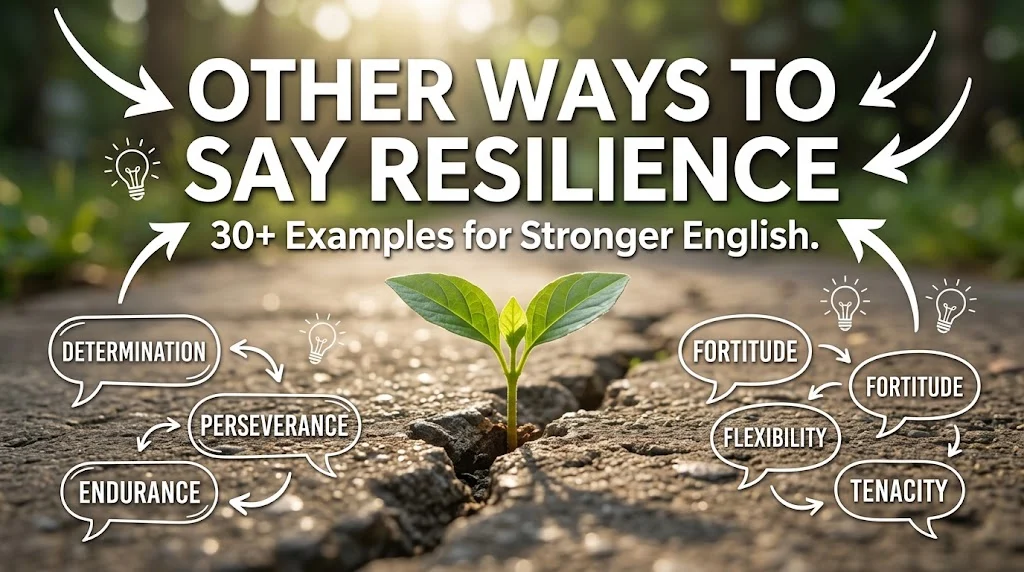
“Resilience” is the ability to recover quickly from difficulty and keep moving forward. For more variety and precision, try alternatives like “grit,” “toughness,” “fortitude,” “inner strength,” “resiliency,” or “emotional durability.”
“Resilience” is one of the most powerful words in modern English. It appears in job descriptions, leadership books, psychology articles, and everyday conversations about overcoming hardship. It describes the capacity to bend without breaking, to recover after setbacks, and to keep going when things get difficult.
This guide provides 30 practical alternatives with meanings, examples, and clear notes on tone. You will learn to express excitement in English when praising someone’s strength and use professional reaction phrases that fit workplace and academic writing.
Pull Quote: “Resilience is not one quality. It is a family of strengths, and each one deserves its own word.”
Quick Categories
Formal alternatives to “Resilience”
- Fortitude
- Resolve
- Endurance
- Equanimity
Pro Tip: Formal alternatives suit academic writing, leadership speeches, and official tributes.
Casual alternatives
- Grit
- Toughness
- Backbone
- Thick skin
Pro Tip: Casual options work well in spoken English and informal encouragement.
Professional alternatives
- Adaptability
- Emotional durability
- Composure under pressure
- Capacity to recover
Pro Tip: Professional alternatives suit CVs, performance reviews, and business writing.
Informal expressions
- Bounce back ability
- Rolling with the punches
- Keeping your chin up
- Getting back on your feet
Pro Tip: Informal expressions belong in conversations, texts, and motivational messages.
Pull Quote: “The right tone makes your English sound professional and confident.”
Common Mistakes
- Using “resilience” for every kind of strength.
Example: “She showed resilience in the meeting” when “composure” is more accurate. - Confusing resilience with stubbornness.
Example: “He refused all advice, showing great resilience.” That is rigidity, not resilience. - Overusing the word in business writing.
Example: “We need resilience, resilience, and more resilience.” Repetition weakens impact. - Using it as a countable noun incorrectly.
Example: “She has many resiliences.” The word is typically uncountable. - Applying it to trivial situations.
Example: “He showed resilience by waiting ten minutes for coffee.” The scale is too small.
What Does “Resilience” Mean?
Definition
It is the capacity to withstand or recover quickly from difficulties, setbacks, or adversity.
Grammar Explanation
“Resilience” is an uncountable noun. The adjective form is “resilient,” and the adverb form is “resiliently.” The alternative “resiliency” is a countable variant used mainly in American English.
Example Sentence
“Her resilience after the project failed impressed the entire team.”
When to Use “Resilience”
Common Contexts
- Psychology: Describing emotional recovery after trauma.
- Business: Praising employees who handle pressure well.
- Education: Discussing student persistence and growth.
- Sports: Describing athletes who recover from defeats.
- Personal life: Talking about overcoming illness, loss, or hardship.
Spoken vs Written
- Spoken: Common in motivational and reflective conversations.
- Written: Very common in academic, professional, and journalistic writing.
Formal vs Informal
- Formal: Standard in academic and professional contexts.
- Informal: Acceptable but often replaced by “grit” or “toughness” in casual speech.
Is It Professional or Polite to Say “Resilience”?
Politeness vs Professionalism
“Resilience” is polite and highly professional. It is widely used in corporate, academic, and clinical settings. However, it can sound generic when overused, so pairing it with specific alternatives often strengthens your message.
Business-Style Example
“Her adaptability and composure under pressure made her an ideal candidate for the role.”
Polite? Yes
Professional? Yes, in most contexts
Pull Quote: “Precision turns a compliment into a credible assessment.”
Pros and Cons of Using “Resilience”
Pros
- Simple and natural: Widely understood across all English registers.
- Friendly tone: Positive and encouraging.
- Common usage: Recognised in every professional field.
- Easy to understand: Requires no specialist vocabulary.
Cons
- Too informal for work: Rarely an issue, but can sound clichéd in corporate writing.
- Overused: Loses impact through repetition.
- Limited emotional range: Cannot express specific types of strength.
- Not suitable for formal writing: Acceptable, but precise alternatives often read better.
Other Ways to Say “Resilience” (With Examples)
These alternatives will help you sound more fluent, confident, and natural in different situations. Use them according to tone, context, and audience to express excitement, admiration, or approval.
1. Grit
Meaning: Courage and determination in the face of difficulty.
Explanation: Emphasises persistence rather than recovery.
Example Sentence: “Her grit carried her through years of training.”
Best Use: Motivation, sports
Worst Use: Clinical writing
Tone: Strong, determined, informal
Context Variability: Casual and professional
2. Fortitude
Meaning: Courage in facing pain or adversity.
Explanation: Formal and often used in tributes.
Example Sentence: “He faced the diagnosis with remarkable fortitude.”
Best Use: Formal tributes
Worst Use: Casual chats
Tone: Formal, dignified, serious
Context Variability: Professional and written
3. Toughness
Meaning: The ability to endure hardship.
Explanation: Direct and physical in tone.
Example Sentence: “Mental toughness is essential for long distance runners.”
Best Use: Sports, leadership
Worst Use: Sensitive contexts
Tone: Direct, strong, physical
Context Variability: Casual and professional
4. Inner strength
Meaning: A deep personal reserve of courage.
Explanation: Emotional and reflective.
Example Sentence: “She drew on her inner strength to rebuild her life.”
Best Use: Personal stories
Worst Use: Technical writing
Tone: Reflective, emotional, warm
Context Variability: Casual and written
5. Resiliency
Meaning: The American variant of resilience.
Explanation: Slightly more countable in usage.
Example Sentence: “The team showed great resiliency during the crisis.”
Best Use: American English
Worst Use: British formal writing
Tone: Neutral, professional, standard
Context Variability: Professional and written
6. Adaptability
Meaning: The ability to adjust to new conditions.
Explanation: Focuses on flexibility rather than recovery.
Example Sentence: “Her adaptability made her invaluable during the restructuring.”
Best Use: Workplace, CVs
Worst Use: Emotional stories
Tone: Professional, flexible, neutral
Context Variability: Professional and written
7. Endurance
Meaning: The capacity to withstand prolonged difficulty.
Explanation: Emphasises duration rather than recovery.
Example Sentence: “The expedition tested their endurance to the limit.”
Best Use: Sports, survival
Worst Use: Short term setbacks
Tone: Strong, sustained, physical
Context Variability: Professional and descriptive
8. Perseverance
Meaning: Continued effort despite difficulty.
Explanation: Focuses on persistence over time.
Example Sentence: “Her perseverance finally paid off with a promotion.”
Best Use: Education, careers
Worst Use: Sudden crises
Tone: Determined, steady, positive
Context Variability: Professional and written
9. Tenacity
Meaning: The quality of holding firmly to a course of action.
Explanation: Strong and slightly formal.
Example Sentence: “His tenacity in negotiations secured a better deal.”
Best Use: Business, law
Worst Use: Casual chats
Tone: Firm, determined, formal
Context Variability: Professional and written
10. Composure
Meaning: Calmness and self control under pressure.
Explanation: Focuses on emotional steadiness.
Example Sentence: “She maintained her composure throughout the interview.”
Best Use: Workplace, interviews
Worst Use: Physical endurance
Tone: Calm, controlled, professional
Context Variability: Professional and spoken
11. Equanimity
Meaning: Mental calmness, especially in difficult situations.
Explanation: Formal and philosophical.
Example Sentence: “He accepted the criticism with equanimity.”
Best Use: Formal writing
Worst Use: Casual speech
Tone: Formal, balanced, philosophical
Context Variability: Professional and written
12. Bounce back ability
Meaning: The capacity to recover quickly.
Explanation: Informal and vivid.
Example Sentence: “Her bounce back ability after the loss was inspiring.”
Best Use: Sports, motivation
Worst Use: Academic writing
Tone: Informal, energetic, vivid
Context Variability: Casual and spoken
13. Backbone
Meaning: Strength of character and courage.
Explanation: Informal and slightly physical.
Example Sentence: “It takes backbone to admit you were wrong.”
Best Use: Informal praise
Worst Use: Formal documents
Tone: Informal, strong, direct
Context Variability: Casual and spoken
14. Thick skin
Meaning: The ability to tolerate criticism.
Explanation: Focuses on emotional protection.
Example Sentence: “You need a thick skin to work in journalism.”
Best Use: Careers, advice
Worst Use: Sensitive topics
Tone: Informal, practical, blunt
Context Variability: Casual and spoken
15. Rolling with the punches
Meaning: Adapting to setbacks as they come.
Explanation: Idiomatic and informal.
Example Sentence: “She is good at rolling with the punches.”
Best Use: Conversation
Worst Use: Formal writing
Tone: Informal, flexible, resilient
Context Variability: Casual and spoken
16. Keeping your chin up
Meaning: Staying positive during difficulty.
Explanation: Encouraging and warm.
Example Sentence: “Keep your chin up, things will improve.”
Best Use: Encouragement
Worst Use: Corporate reports
Tone: Warm, encouraging, informal
Context Variability: Casual and spoken
17. Getting back on your feet
Meaning: Recovering after a setback.
Explanation: Practical and physical in imagery.
Example Sentence: “After the bankruptcy, he focused on getting back on his feet.”
Best Use: Personal recovery
Worst Use: Technical writing
Tone: Practical, hopeful, informal
Context Variability: Casual and spoken
18. Emotional durability
Meaning: The capacity to withstand emotional strain.
Explanation: Clinical and professional.
Example Sentence: “Emotional durability is essential for emergency responders.”
Best Use: Psychology, HR
Worst Use: Everyday chat
Tone: Clinical, professional, precise
Context Variability: Professional and written
19. Capacity to recover
Meaning: The ability to return to a normal state.
Explanation: Neutral and technical.
Example Sentence: “The report assessed the company’s capacity to recover from losses.”
Best Use: Business reports
Worst Use: Personal stories
Tone: Technical, neutral, formal
Context Variability: Professional and written
20. Mental toughness
Meaning: Psychological strength under pressure.
Explanation: Common in sports and performance.
Example Sentence: “Mental toughness separates good athletes from great ones.”
Best Use: Sports, coaching
Worst Use: Clinical writing
Tone: Strong, focused, athletic
Context Variability: Professional and spoken
21. Steadfastness
Meaning: Firm and unwavering commitment.
Explanation: Formal and moral in tone.
Example Sentence: “Her steadfastness during the crisis earned widespread respect.”
Best Use: Formal tributes
Worst Use: Casual chats
Tone: Formal, loyal, steady
Context Variability: Professional and written
22. Hardiness
Meaning: The ability to survive difficult conditions.
Explanation: Often used in psychology and botany.
Example Sentence: “The study measured psychological hardiness among soldiers.”
Best Use: Psychology, research
Worst Use: Casual conversations
Tone: Academic, technical, robust
Context Variability: Professional and written
23. Stamina
Meaning: Sustained physical or mental effort.
Explanation: Focuses on energy over time.
Example Sentence: “The project required both creativity and stamina.”
Best Use: Long projects
Worst Use: Sudden shocks
Tone: Physical, sustained, energetic
Context Variability: Professional and descriptive
24. Staying power
Meaning: The ability to last or endure.
Explanation: Informal and practical.
Example Sentence: “The brand has real staying power in a tough market.”
Best Use: Business, brands
Worst Use: Personal trauma
Tone: Practical, informal, durable
Context Variability: Casual and professional
25. Level headedness
Meaning: Calm and sensible thinking under pressure.
Explanation: Focuses on judgement rather than endurance.
Example Sentence: “Her level headedness kept the team focused.”
Best Use: Leadership
Worst Use: Physical endurance
Tone: Calm, rational, professional
Context Variability: Professional and spoken
26. Poise
Meaning: Graceful and confident composure.
Explanation: Elegant and slightly formal.
Example Sentence: “He handled the hostile questions with poise.”
Best Use: Public speaking
Worst Use: Physical hardship
Tone: Elegant, calm, confident
Context Variability: Professional and written
27. Buoyancy
Meaning: The ability to stay positive and recover quickly.
Explanation: Light and optimistic.
Example Sentence: “Her natural buoyancy lifted the mood of the whole office.”
Best Use: Personality traits
Worst Use: Technical reports
Tone: Optimistic, light, warm
Context Variability: Professional and written
28. Steel
Meaning: Great strength of character.
Explanation: Metaphorical and powerful.
Example Sentence: “There is steel in her, and it shows under pressure.”
Best Use: Literary praise
Worst Use: Casual texts
Tone: Strong, dramatic, literary
Context Variability: Creative and spoken
29. Guts
Meaning: Courage and determination.
Explanation: Very informal and physical.
Example Sentence: “It took guts to start over at fifty.”
Best Use: Informal praise
Worst Use: Formal writing
Tone: Informal, bold, direct
Context Variability: Casual and spoken
30. Heart
Meaning: Courage, spirit, and determination.
Explanation: Emotional and warm.
Example Sentence: “The team showed real heart after losing the first match.”
Best Use: Sports, motivation
Worst Use: Technical writing
Tone: Emotional, warm, motivational
Context Variability: Casual and spoken
Pull Quote: “Professional reaction phrases and precise strength words both show the same thing: you notice the person, not just the outcome.”
Mini Quiz / Self-Check
- Scenario: You are writing a performance review praising an employee who stayed calm during a crisis. Which fits best?
- A) She showed guts.
- B) She demonstrated composure under pressure.
- C) She had a thick skin.
- Scenario: You are writing a motivational message to a friend who failed an exam. Which is most natural?
- A) Keep your chin up, you will get there.
- B) Your equanimity is noted.
- C) Your hardiness is impressive.
- Scenario: You are writing an academic paper on psychological strength. Which word fits best?
- A) Guts.
- B) Hardiness.
- C) Backbone.
- Scenario: Which phrase is the most informal?
- A) Endurance.
- B) Rolling with the punches.
- C) Steadfastness.
Comparison Table: Top Alternatives
| Phrase | Tone | Best Use |
| Grit | Strong, determined | Motivation, sports |
| Fortitude | Formal, dignified | Formal tributes |
| Adaptability | Professional, flexible | Workplace, CVs |
| Composure | Calm, controlled | Interviews, leadership |
| Tenacity | Firm, determined | Business, law |
| Perseverance | Steady, positive | Education, careers |
| Endurance | Strong, sustained | Sports, survival |
| Inner strength | Reflective, emotional | Personal stories |
| Mental toughness | Strong, focused | Sports, coaching |
| Equanimity | Formal, balanced | Academic writing |
FAQs
1. What is a formal alternative to “resilience”?
“Fortitude,” “equanimity,” and “steadfastness” are strong formal alternatives suitable for academic writing, tributes, and official documents.
2. How do I praise someone’s resilience at work?
Use specific phrases such as “composure under pressure,” “adaptability,” or “capacity to recover” to make your praise credible and professional.
3. What is the difference between resilience and grit?
“Grit” focuses on persistence and passion over time, while “resilience” focuses on recovery after setbacks.
4. What can I say instead of “resilience” in casual conversation?
“Grit,” “backbone,” “thick skin,” and “bounce back ability” are natural and informal alternatives for everyday speech.
5. Is “resilience” a countable or uncountable noun?
“Resilience” is typically uncountable, while “resiliency” is a countable variant used mainly in American English.
Conclusion
Learning other ways to say resilience gives you the precision to describe strength in all its forms, from quiet composure to relentless grit. Whether you are writing a performance review, encouraging a friend, or drafting an academic paper, the right word makes your English sound thoughtful and fluent. These alternatives to resilience help you move beyond one overused term and into richer expression.
Practise by describing the strengths you notice in the people around you each day. Pay close attention to tone and context, because the right word depends on the situation and the audience. With steady practice, these informal expressions in English and their formal counterparts will become part of your everyday fluency.

Stephen King is an American writer and language enthusiast who enjoys creating clear, practical content that helps readers communicate with confidence. His work at QuickResponsess.com focuses on making English easier to understand through simple explanations and everyday examples.