Quick Answer:
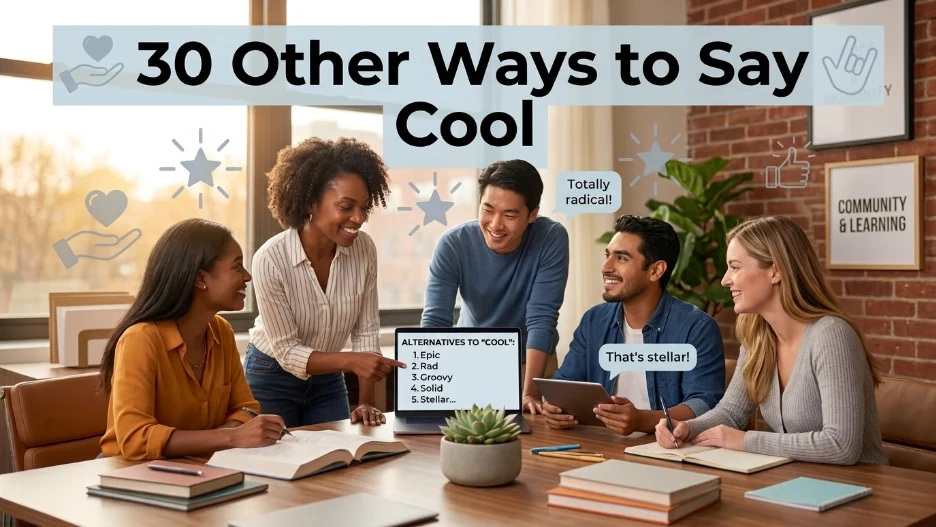
Looking for fresh alternatives to “cool”? Here are 5 top options to get you started: Awesome, Excellent, Impressive, Stylish, Superb. Each one fits different tones and situations, from casual chats to professional emails.
The word “cool” is a staple of modern English. You use it to show approval, admiration, or just that something is interesting. It’s versatile, easy to say, and everyone understands it. But relying on “cool” for every positive reaction can make your English sound repetitive and informal.
Learning alternatives to “cool” is one of the fastest ways to sound more fluent and confident. Whether you want to express excitement in English during a casual conversation or need a polished phrase for a work email, having a rich vocabulary helps you match your tone to the situation.
Quick Categories
Formal Alternatives
- Excellent
- Superior
- Commendable
- Admirable
- Exceptional
- Outstanding
Pro Tip:
Use these in professional emails, presentations, or when writing to a client. They show respect and sophistication.
Casual Alternatives
- Awesome
- Sweet
- Great
- Nice one
- Perfect
- Neat
Pro Tip:
These work well with friends and family. They’re warm and natural without being too informal.
Professional Alternatives
- Impressive
- Refined
- Polished
- Sophisticated
- Elegant
- Exemplary
Pro Tip:
When describing work or ideas, these words signal high standards and attention to detail.
Informal Expressions
- Lit
- Dope
- Sick
- Rad
- Chill
- Wicked
Pro Tip:
Save these for casual settings with peers. They can be dated or misunderstood across generations, so choose wisely.
Common Mistakes Using “Cool”
Avoid these common errors to sound more natural:
- Overusing “cool” in professional emails. “Your proposal is cool” sounds too casual. Try “Your proposal is excellent.”
- Using “cool” for formal achievements. “She got a cool grade” is incorrect. Use “She got an outstanding grade.”
- Saying “cool” to mean “cold” in a positive sense. “The weather is cool” means slightly cold, not “great.”
- Using “cool” as a filler in every sentence. Repetition weakens your message.
- Misusing “cool” to describe people in a professional context. “He’s a cool manager” might sound unprofessional. Use “He’s an effective manager.”
What Does “Cool” Mean?
Definition: As a slang term, “cool” means fashionably attractive, impressive, or excellent. It can also mean calm, composed, or unruffled.
Example Sentence: “That new café is so cool—you should try their coffee.”
When to Use “Cool”
- When reacting positively to news or ideas
- In casual conversations with friends and peers
- In informal written messages (texts, social media)
- To describe something as fashionable or trendy
Spoken vs Written: “Cool” is more common in spoken English than in formal writing.
Formal vs Informal: “Cool” is decidedly informal. In most professional contexts, use stronger alternatives.
Is It Professional or Polite to Say “Cool”?
Professional? ❌ No (in most cases)
Polite? ✔️ Yes (in casual settings)
Business Example: Instead of: “Your presentation was cool.”
Say: “Your presentation was impressive and well structured.”
Conclusion: “Cool” is polite in friendly contexts but generally too informal for professional or academic writing.
Pros and Cons of Using “Cool”
| Pros | Cons |
| Simple and natural | Too informal for work |
| Friendly tone | Overused |
| Common and universally understood | Limited emotional range |
| Easy to understand | Not suitable for formal writing |
Other Ways to Say “Cool” (With Examples)
These other ways to say “cool” will help you sound more fluent, confident, and natural in different situations. Use them according to tone, context, and audience to express excitement, admiration, or approval.
Formal & Professional Alternatives
1. Phrase: Excellent
Meaning: Extremely good or first rate.
Explanation: A polished, professional synonym for “cool” that carries weight.
Example Sentence: “Your analysis of the quarterly report was excellent.”
Best Use: Professional feedback
Worst Use: Reacting to a funny meme
Tone: Formal, respectful
Context Variability: Professional / Spoken / Written
2. Phrase: Impressive
Meaning: Deserving admiration because of excellence.
Explanation: Highlights skill or achievement with a formal edge.
Example Sentence: “Her presentation skills are truly impressive.”
Best Use: Job interviews
Worst Use: Describing a casual outfit
Tone: Professional, respectful
3. Phrase: Outstanding
Meaning: Exceptionally good or remarkable.
Explanation: Stronger than “cool” for formal praise.
Example Sentence: “The team delivered an outstanding performance this quarter.”
Best Use: Performance reviews
Worst Use: Reacting to a friend’s joke
Tone: Formal, elevating
4. Phrase: Commendable
Meaning: Deserving praise.
Explanation: Carries a sense of approval and respect.
Example Sentence: “Your commitment to this project is commendable.”
Best Use: Written feedback
Worst Use: Casual conversation
Tone: Very formal, appreciation
5. Phrase: Refined
Meaning: Elegant, polished, and cultured.
Explanation: Suggests sophistication and good taste.
Example Sentence: “The design has a refined aesthetic that appeals to luxury clients.”
Best Use: Describing art or design
Worst Use: Describing a fast food meal
Tone: Formal, cultured
6. Phrase: Sophisticated
Meaning: Wise, complex, and cultured.
Explanation: Suggests maturity and high level quality.
Example Sentence: “That’s a sophisticated approach to a complex problem.”
Best Use: Describing technology or strategy
Worst Use: Describing a child’s drawing
Tone: Professional, intellectual
7. Phrase: Exemplary
Meaning: Serving as a desirable model; outstanding.
Explanation: Used for the highest level of praise in formal settings.
Example Sentence: “She showed exemplary leadership during the crisis.”
Best Use: Awards or recommendations
Worst Use: Everyday conversation
Tone: Very formal, high praise
8. Phrase: Superb
Meaning: Of excellent quality; magnificent.
Explanation: Classic alternative for “excellent.”
Example Sentence: “The food at that restaurant was superb.”
Best Use: Formal praise
Worst Use: Reacting to a joke
Tone: Formal, elevated
Casual & Everyday Alternatives
9. Phrase: Awesome
Meaning: Extremely impressive or enjoyable.
Explanation: One of the most common casual alternatives.
Example Sentence: “You got the job? That’s awesome!”
Best Use: Reacting to good news
Worst Use: Formal writing
Tone: Enthusiastic, friendly
10. Phrase: Sweet
Meaning: Pleasant, satisfying, or pleasing.
Explanation: A friendly and slightly informal way to show approval.
Example Sentence: “You got us tickets to the show? Sweet!”
Best Use: Expressing appreciation
Worst Use: Professional reports
Tone: Casual, warm
11. Phrase: Great
Meaning: Very good or excellent.
Explanation: Simple, safe, and always appropriate in casual or neutral settings.
Example Sentence: “That’s a great idea!”
Best Use: Everyday situations
Worst Use: Formal praise
Tone: Neutral casual
12. Phrase: Neat
Meaning: Pleasant, convenient, or clever.
Explanation: More reserved than “cool,” but positive and charming.
Example Sentence: “What a neat gadget!”
Best Use: Describing clever items
Worst Use: Exciting news
Tone: Reserved, positive
13. Phrase: Nice one
Meaning: A friendly compliment.
Explanation: Common in British English for casual approval.
Example Sentence: “You fixed the printer? Nice one!”
Best Use: Replying to a small success
Worst Use: Formal context
Tone: Informal, friendly
14. Phrase: Perfect
Meaning: Ideal or exactly right.
Explanation: Shows that something meets expectations completely.
Example Sentence: “Your timing is perfect.”
Best Use: Situational approval
Worst Use: Broad praise
Tone: Casual, satisfied
Slang & Informal Expressions
15. Phrase: Lit
Meaning: Exciting, excellent, or fun.
Explanation: Popular slang for events or experiences that are exciting.
Example Sentence: “The party last night was absolutely lit!”
Best Use: Describing events
Worst Use: Formal or professional contexts
Tone: Very informal, playful
16. Phrase: Dope
Meaning: Very good or stylish.
Explanation: Common in hip hop culture.
Example Sentence: “Those sneakers are dope!”
Best Use: Describing fashion
Worst Use: Professional writing
Tone: Slang, trendy
17. Phrase: Sick
Meaning: Amazing or excellent (in slang).
Explanation: A classic example of negative words used positively.
Example Sentence: “That skateboard trick was sick!”
Best Use: Extreme performances
Worst Use: Formal contexts
Tone: Slang, youthful
18. Phrase: Rad
Meaning: Excellent or exciting.
Explanation: Short for “radical.”
Example Sentence: “That guitar solo was rad!”
Best Use: Music or sports
Worst Use: Professional emails
Tone: Retro slang, informal
19. Phrase: Chill
Meaning: Relaxed, calm, or enjoyable.
Explanation: Often used to describe people or atmospheres.
Example Sentence: “The vibe in this café is so chill.”
Best Use: Describing atmospheres
Worst Use: Formal feedback
Tone: Relaxed, informal
20. Phrase: Wicked
Meaning: Excellent or very good.
Explanation: Common in New England and UK English.
Example Sentence: “That burger was wicked good!”
Best Use: Regional conversational English
Worst Use: Global professional communication
Tone: Informal, regional
21. Phrase: Killer
Meaning: Very impressive or effective.
Explanation: Can describe anything from a deal to a song.
Example Sentence: “You made a killer presentation.”
Best Use: Casual praise
Worst Use: Formal writing
Tone: Informal, emphatic
22. Phrase: Fresh
Meaning: New, stylish, or appealing.
Explanation: Often describes fashion or new music.
Example Sentence: “His style is so fresh.”
Best Use: Fashion and trends
Worst Use: Professional work
Tone: Slang, youthful
Descriptive Alternatives (People & Fashion)
23. Phrase: Chic
Meaning: Elegantly and stylishly fashionable.
Example Sentence: “She always looks so chic.”
Best Use: Fashion, design
Worst Use: Describing functional items
Tone: Sophisticated, stylish
24. Phrase: Stylish
Meaning: Fashionable and sophisticated.
Example Sentence: “I love your stylish outfit today.”
Best Use: Compliments on appearance
Worst Use: Describing weather
Tone: Polite, friendly
25. Phrase: Classy
Meaning: Stylish and sophisticated in behavior or appearance.
Example Sentence: “That’s a classy way to handle a difficult situation.”
Best Use: Compliments on manner or taste
Worst Use: Casual events
Tone: Respectful, elegant
26. Phrase: Sharp
Meaning: Smart and neatly dressed.
Example Sentence: “You look sharp in that suit.”
Best Use: Formal appearances
Worst Use: Everyday casual outfits
Tone: Formal, complimentary
Emotional & Reaction Based Alternatives
27. Phrase: Fantastic
Meaning: Extremely wonderful or impressive.
Explanation: A high intensity alternative to “cool.”
Example Sentence: “That’s fantastic news!”
Best Use: Strong positive reactions
Worst Use: Underwhelming events
Tone: Enthusiastic
28. Phrase: Amazing
Meaning: Astonishing or wonderful.
Explanation: Universally understood and widely used.
Example Sentence: “Your support has been amazing.”
Best Use: Expressing gratitude
Worst Use: Describing everyday objects
Tone: Warm, impressed
29. Phrase: Brilliant
Meaning: Very clever or impressive.
Explanation: A top choice, especially in British English.
Example Sentence: “That’s a brilliant solution!”
Best Use: Intelligence and ideas
Worst Use: Describing objects
Tone: Intellectual, impressed
30. Phrase: Sensational
Meaning: Very impressive or wonderful.
Explanation: Adds drama and excitement to your praise.
Example Sentence: “The performance was sensational!”
Best Use: Art and entertainment
Worst Use: Everyday small achievements
Tone: Dramatic, elevated
“Mastering tone is what separates fluent English speakers from truly confident ones.”
Mini Quiz: Choose the Best Alternative
1. Your colleague gives a well researched presentation.
What is the most professional response?
- A) “That was cool!”
- B) “That was impressive!”
- C) “That was dope!”
Answer: B
2. Your friend shows you their new car.
What’s the best casual response?
- A) “Sweet ride!”
- B) “Superb vehicle.”
- C) “Commendable choice.”
Answer: A
3. A client asks if you can meet a tight deadline.
What is the most reassuring response?
- A) “Cool, no problem.”
- B) “Yes, we have a solid plan to meet it.”
- C) “Lit, we’ll handle it.”
Answer: B
Comparison Table: Top 10 Alternatives
| Phrase | Tone | Best Use |
| Excellent | Formal | Professional feedback |
| Impressive | Professional | Job interviews, presentations |
| Outstanding | Formal | Performance reviews |
| Awesome | Casual | Reacting to good news |
| Sweet | Casual | Friendly appreciation |
| Lit | Slang | Events, parties |
| Dope | Slang | Fashion, music |
| Classy | Sophisticated | Manners, style |
| Brilliant | Intellectual | Ideas, solutions |
| Sensational | Dramatic | Art, entertainment |
FAQs
1. What is the best alternative to “cool” in a professional email?
Use “excellent,” “impressive,” or “outstanding.” These convey approval without being too informal.
2. Is “cool” unprofessional in the workplace?
In most cases, yes. “Cool” is considered informal and may be viewed as too casual in emails with clients or managers. Use professional alternatives.
3. How can I express excitement in English without using “cool”?
Use dynamic words like “amazing,” “fantastic,” or “sensational.” These convey genuine enthusiasm and are widely understood.
4. What are some British alternatives to “cool”?
“Brilliant,” “wicked,” and “ace” are common British alternatives. “Nice one” is also used for casual approval.
5. What is a formal way to say someone is “cool” (as in fashionable)?
Use “sophisticated,” “refined,” or “elegant” for formal contexts. “Chic” works for fashion, while “classy” suits behavior.
Conclusion
Learning other ways to say “cool” isn’t about ditching a great word it’s about expanding your expressive range. Whether you need professional reaction phrases for work or informal expressions in English for social situations, having options helps you sound more fluent, confident, and situationally aware.
Practice using one or two new alternatives each day. Listen to how native speakers choose their words. Over time, your vocabulary will grow naturally, and you’ll never feel stuck saying “cool” again.

Sally Rooney is an American writer who contributes to QuickResponsess.com, creating clear and practical content for English learners. Her articles help readers build confidence in using words and expressions accurately in everyday and professional communication.