Quick Answer 🔥
Try these alternatives: That must be difficult for you, I’m saddened to hear that, My heart goes out to you, I’m here for you, and Please accept my sympathies.
The phrase “I am sorry to hear that” is one of the most common expressions in English. You use it when someone shares unfortunate news whether it’s a job loss, an illness, a breakup, or a professional setback. It’s a polite, empathetic response that shows you care.
But here’s the problem: using the same phrase over and over can make you sound repetitive, generic, or even insincere. In professional settings, it may come across as too casual. In personal conversations, it might not convey the depth of your concern. That’s why learning alternatives to “I am sorry to hear that” is essential for anyone who wants to sound fluent, thoughtful, and emotionally intelligent in English.
Quick Categories
Formal Alternatives to “I Am Sorry to Hear That”
- I am saddened to hear that
- Please accept my sympathies
- I regret to learn of this
- I am deeply sorry to hear that
- I extend my sincere condolences
Casual Alternatives
- That’s too bad
- That really sucks
- I hate that for you
- That’s rough
- Bummer
Professional Alternatives
- I am sorry to learn of this
- That must be difficult for you
- I understand this is disappointing
- I empathize with your situation
- I appreciate you sharing this with me
Informal Expressions
- Oh no, I’m so sorry
- That’s awful
- I feel for you
- You have my sympathy
- I’m gutted for you
Pro Tip: Match your tone to your relationship with the person and the seriousness of the news. A close friend needs warmth; a client needs professionalism. Choose accordingly.
Common Mistakes
Even advanced English learners make errors when using “I am sorry to hear that.” Here are five common mistakes to avoid:
1. Using it when you should apologize instead
- ❌ “I’m sorry to hear that I missed the deadline.”
- ✅ “I apologize for missing the deadline.”
2. Overusing it in professional emails
- ❌ “I’m sorry to hear that. I’m sorry to hear that you’re unhappy. I’m sorry to hear that again.”
- ✅ Vary your language with professional alternatives.
3. Using it for trivial matters
- ❌ “I’m sorry to hear that your coffee was cold.”
- ✅ “That’s unfortunate about your coffee.”
4. Forgetting the verb “to be”
- ❌ “Sorry hear that.”
- ✅ “I’m sorry to hear that.”
5. Using it when you’re the cause of the bad news
- ❌ “I’m sorry to hear that you’re upset with my work.”
- ✅ “I apologize for my mistake. Let me fix it.”
What Does “I Am Sorry to Hear That” Mean?
The phrase “I am sorry to hear that” is an expression of sympathy or empathy. It does not mean you are apologizing for something you did. Instead, it acknowledges someone else’s misfortune, pain, or disappointment and shows that you care.
Grammar note: It’s a complete sentence with a subject (I), a verb (am), and a complement (sorry to hear that). The word that refers to the bad news the other person just shared.
Example: “I am sorry to hear that you didn’t get the promotion. I know how hard you worked for it.”
When to Use “I Am Sorry to Hear That”
- When someone shares news of an illness, injury, or health issue
- When a friend or colleague experiences a loss (job, relationship, loved one)
- When someone faces a disappointment or setback
- When a client or customer expresses dissatisfaction
- When you want to show emotional support in a conversation
Spoken vs Written: Works in both, but in writing, it can sound impersonal if overused.
Formal vs Informal: It’s neutral polite enough for most situations but not formal enough for official correspondence like condolence letters.
Is It Professional or Polite to Say “I Am Sorry to Hear That”?
Polite? ✔️ Yes. It’s a kind, empathetic response that shows emotional intelligence.
Professional? ❌ No (in most cases). While it’s acceptable in casual workplace conversations, it can sound generic and overly casual in high-stakes professional communication.
Business-style example: “I am sorry to hear that your team encountered these challenges. Please let me know how we can support you.” This is polite but not as polished as formal alternatives.
Pros and Cons of Using “I Am Sorry to Hear That”
Pros
- Simple and natural easy to use in any conversation
- Friendly tone shows warmth and care
- Common usage universally understood by all English speakers
- Easy to understand no complicated vocabulary
Cons
- Too informal for work lacks the gravitas needed in professional settings
- Overused can sound like a scripted response
- Limited emotional range doesn’t convey deep sympathy
- Not suitable for formal writing avoid in official letters or emails
Other Ways to Say “I Am Sorry to Hear That” (With Examples)
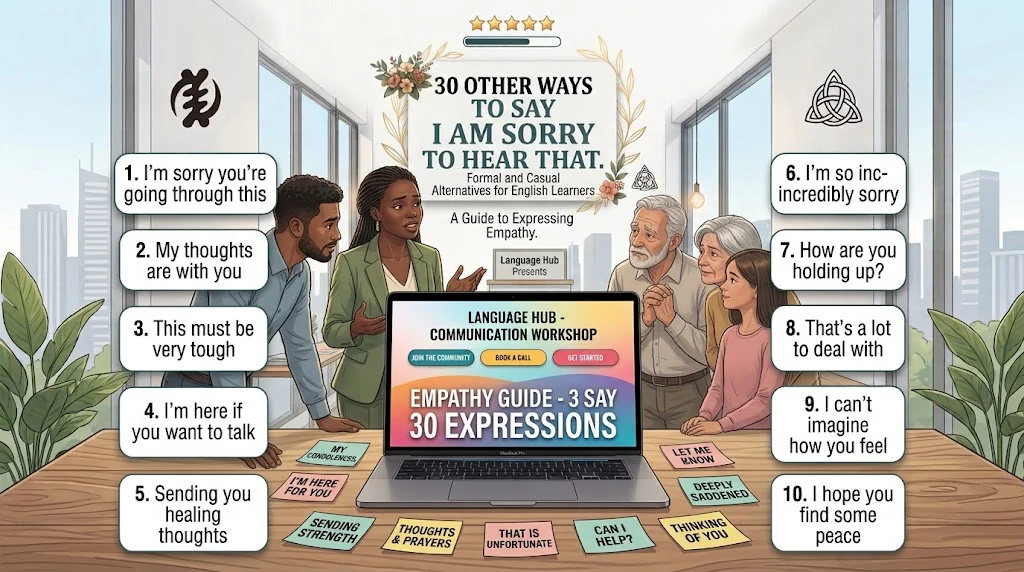
These 30 alternatives to “I am sorry to hear that” will help you sound more fluent, confident, and natural in different situations. Use them according to tone, context, and audience to express empathy, concern, or support.
Formal Alternatives
1. Phrase: I am saddened to hear that
- Meaning: Expresses deep sorrow upon receiving bad news.
- Explanation: A formal and heartfelt way to show you are genuinely upset by the news.
- Example Sentence: “I am saddened to hear that you’re leaving the company. You will be greatly missed.”
- Best Use: Professional emails
- Worst Use: Casual conversations
- Tone: Formal, sincere
- Context Variability: Professional / written
2. Phrase: Please accept my sympathies
- Meaning: A polite request for the other person to receive your condolences.
- Explanation: Commonly used in formal situations, especially surrounding loss or grief.
- Example Sentence: “Please accept my sympathies during this difficult time for your family.”
- Best Use: Bereavement, serious loss
- Worst Use: Minor disappointments
- Tone: Formal, compassionate
- Context Variability: Professional / formal written
3. Phrase: I regret to learn of this
- Meaning: A refined way to say you are sorry to receive this information.
- Explanation: Maintains professionalism while showing concern.
- Example Sentence: “I regret to learn of this situation and will investigate it immediately.”
- Best Use: Customer complaints, internal reports
- Worst Use: Personal emotional matters
- Tone: Professional, composed
- Context Variability: Professional / written
4. Phrase: I am deeply sorry to hear that
- Meaning: Adds emotional weight to the standard expression.
- Explanation: The word deeply intensifies the sincerity of your sympathy.
- Example Sentence: “I am deeply sorry to hear that your mother has passed away.”
- Best Use: Serious personal news
- Worst Use: Everyday inconveniences
- Tone: Formal, heartfelt
- Context Variability: Professional / spoken
5. Phrase: I extend my sincere condolences
- Meaning: Offers formal sympathy, typically for a death.
- Explanation: A very formal phrase used in official correspondence.
- Example Sentence: “I extend my sincere condolences to you and your family.”
- Best Use: Death, bereavement
- Worst Use: Minor issues
- Tone: Highly formal, respectful
- Context Variability: Professional / formal written
6. Phrase: That is most unfortunate
- Meaning: A formal way to acknowledge bad news.
- Explanation: Sounds professional but somewhat detached use carefully.
- Example Sentence: “That is most unfortunate. Let’s see how we can resolve this.”
- Best Use: Professional setbacks
- Worst Use: Personal or emotional situations
- Tone: Formal, neutral
- Context Variability: Professional / written
7. Phrase: I am sorry to learn of this situation
- Meaning: A more formal version of the original phrase.
- Explanation: Uses learn instead of hear for a more polished tone.
- Example Sentence: “I am sorry to learn of this situation and will do everything I can to assist.”
- Best Use: Work emails, client communication
- Worst Use: Casual conversation
- Tone: Professional, courteous
- Context Variability: Professional / written
8. Phrase: This must be very difficult for you
- Meaning: Validates the other person’s hardship.
- Explanation: Shows empathy by acknowledging their emotional struggle.
- Example Sentence: “This must be very difficult for you. Please know we’re here to support you.”
- Best Use: Personal or professional challenges
- Worst Use: Trivial matters
- Tone: Warm, formal
- Context Variability: Professional / spoken
9. Phrase: I empathize with your situation
- Meaning: Shows you understand and share their feelings.
- Explanation: A sophisticated way to express emotional intelligence.
- Example Sentence: “I empathize with your situation and appreciate your patience.”
- Best Use: Conflict resolution, HR matters
- Worst Use: Light or casual topics
- Tone: Formal, supportive
- Context Variability: Professional / written
10. Phrase: I share your sorrow
- Meaning: Expresses that you feel their pain alongside them.
- Explanation: A compassionate, formal expression of solidarity.
- Example Sentence: “I share your sorrow at this difficult time.”
- Best Use: Grief, loss
- Worst Use: Everyday problems
- Tone: Formal, compassionate
- Context Variability: Professional / formal written
Professional Alternatives
11. Phrase: I am sorry to hear about the setback
- Meaning: Acknowledges a professional disappointment.
- Explanation: Specific to work-related challenges.
- Example Sentence: “I am sorry to hear about the setback on the project. Let’s regroup and find a solution.”
- Best Use: Workplace challenges
- Worst Use: Personal issues
- Tone: Professional, supportive
- Context Variability: Professional / spoken
12. Phrase: That must be disappointing
- Meaning: Recognizes the other person’s feelings of letdown.
- Explanation: Validates their emotional response without being overly emotional yourself.
- Example Sentence: “That must be disappointing after all the effort you put in.”
- Best Use: Missed goals, rejected proposals
- Worst Use: Serious personal loss
- Tone: Professional, empathetic
- Context Variability: Professional / spoken
13. Phrase: I understand this is not easy
- Meaning: Shows awareness of the other person’s difficulty.
- Explanation: A neutral, professional way to acknowledge hardship.
- Example Sentence: “I understand this is not easy for you. Let’s work through it together.”
- Best Use: Performance reviews, difficult conversations
- Worst Use: Casual chats
- Tone: Professional, calm
- Context Variability: Professional / spoken
14. Phrase: I appreciate you sharing this with me
- Meaning: Thanks the person for trusting you with their news.
- Explanation: Shows respect and gratitude for their openness.
- Example Sentence: “I appreciate you sharing this with me. Let’s see how we can move forward.”
- Best Use: Client feedback, team discussions
- Worst Use: Extremely emotional situations
- Tone: Professional, appreciative
- Context Variability: Professional / written
15. Phrase: I’m sorry you’re dealing with this
- Meaning: Acknowledges their struggle in a supportive way.
- Explanation: Shows you recognize they are facing a challenge.
- Example Sentence: “I’m sorry you’re dealing with this. How can I support you?”
- Best Use: Work stress, personal difficulties
- Worst Use: Formal letters
- Tone: Professional, warm
- Context Variability: Professional / spoken
16. Phrase: I regret any frustration this has caused
- Meaning: Apologizes for the emotional impact of a problem.
- Explanation: Professional way to address customer or client dissatisfaction.
- Example Sentence: “I regret any frustration this has caused and assure you we’re resolving it.”
- Best Use: Customer service, support
- Worst Use: Personal matters
- Tone: Professional, accountable
- Context Variability: Professional / written
17. Phrase: I can only imagine how hard that must be
- Meaning: Shows deep empathy by putting yourself in their shoes.
- Explanation: A respectful way to acknowledge their pain without claiming to fully understand.
- Example Sentence: “I can only imagine how hard that must be for you and your team.”
- Best Use: Serious professional or personal challenges
- Worst Use: Minor issues
- Tone: Warm, professional
- Context Variability: Professional / spoken
18. Phrase: That sounds really challenging
- Meaning: Recognizes the difficulty of their situation.
- Explanation: A supportive phrase that validates their experience.
- Example Sentence: “That sounds really challenging. Let me know how I can help.”
- Best Use: Workload issues, project difficulties
- Worst Use: Grief or loss
- Tone: Professional, supportive
- Context Variability: Professional / spoken
19. Phrase: I’m sorry to hear about the difficulty
- Meaning: A direct professional alternative.
- Explanation: Simple, clear, and appropriate for most work situations.
- Example Sentence: “I’m sorry to hear about the difficulty with the new system. We’re looking into it.”
- Best Use: General professional problems
- Worst Use: Personal emotional news
- Tone: Professional, neutral
- Context Variability: Professional / written
20. Phrase: I wish things were different
- Meaning: Expresses a desire for a better outcome.
- Explanation: A gentle, empathetic way to respond to bad news.
- Example Sentence: “I wish things were different for you right now. You have my full support.”
- Best Use: Layoffs, project cancellations
- Worst Use: Minor disappointments
- Tone: Professional, compassionate
- Context Variability: Professional / spoken
Casual Alternatives
21. Phrase: That’s too bad
- Meaning: A simple, informal way to acknowledge bad news.
- Explanation: Very common in everyday speech, light and easy.
- Example Sentence: “That’s too bad about your car breaking down.”
- Best Use: Friends, casual settings
- Worst Use: Serious or professional situations
- Tone: Casual, light
- Context Variability: Informal / spoken
22. Phrase: That really sucks
- Meaning: Strong informal expression of sympathy.
- Explanation: Use only with close friends, it’s slang and can be seen as crude.
- Example Sentence: “That really sucks. I’m sorry you have to deal with that.”
- Best Use: Close friends, very casual settings
- Worst Use: Professional or formal contexts
- Tone: Informal, genuine
- Context Variability: Informal / spoken
23. Phrase: I hate that for you
- Meaning: Shows you dislike the situation they’re in.
- Explanation: Casual but empathetic common among younger speakers.
- Example Sentence: “I hate that for you. Let me know if I can do anything.”
- Best Use: Friends, peers
- Worst Use: Professional environments
- Tone: Informal, sympathetic
- Context Variability: Informal / spoken
24. Phrase: That’s rough
- Meaning: Acknowledges that their situation is difficult.
- Explanation: Short, casual, and relatable.
- Example Sentence: “That’s rough. Hang in there.”
- Best Use: Casual conversations with friends
- Worst Use: Professional or formal settings
- Tone: Casual, supportive
- Context Variability: Informal / spoken
25. Phrase: Bummer
- Meaning: A very informal expression of disappointment.
- Explanation: One-word response light and quick.
- Example Sentence: “Bummer. I was really looking forward to that trip too.”
- Best Use: Text messages, close friends
- Worst Use: Any serious or professional context
- Tone: Very informal, light
- Context Variability: Informal / spoken
26. Phrase: Oh no, I’m so sorry
- Meaning: A natural, emotional reaction to bad news.
- Explanation: Adds surprise and concern to the standard phrase.
- Example Sentence: “Oh no, I’m so sorry to hear that. Are you okay?”
- Best Use: Friends, family, emotional situations
- Worst Use: Professional settings
- Tone: Warm, emotional
- Context Variability: Informal / spoken
27. Phrase: That’s awful
- Meaning: Strongly expresses that the news is terrible.
- Explanation: A direct emotional response.
- Example Sentence: “That’s awful. I can’t believe that happened.”
- Best Use: Friends, serious but casual contexts
- Worst Use: Professional or formal settings
- Tone: Informal, emotional
- Context Variability: Informal / spoken
Informal Expressions
28. Phrase: I feel for you
- Meaning: Expresses deep sympathy and understanding.
- Explanation: Shows you emotionally connect with their struggle.
- Example Sentence: “I really feel for you. That must be so hard.”
- Best Use: Friends, family
- Worst Use: Professional settings
- Tone: Warm, empathetic
- Context Variability: Informal / spoken
29. Phrase: You have my sympathy
- Meaning: A slightly more formal casual expression of care.
- Explanation: Works well when you want to be supportive but not overly emotional.
- Example Sentence: “You have my sympathy during this tough time.”
- Best Use: Friends, acquaintances
- Worst Use: Very formal situations
- Tone: Warm, supportive
- Context Variability: Informal / spoken
30. Phrase: I’m gutted for you
- Meaning: British slang meaning you feel devastated for them.
- Explanation: Very informal and emotional use with close friends only.
- Example Sentence: “I’m gutted for you. That’s terrible news.”
- Best Use: Close friends, British English contexts
- Worst Use: Professional or American formal settings
- Tone: Very informal, emotional
- Context Variability: Informal / spoken
“The right tone makes your English sound professional and confident.”
“Empathy is not about having the perfect words it’s about showing you care.”
“In professional communication, a polished phrase builds trust and respect.”
“Your choice of words reveals your emotional intelligence.”
Mini Quiz / Self-Check
1. Which phrase is most appropriate for a formal condolence email?
- A) That really sucks
- B) Please accept my sympathies
- C) Bummer
- D) I hate that for you
Answer: B
2. Your colleague shares that they didn’t get the promotion. Which response is professional and supportive?
- A) That’s too bad
- B) I’m gutted for you
- C) That must be disappointing
- D) Oh no, I’m so sorry
Answer: C
3. Your best friend tells you their pet passed away. Which response shows the most warmth?
- A) I regret to learn of this
- B) That’s unfortunate
- C) My heart goes out to you
- D) I empathize with your situation
Answer: C
4. A client complains about a service delay. Which response is most professional?
- A) That really sucks
- B) I regret any frustration this has caused
- C) Bummer
- D) I feel for you
Answer: B
Comparison Table: Top 10 Alternatives
| Phrase | Tone | Best Use |
| I am saddened to hear that | Formal | Professional emails |
| Please accept my sympathies | Formal | Bereavement, loss |
| I regret to learn of this | Professional | Customer complaints |
| That must be difficult for you | Professional | Personal challenges |
| I empathize with your situation | Formal | Conflict resolution |
| I’m sorry you’re dealing with this | Professional | Work stress |
| That’s too bad | Casual | Friends, casual settings |
| That really sucks | Informal | Close friends |
| I feel for you | Informal | Friends, family |
| My heart goes out to you | Warm | Serious hardship |
FAQs
1. Is “I am sorry to hear that” grammatically correct?
Yes, it is perfectly grammatically correct. It follows the structure: subject (I) + verb (am) + complement (sorry to hear that).
2. Can I use “I am sorry to hear that” in a professional email?
Yes, but it’s better to use more formal alternatives to “I am sorry to hear that” like “I regret to learn of this” or “I am saddened to hear that” for a more polished tone.
3. What is the difference between “sorry to hear that” and “sorry for your loss”?
“Sorry to hear that” is a general expression of sympathy for any bad news. “Sorry for your loss” is specifically used when someone has experienced a death.
4. How do I respond when someone says “I am sorry to hear that”?
You can say “Thank you for your kind words”, “I appreciate your support”, or simply “Thank you”.
5. Is it rude to say “I am sorry to hear that” in a text message?
Not at all. It’s a polite and caring response in texts. However, you can also use shorter informal expressions in English like “That’s rough” or “Oh no, I’m so sorry” for a more natural feel.
Conclusion
Learning other ways to say “I am sorry to hear that” is one of the simplest ways to elevate your English communication. Whether you’re writing a professional email, supporting a friend, or navigating a difficult conversation, having a range of expressions at your disposal makes you sound more fluent, thoughtful, and emotionally intelligent.
Start by practicing 3-5 alternatives this week. Pay attention to the tone of each situation and choose your words accordingly. The more you practice, the more natural these phrases will feel. And remember empathy is about showing you care, not just about finding the perfect words.

John Green is an American writer who contributes to QuickResponsess.com, creating clear and practical content on English grammar, vocabulary and everyday language. His goal is to make learning English simple, engaging and easy to apply.